

Archaeologists from the Brno Institute of Archaeological Monument Care have uncovered the foundations of the city’s monumental Great Synagogue, which was built in 1853-55 and torched by the Nazis in March 17-18, 1939 and made other discoveries.
“The archaeological research itself is at the beginning, gradually digging through the rubble and detritus to uncover the foundations of the synagogue, from which we have uncovered the southeast staircase tower […] and part of the southern and eastern perimeter masonry,” the Institute said on its web site.
Designed in historicist neo-Romanesque style by the Vienna-based architects Johann Roman and August Schwendenwein, the Great Synagogue was a monumental building with a distinctive arched gable, four low towers, and an ornate interior with three tiers of women’s galleries.
Low remnants of the synagogue’s walls are known to have stood until the mid 1940s.
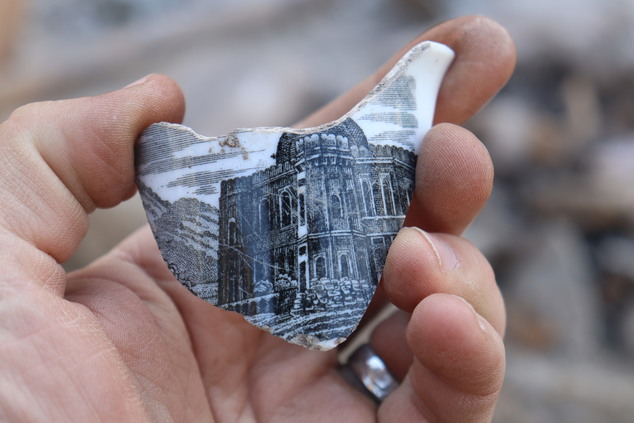
Besides the foundations, finds so far have included coins, everyday objects, and small pieces of porcelain. On one of these there is a picture depicting a domed building that could be a different synagogue — but the building depicted has not yet been identified.
The excavations are being carried out as part of a series of initiatives commemorating the synagogue.
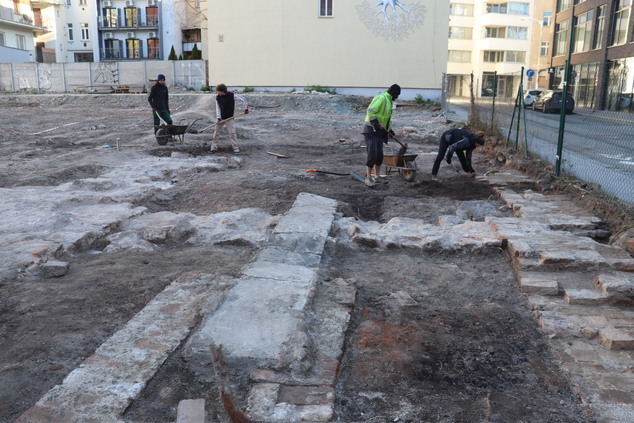
From March to June, the ŠTETL Centre for Jewish Culture, operating at the Jewish Community of Brno, is organizing guided tours at the excavation site, and the site and destroyed synagogue will be the focus of the annual Štetl Fest Jewish culture festival in August.
If you are in Brno and want to learn more about the excavations, there will be a guided tour of the site on May 13, with researcher Michal Doležel.
The tour “will offer a look at the surviving remains, present the architectural development of the synagogue and the circumstances of its destruction, and place the site within the broader context of the city’s urban transformations.”
Click here to reserve and buy a ticket for the tour