
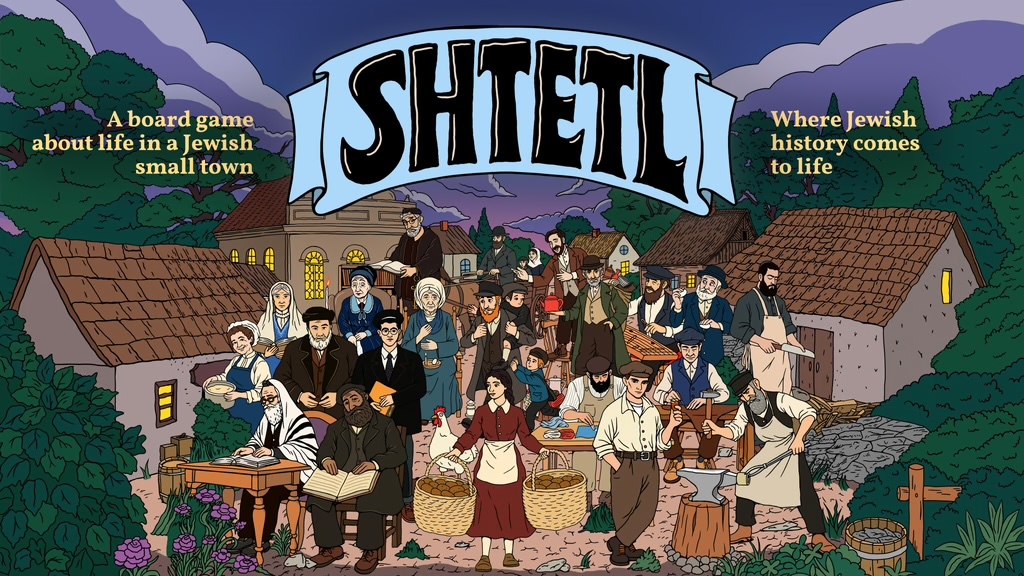
A new cultural strategy board game under development aims to introduce players of all ages to Jewish small-town life in the former Pale of Settlement.
Called Shtetl, the game is a project of the Belarusian-Jewish Cultural Heritage Center, which works to preserve, research, and reinterpret Jewish heritage of the region through digital, educational and cultural formats.
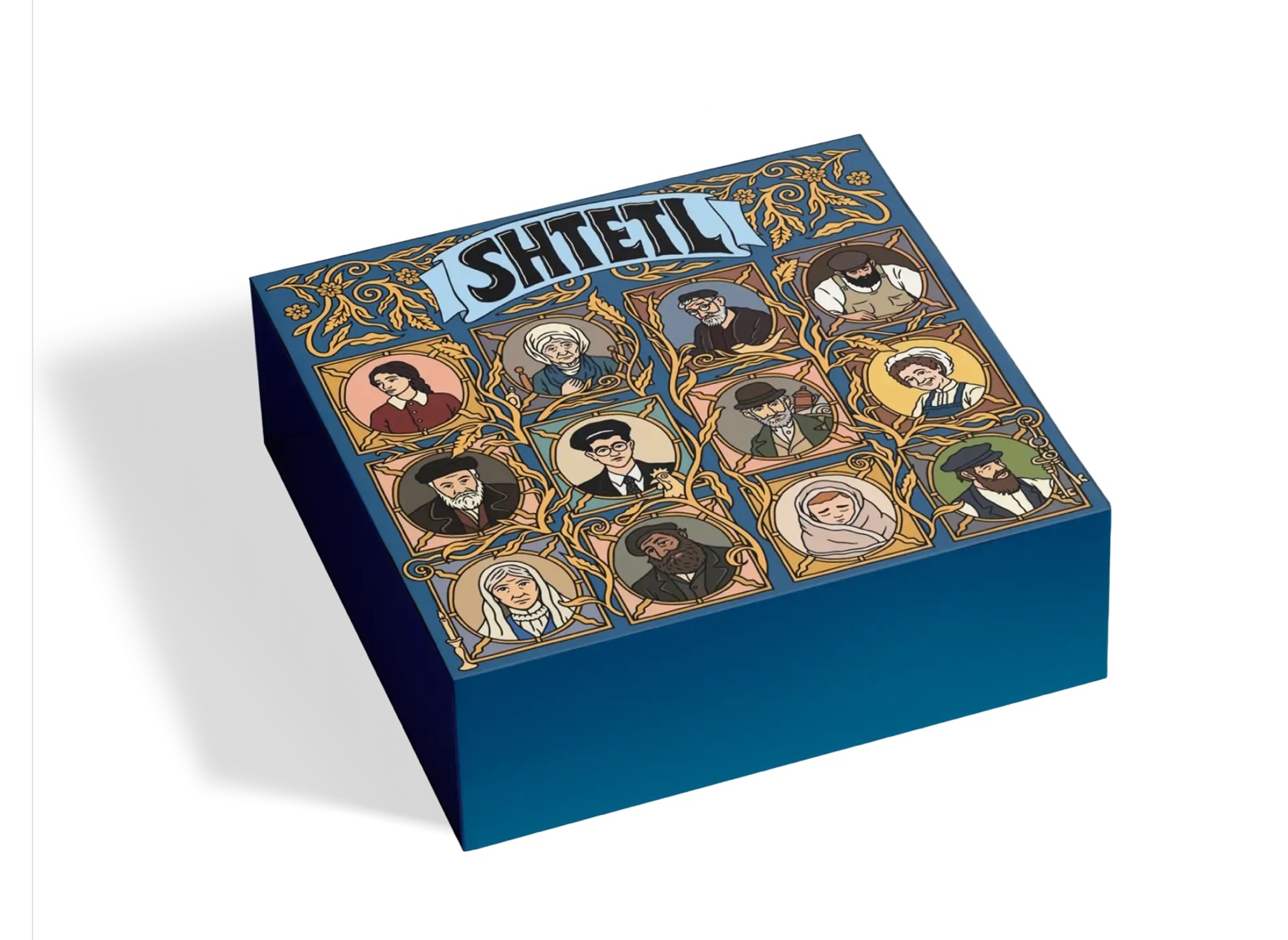 The Center says the game “continues a broader effort to make dispersed and often invisible Jewish heritage accessible through contemporary forms – from virtual reconstructions of synagogues to musical albums and public-facing creative projects.”
The game is ready to print and package, and the creators have launched a Kickstarter campaign for its first print run, which also provides a detailed description of the game. It has already exceeded its original funding goal.
The game, the Center says, “draws on the social, religious, architectural, and everyday life of Jewish communities in the former Pale of Settlement. The game is designed for 2–6 players, ages 8 and up, and will be published in two language editions: English and Russian.”
Players develop their own shtetl: welcoming residents, constructing buildings, celebrating holidays, studying, preparing traditional dishes, and guiding their community through the joys and challenges of a bygone era.
 It will not, however, creators say, be a nostalgic or ‘storybook’ shtetl.”
Alongside weddings, fairs, and holidays, the game includes difficult realities of 19th-century Jewish life in the region such as refugees, military conscription, and taxes. Community roles, social structures, religious learning, economic life, and historical pressures are translated into concrete gameplay mechanics.
Shtetl was created by a team of historians, educators, artists, producers, and game designers. Historical research and review were supported by historian and ethnographer Maria Kaspina and Professor Claire Le Foll.
The visual world of the game
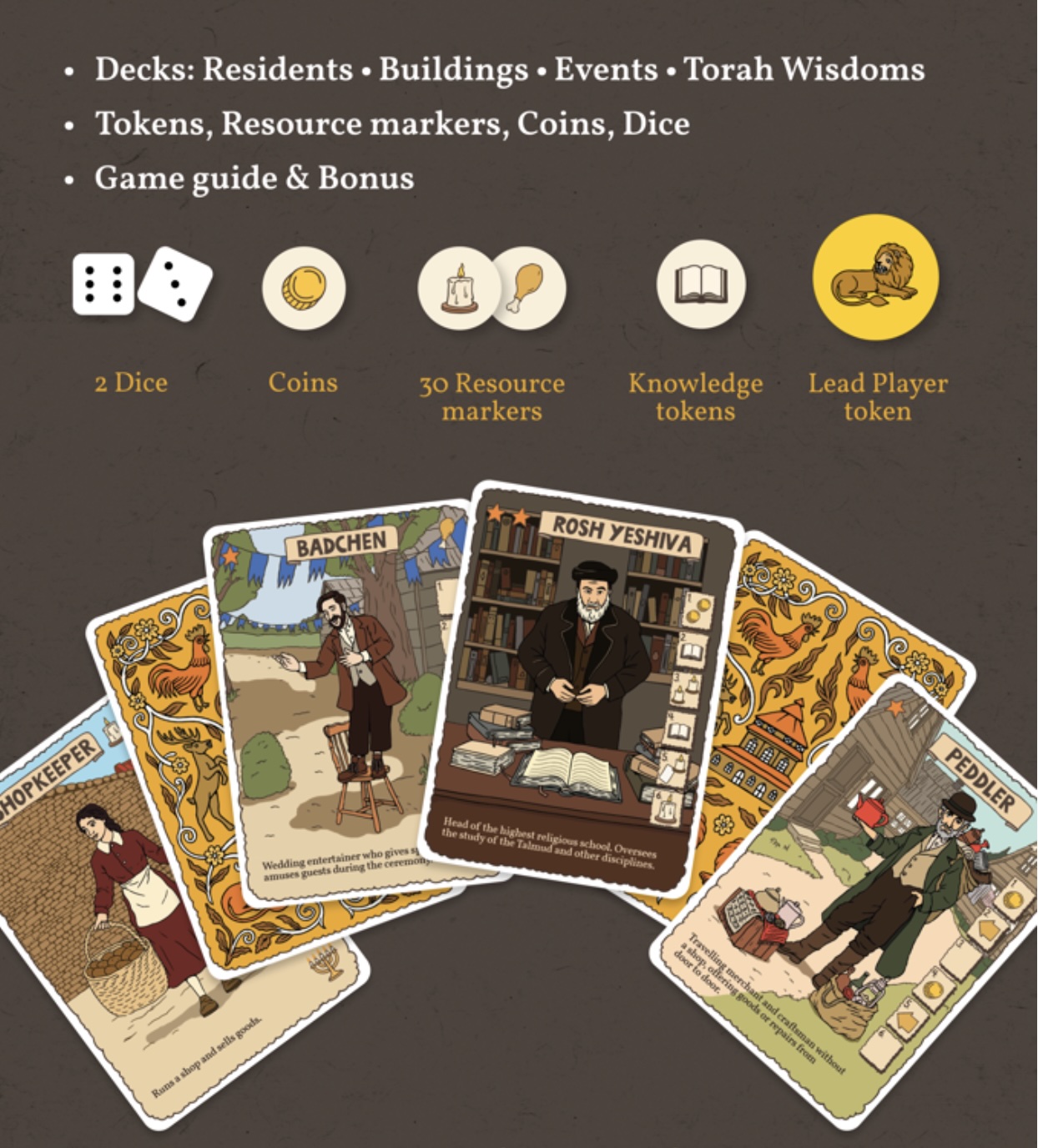
is based on careful work with historical sources. Buildings and cards draw on real regional references, including wooden synagogues, yeshiva architecture, traditional townscapes, archival photographs, clothing, crafts of the period. The card backs reinterpret Belarusian vycinanka and the Jewish reyzele ornament as a visual sign of cultural interaction.
Access the Kickstarter campaign and learn details of the game
4 comments on “Belarus: A board game under development called Shtetl aims to introduce players of all ages to Jewish small-town life in the former Pale of Settlement.”
Yes, when will it be available in English, how do we order and what is the cost?
Follow the link to the kickstarter page, which gives the price. They have met their goal, so I assume that the game will be ready as soon as they are able to print and package it.
When will it be available for purchase?
Follow the link to the kickstarter page, which gives the price, including discount for supporters. They have met their goal, so I assume that the game will be ready as soon as they are able to print and package it.