

Archaeologists have discovered the foundations of a medieval synagogue in Rothenburg ob der Tauber in southern Germany, a major center of Jewish scholarship in the middle ages.
The synagogue was used until a pogrom in 1349 devastated the Jewish community. After that, it and other Jewish communal buildings were taken over by the city, the Bavarian Monuments Preservation Office said in a statement. In 1404 the city sold the building to a local patrician who in 1406-07 had it converted into a chapel dedicated to Mary. “The core building was preserved, among other things supplemented by an apse in the Gothic style,” the statement said. The building was demolished in 1805.
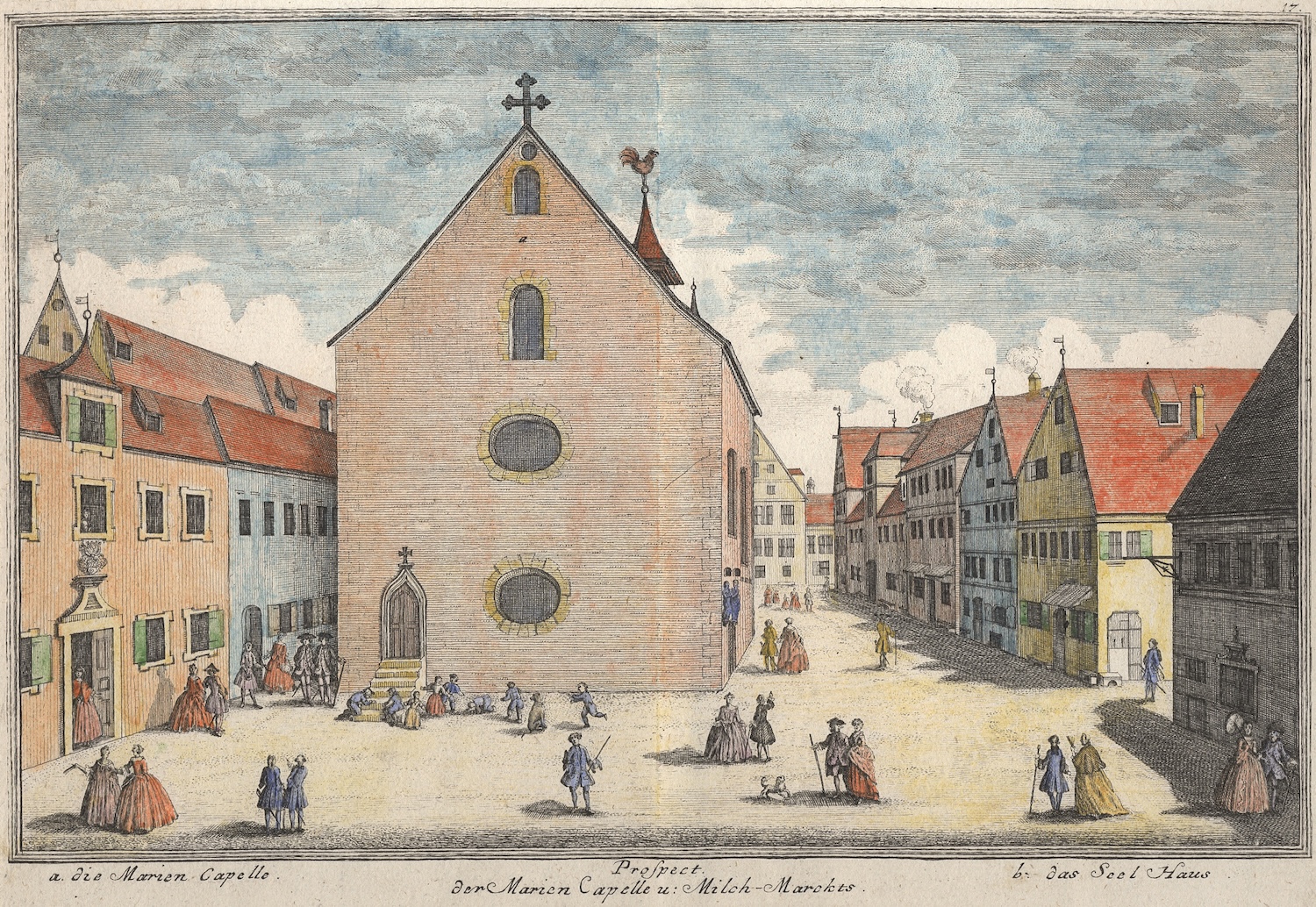
The foundations were revealed during excavation work on central Kapellenplatz. The construction, its alignment, and the location of the main entrance were consistent with what was shown in two known illustrations of the synagogue from the 18th century, the statement said.
“Together with the traditional written sources, they leave little doubt: The finds are very likely to be the first synagogue of Rothenburg, which as a large, free-standing Romanesque building shaped the cityscape,” it said.
The date of construction of the synagogue remains unknown, the statement said, and it is also unclear if there was a so-called “women’s synagogue” attached, which may have been removed when the building was converted into a chapel.
“The now exposed, massive limestone foundations of this stately building impressively demonstrate the importance of Rothenburg in the Middle Ages as one of the great centers of Judaism in southern Germany,” Rothenburg Mayor Markus Naser said.. “The inglorious end of this era is also part of our city history, which we want to continue to research and keep in consciousness.”
It said that the excavations would be limited to a certain space and that the foundations would be re-covered by new paving, but that the foundations will be depicted above ground in a way that will be visible.
Read the Monuments Preservation Officel announcement
Read an article about the find on the Medieval Jewish Studies Now web site