

Books!
Over the past year, we have posted on a number of major new books in the Jewish heritage field. They deal with subjects ranging from architecture and Jewish cemeteries to art and history.
Here’s a summary of more than a dozen of them — we’re still catching up on some books received and will be featuring more in future posts.
 Metropolitan Jewish Cemeteries of the 19th and 20th Centuries in Central and Eastern Europe: A Comparative Studies
By Rudolf Klein, Imhof Verlag
A richly illustrated, detailed examination of 19th and 20th century Jewish cemeteries in Eastern and Central European cities in all their aspects — funerary art, layout, topography, architecture, the impact of religious streams, and much more, including their destruction during and after WW2.
Here’s a book review/essay about it.
– – – – – –
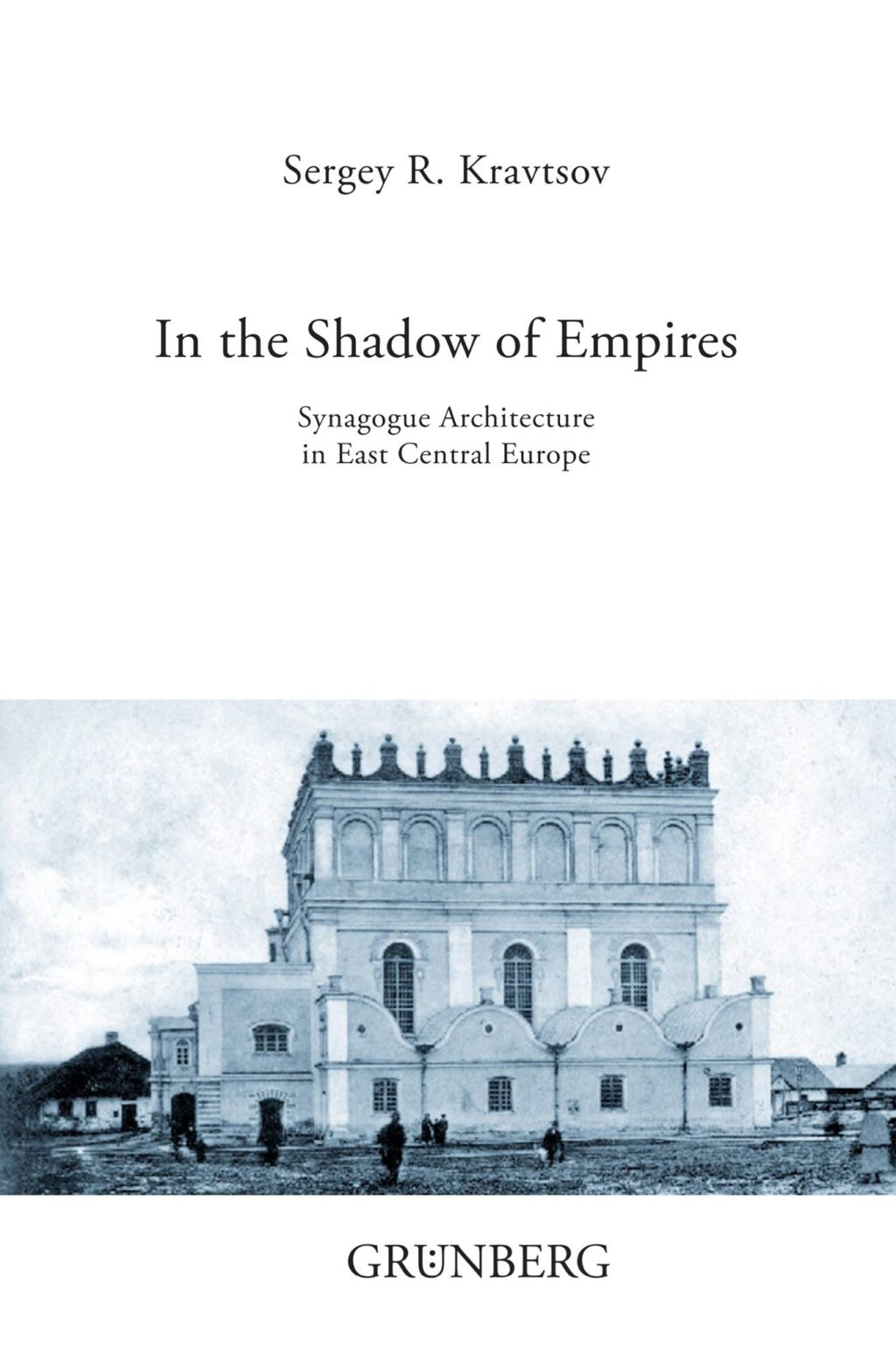 In the Shadow of Empires: Synagogue Architecture in East Central Europe
By Sergey R. Kravstov, Grünberg Verlag
A collection of essays by JHE friend Sergey R. Kravtsov, of the Center for Jewish Art in Jerusalem, a leading expert on synagogue architecture.
Bar Ilan University scholar Ilia Rodov provides the Introduction.
The book includes both site-specific essays centered on individual buildings as well as thematic chapters dealing with the history and meaning of synagogues.
– – – – – –
 Corpus Inscriptionum Judaicarum Graeciae (CIJG): Corpus of Jewish and Hebrew Inscriptions from Mainland and Island Greece (late 4th c. BCE–15th century)
Edited by Zanet Battinou, Jewish Museum of Greece
The compilation of Jewish and Hebrew inscriptions is part of the research programs of the Jewish Museum of Greece, which focus on the recording, study and publication of tangible and intangible evidence of the archaeological and historical past of the Greek Jews […] Aimed at the general public as well as the specialist audience of archaeologists, historians, educators, academics and researchers, the publication serves the historical record and documentation of the long-standing presence, as well as the distribution of Jewish settlements in the Greek lands.
– – – – – –
In Fading Light
By Christian Herrmann, Lukas Verlag
Christian’s latest book of photographs of Jewish heritage sites in Eastern Europe. He wrote in a blogpost: My photos reflect a kaleidoscopic and collage-like echo of a destroyed world. There are different levels that one can discover: the beauty of a destroyed culture, the destructive rage of the German occupiers and their allies, Soviet indifference and denial of history, the presence of the people who today live with the traces of the past, and – after the implosion of communism – the attempts of organizations and individuals to save what can still be saved […] I do not want to teach people how to deal with my pictures and what to feel about them. How a person reacts and what they feel depends on the individual. Some are repulsed, grief-stricken, angry, horrified, or indifferent. I don’t want to make a statement about what the “right“ emotion is. But one thing is common to all these feelings: uncertainty.
– – – – – –
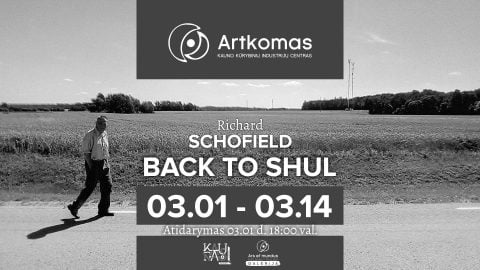 Back to Shul
By Richard Schofield, International Center for Litvak Photography
A free, downloadable book — a highly personal text and photo essay by the Center’s director, the British photographer Richard Schofield, that chronicles a 12-day journey documenting synagogue buildings in Lithuania.
– – – – –
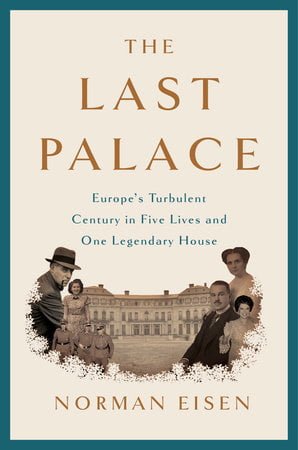 The Last Palace: Europe’s Turbulent Century in Five Lives and One Legendary House.
By Norm Eisen, Penguin Random House
At Hanukkah 2011, the then-U.S. Ambassador to the Czech Republic, Norm Eisen, hosted the pre-launch of Jewish Heritage Europe at the palatial ambassadorial residence in Prague. Eisen’s book tells the story of the mansion through the story of himself and four other people who lived there over the past century. These include the Jewish coal baron Otto Petschek who built it; the Nazi commander who took it over during WW2; the post-war Jewish U.S. Ambassador to Czechoslovakia who established the mansion as the ambassadorial residence; and Shirley Temple Black, the former child movie star who was U.S. ambassador at the time of the Velvet Revolution and fall of communism.
– – – – – –
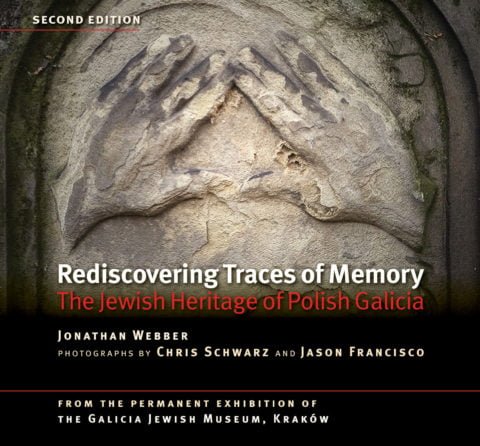 Rediscovering Traces of Memory – the Jewish Heritage of Polish Galicia
By Jonathan Webber, Chris Schwarz, Jason Francisco. Littman Library/Liverpool University Press
This second edition of Rediscovering Traces of Memory: The Jewish Heritage of Polish Galicia is a much-needed revised and expanded companion to the permanent exhibition at the Galicia Jewish Museum in Krakow — an exhibition that itself has recently undergone revision and expansion.
The new book still focus primarily on Schwarz’s images, which were taken between the late 1980s and early 2000s. Added to these are new images, taken by the American photographer and writer Jason Francisco — in what Francisco describes as a “posthumous collaboration” with Schwarz and an ongoing collaboration with the British anthropologist Jonathan Webber — who worked with Schwarz for years and who provided the text for all editions of the book.
– – – – – –
 Historical Atlas of Hasidism
By Marcin Wodziński, with cartography by Waldemar Spallek. Princeton University Press
The book takes a deep dive into the physical realms of Hasidic Jews since the movement’s founding in eastern Europe the 18th century. Supplementing the text with 74 maps, plus historical and contemporary photographs, diagrams, charts, and other images, it presents a complex, and eye-opening picture of the development of the movement — concentrating on the places where Hasidic Jews have lived, prayed, studied, traveled, moved to, and established communities, from the origins of Hasidism in Eastern Europe until the present, in Israel and the Americas as well as Europe.
– – – – – –

The Jewish Ghetto and the Visual Imagination of Early Modern Venice
By Dana E. Katz. Cambridge University Press
This book examines the Venice Ghetto from a both a visual and architecture perspective, detailing this “Jewish Space” and its relationship to the rest of the city. Published in 2017 by Cambridge University Press, the book is richly illustrated, and Katz makes use of maps, diagrams, drawings and other visual material as well as other contemporary documentation.
– – – – – –
The Ghetto in Global History: 1500 to the Present
Edited by Wendy Z. Goldman and Joe William Trotter Jr. Routledge
The volume is structured around four main case studies, covering the first ghettos created for Jews in early modern Europe; the Nazis’ use of ghettos; the enclosure of African Americans in segregated areas in the United States; and the extreme segregation of blacks in South Africa.
– – – – – –
A Travel Guide to Jewish Europe – Fourth Edition
By Ben Frank. Pelican Press.
This is the fourth revised edition of a ground-breaking guidebook that first came out in 1992, with subsequent editions in 1996 and 2001. It includes 20 countries across western, central, and east-central Europe. It provides ample historical background on the Jewish communities of the various countries, as well as addresses for active synagogues, Jewish organizations, and kosher restaurants. In much of the book, however, the author tends to focus almost exclusively on major cities.
– – – – – –
Jewish London, 3rd Edition: A Comprehensive Guidebook for Visitors and Londoners
By Rachel Kolsky and Roslyn Rawson. IMM Lifestyle Press.
The first edition of this lavishly illustrated, information-packed book came out in 2012, followed by a second edition in 2915. The book includes 10 guided walks through the East End, Central, and West End of London, as well as day trip outside of the city, practical and historical information, major sights as well as off-the-beaten-track sights with Jewish interest.
– – – – – –
Synagogues in the Islamic World: Architecture, Design and Identity
Edited by Mohammad Gharipour. Edinburgh University Press
This richly illustrated book explores the elements and concepts applied in the design of synagogues in the Islamic world. It shows connections between Jewish and Islamic architecture and the collaboration among Muslims and Jews in the design and construction of synagogues. Taking an interdisciplinary and cross-cultural approach, it provides a new setting for the analysis of Islamic architecture and addresses historical, social, urban, and architectural aspects of synagogues throughout the Muslim world.
– – – – – –
 Synagogues in Hungary, 1782-1918 : genealogy, typology and architectural significance
By Rudolf Klein. CEU Press
This is the long-awaited English language version of Klein’s lavishly illustrated, massive and encyclopedic work on the history, forms and styles of synagogues in central Europe that came out in 2011.
– – – – – –