

Nearly seven years ago, at Hanukkah 2011, the then-U.S. Ambassador to the Czech Republic, Norm Eisen, hosted the pre-launch of Jewish Heritage Europe at the palatial ambassadorial residence in Prague. JHE Director Ruth Ellen Gruber demonstrated our site to Eisen and other guests. We went live online two months later.
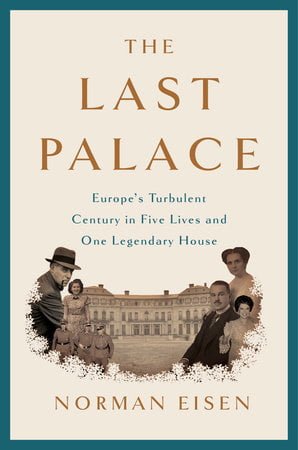 Eisen, the son of a Holocaust survivor from the former Czechoslovakia and an observant Jew, now has just published a book about the magnificent residence — it’s called The Last Palace: Europe’s Turbulent Century in Five Lives and One Legendary House.
It tells the story of the mansion through the story of himself and four other people who lived there over the past century. These include the Jewish coal baron Otto Petschek who built it; the Nazi commander who took it over during WW2; the post-war Jewish U.S. Ambassador to Czechoslovakia who established the mansion as the ambassadorial residence; and Shirley Temple Black, the former child movie star who was U.S. ambassador at the time of the Velvet Revolution and fall of communism.
Throughout, Eisen, now a senior fellow at the Brookings Institute, weaves in the story of his mother and her journey, as well as his own observations about the impact of history on the present.
Eisen says in an interview on the book’s web page:
The palace was my home as U.S. ambassador to the Czechs. It’s widely considered the most beautiful of any of our ambassadorial residences and, sure enough, when I moved in, it took my breath away. But even more startling was my discovery of a swastika hidden beneath a beautiful antique table—residue from when Nazi Germany occupied the house. That hit me particularly hard as the child of a Czechoslovak Holocaust survivor who had been deported to Auschwitz by those very same occupying forces. That collision of the history—the palace’s, my family’s—compelled me to dig into what had happened on the property over the past century. What I found out amazed me—not just about World War II, but about the recurring struggle between liberalism and illiberalism in every generation, including our own.
The book, “part memoir, part family history, tells the story of a century of European upheaval as it played out in one baronial Prague address,” writes Ron Kampeas in a review-interview for JTA that describes the story as “a metaphor for Jewish resistance to authoritarianism.”
He adds: “Eisen structures the book around the tensions between his enthusiasm for the house and the country and his mother’s child and young adulthood, under the Nazis and then the communists.”
The book is published by Penguin Random House.
Click to see the web page and interview with Eisen.
Click here to see interview-review on JTA
