Jewish Heritage Europe

Czech Republic: Important Jewish heritage web resource is now (at least partially) in English

Screenshot of interactive Czech map

(JHE) — An important online resource for Jewish heritage sites in the Czech Republic is now at least partially available in English. Called  Židovské památky Čech, Moravy a Slezska – Jewish Heritage in Bohemia, Moravia, and Silesia, it is a revamped … continue reading →

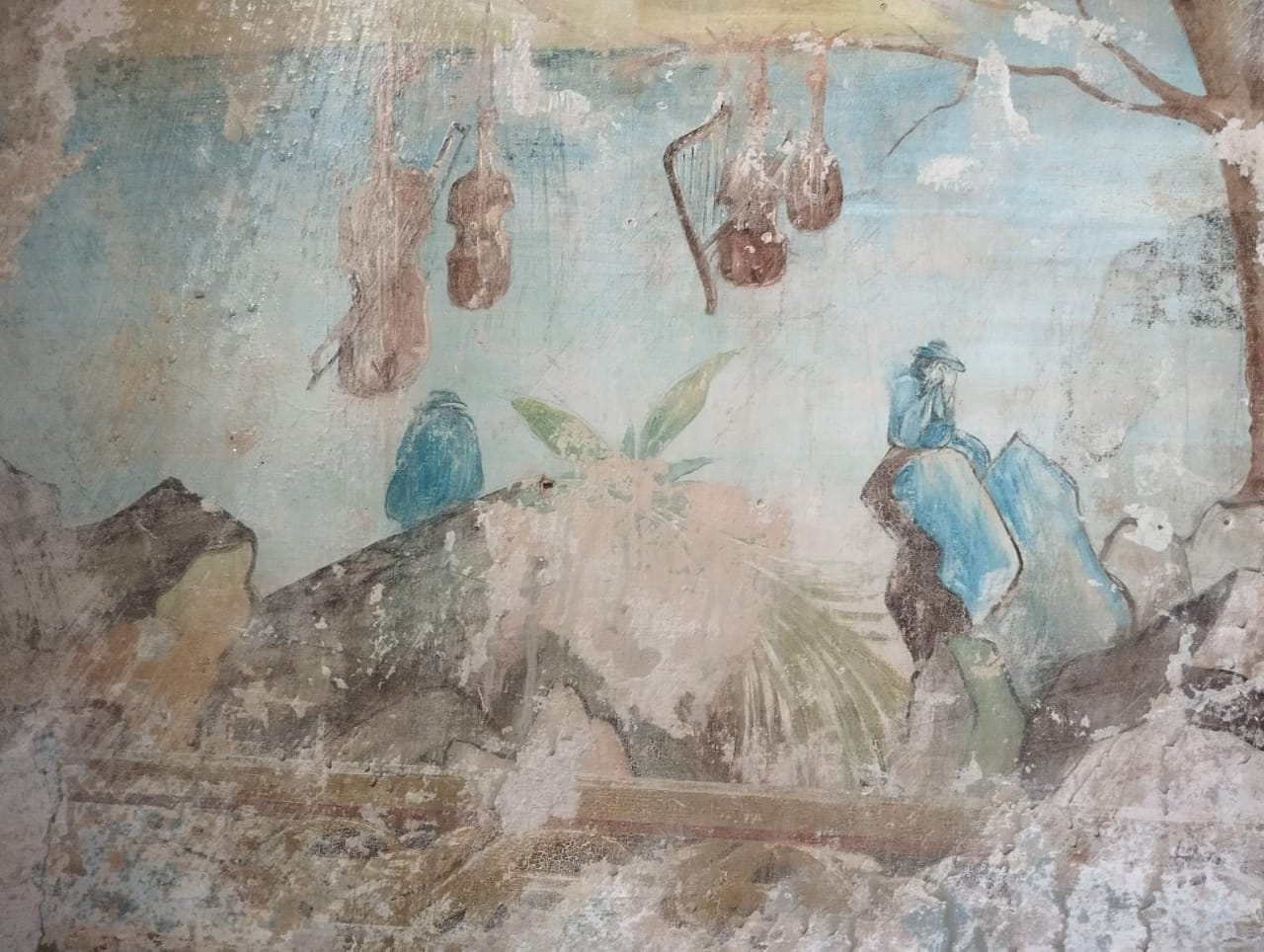
Ukraine: Colourful wall paintings have been discovered in the one-time Beit Midrash in Illintsi, western Ukraine.  

One of the recently discovered murals in the Beit Midrash, Illinois. Photo courtesy of Vitalii Kamozin

Colourful wall paintings have been discovered in the one-time Beit Midrash, part of a former shulhoyf in Illintsi, in the Vinnytsia region of western Ukraine.   JHE friend Vitalii Kamozin, the COO of the United Jewish Community of Ukraine (UJCU), … continue reading →

UK Job Opportunity: Community Engagement & Volunteer Coordinator, historic Bevis Marks Synagogue, London

We are pleased to share this London-based job opportunity: Community Engagement & Volunteer Coordinator, historic Bevis Marks Synagogue Submission deadline July 8 Hours:  37 hours a week – flexible working, including bank holidays, evenings and weekends will be required Salary … continue reading →

JHE Photo Essay: Shavuot 2024 — Images of the 10 Commandments to Mark the Holiday

10 commandments in the synagogue, Goteborg (Gothenburg) Sweden

(JHE) — The festival of Shavuot, which begins Tuesday night, marks the reception of the Torah — and Ten Commandments — at Mt. Sinai. Jews traditionally go to synagogue on Shavuot to hear the Ten Commandments read out: 1. I am … continue reading →

Monday is World Art Nouveau Day — we highlight a few examples of art nouveau embodied in Jewish built heritage

Tomb of the Schmidl family, Kozma utca Jewish cemetery, Budapest May 2019

This  Monday, June 10,  marks World Art Nouveau Day, an occasion launched in 2013 to appreciate the architectural and decorative style that utilised sinuous curves and often floral or or vegetal motifs and flourished mainly from around 1890 up until … continue reading →