
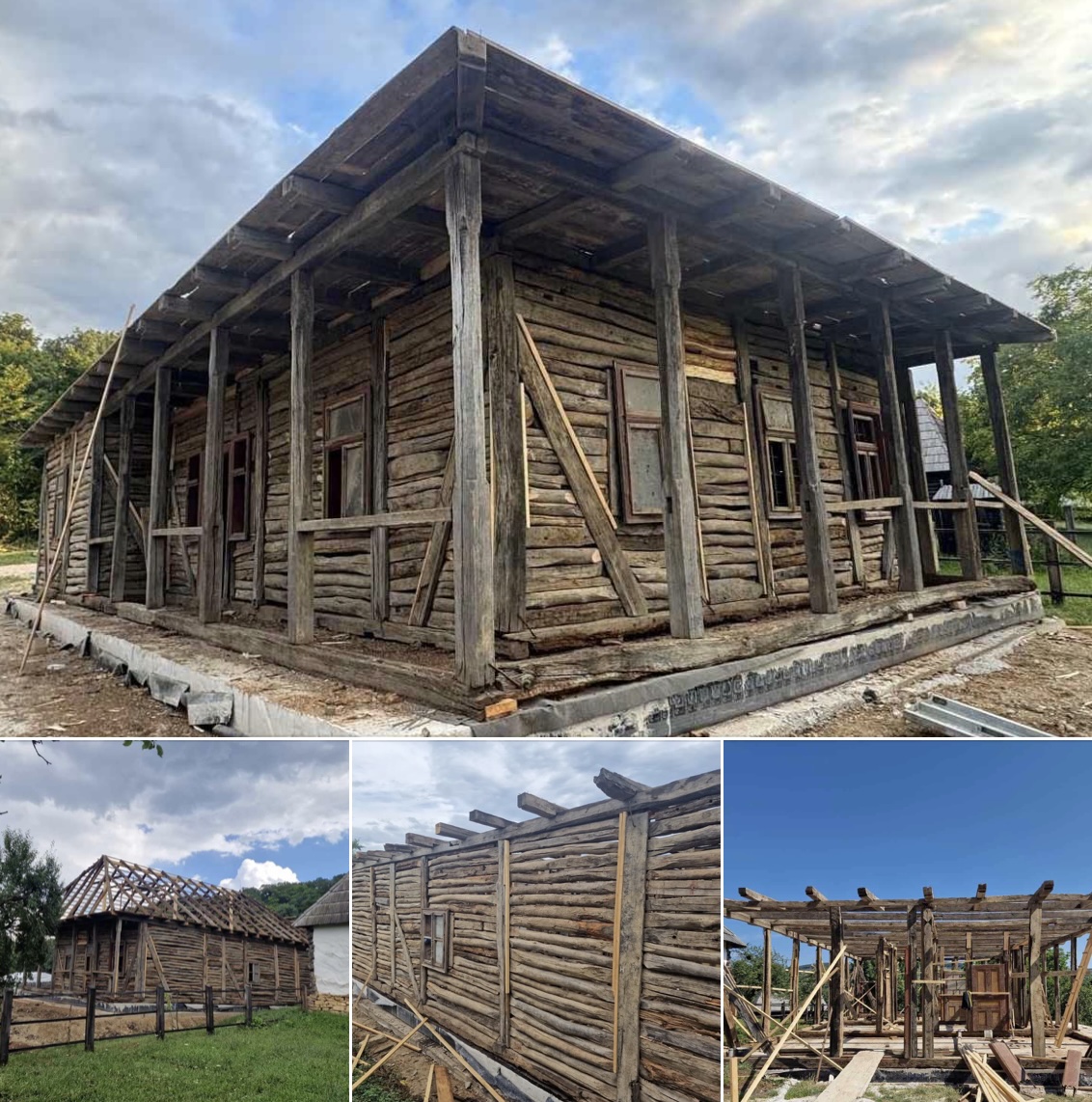
An open air ethnographic museum in Transylvania is installing a former Jewish house from a small village in northwest Romania. Once reconstructed on site, it will include an installation by noted Israeli sculptor Belu Simion Făinaru commemorating Jews who were deported and killed at Auschwitz.
The wooden house will be part the Romulus Vuia National Ethnographic Park, part of the Ethnographic Museum of Transylvania in Cluj. Originally located in the village of Cămărzana, in northwest Romania’s Satu Mare county on the border with Ukraine, the wooden house was dismantled and brought to Cluj this summer
“The building represents a valuable example of vernacular architecture and brings to the museum’s heritage a cultural and historical component insufficiently represented until now,” the Cluj County Council said.
According to an article on the website of the Hungarian Jewish umbrella organization Mazsihisz, the house belonged before WW2 to the Weinstein family — Samuel Weinstein, his wife and their eight children, all of whom were deported to their deaths in 1944. After the war a Romanian family lived there, and in the 1980s it was donated to the Satu Mare County Museum.
It was once the home of the Weinstein family, and today it continues its journey to keep the story of a community alive. Although not fully renovated yet, the house already speaks of people, destinies, and the power to save what time and history have tried to erase. Every beam saved is a testimony, every step taken to save it is a gesture of respect to the heritage and the memory of those who lived here.
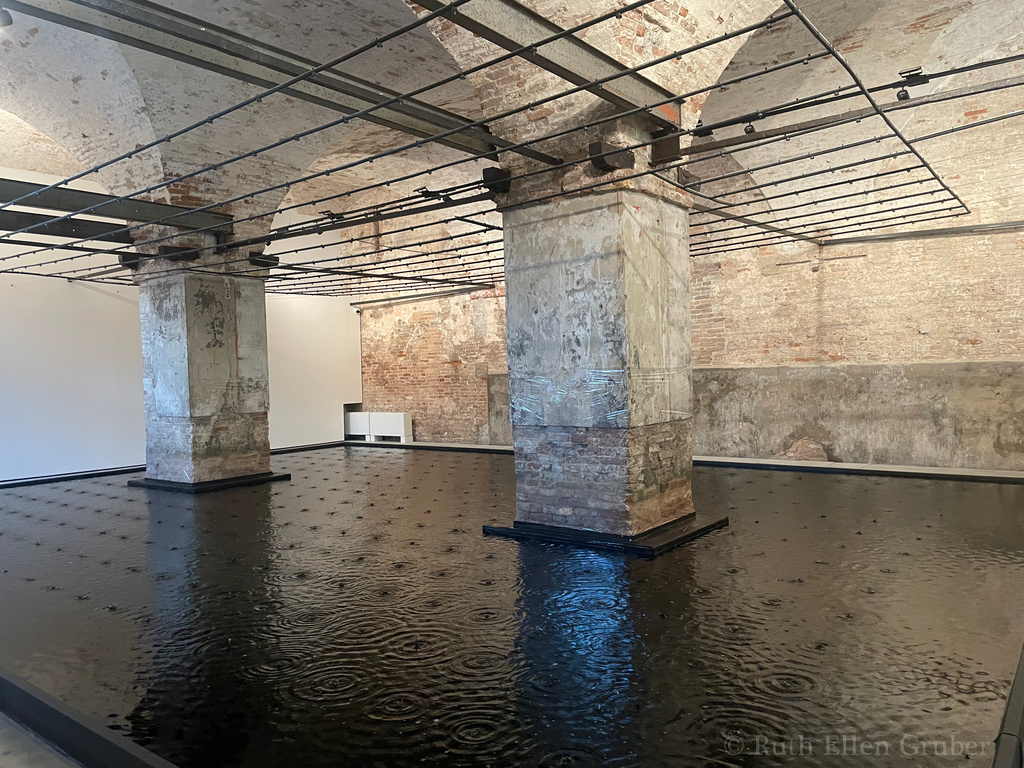
The project was initiated by the Ethnographic Museum at the proposal of the noted Bucharest-born Israeli sculptor Belu Simion Făinaru. A recipient of the Israel Prize, Făinaru is the creator of the installation at the Israeli Pavilion at this year’s Venice Biennale International art exhibition — a shimmering indoor lake and drip fountain called The Rose of Nothingness.
Once the house is reconstructed, Făinaru will create an installation there commemorating the Jews deported from northern Transylvania and murdered at Auschwitz.
“In this way,” the county announcement states, “the project combines the recovery of the built heritage with the memorial and educational dimension of the history of the Jewish communities in Transylvania.”
It will “become a living memorial—an artistic sculpture and a site of remembrance for the family that perished and for an entire Jewish community that disappeared,” Făinaru, who said he began working on the project more than two years ago, wrote in a Facebook post.
The concept of “home” has been a central axis in my artistic work over the years. For me, home represents an ongoing search for identity—a place that defines belonging and serves as the nucleus of life, family, and community. This house carries within it the memory of rich Jewish lives that were destroyed, and of a profound contribution to the life of the place in which it once stood. Memory needs a place in order to exist, because only in space can that which has passed in time be anchored.
The reconstruction works started in June and are being carried out by “a multidisciplinary team consisting of architects, designers, heritage preservation specialists, builders and artisans from Maramureș,” craftsmen experienced in the restoration and reconstruction of traditional wooden architecture, the County said. “All interventions are carried out in compliance with the principles of conservation and reconstruction specific to the built heritage, using traditional materials and techniques. ”
“The dismantling and actual transfer of the house were a complex logistical operation,” Tudor Sălăgean, manager of the Ethnographic Museum of Transylvania, told the news site portalsm.ro. “The house was dismantled and transported to Cluj with four trucks, each loaded with large elements.”
The transfer was carried out with the support of the Satu Mare County Museum, the Romanian Academy, the National Network of Museums in Romania, the Jewish Community of Cluj-Napoca and various other individuals and organizations.
Read the announcement of the project by the Cluj County Council