
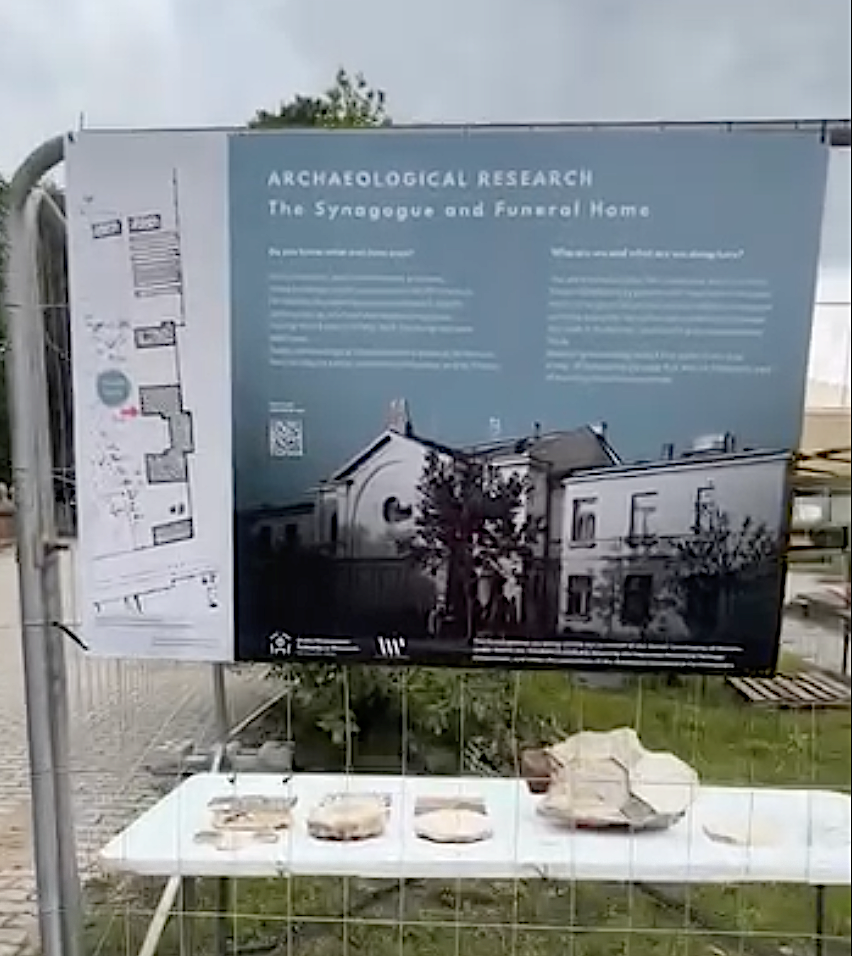
Archaeologists have begun excavations at the site of the pre-burial house and synagogue that once stood at the entrance to the Okopowa st. Jewish cemetery in Warsaw.
“The buildings were erected in the second half of the 19th century. They served the Jewish community of Warsaw until 1943, when they were demolished,” Wykop na Poziomie, the archeology firm carrying out the excavations, posted on Facebook.
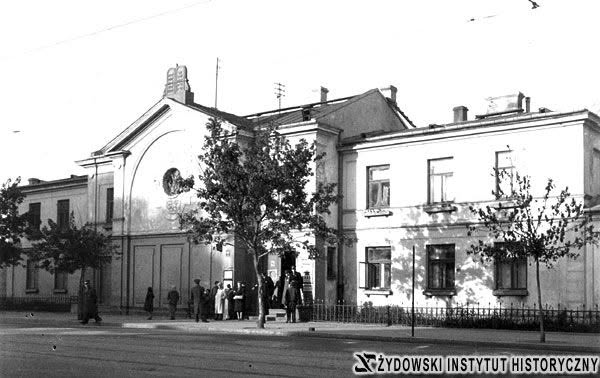
“Already on the first day of work, fragments of walls and elements of building furnishings began to emerge from the ground,” it said.
Photos and video it shared showed decorative tiles and other material.
Click to watch a FB video from the excavation, showing earl finds.
The project is the latest phase of wide-ranging archaeological research at the vast cemetery, begun seven years ago and carried out under the supervision of Poland’s Rabbinical Commission for Cemeteries.
Established in 1806, Okopowa is the largest Jewish cemetery in Poland. So far, more than 82,000 legible matzevot have been documented, but it is estimated that as many as three times that number of people are buried there.

Among other things, archaeologist have uncovered previously unknown cobblestone paths, buried matzevot (some with gilding and polychrome decoration), and artifacts including glass bottles and coins dating back more than a century.