If you are in Budapest, don’t miss the closing days of an exhibition that celebrated the 150th anniversary of the birth of the great Jewish architect Béla Lajta. The exhibit, which has run since December 20 at the Kiscelli Museum, concludes with a three-day Lajta festival this weekend, April 26-28.
Lajta (1873-1920), born Béla Leitersdorfer, was one of the most prominent Hungarian architects of his day and a disciple of Ödön Lechner, the founder of Hungary’s vivid art nouveau style. Lajta’s work foreshadowed art deco and modernism, and he designed a number of important buildings in Budapest, including a nightclub now known as the “New Theatre” on Paulay Ede street — as well as many sculptural tombs and family mausolea in Jewish cemeteries.
Lajta in fact had a relationship with the Budapest Jewish community’s Chevra Kadisha that began at the end of 1903, and he eventually was taken on as permanent technical adviser for the cemeteries.

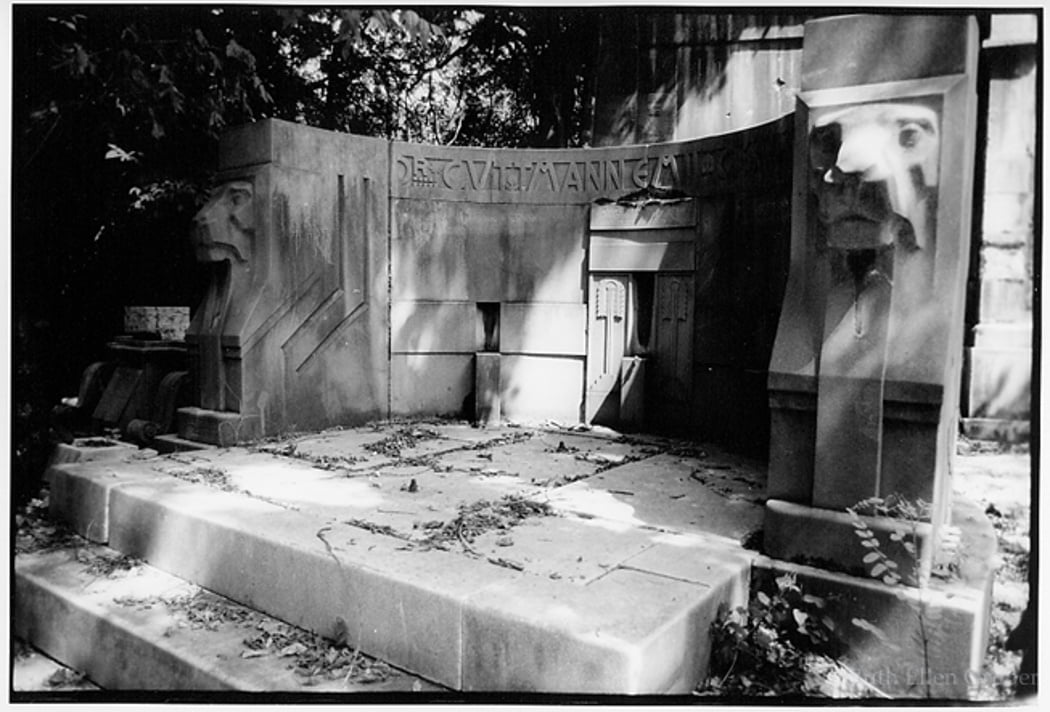
He is known to have designed more than 30 tombstones and family vaults, both in the vast Kozma utca (Rákoskeresztúr) Jewish cemetery (where he is buried) and in the Salgótarjáni utca Jewish cemetery, where he also designed the entrance gate and ceremonial hall.
The exhibition at the Kiscelli museum included material on the origin and transformations of some important Lajta buildings using plans, photos, building elements, as well as image animations and videos.
The closing festival includes a concert, a bicycle city tour, a catalog presentation and a round table discussion.
See more about Lajta at the Lajta Virtual Archive
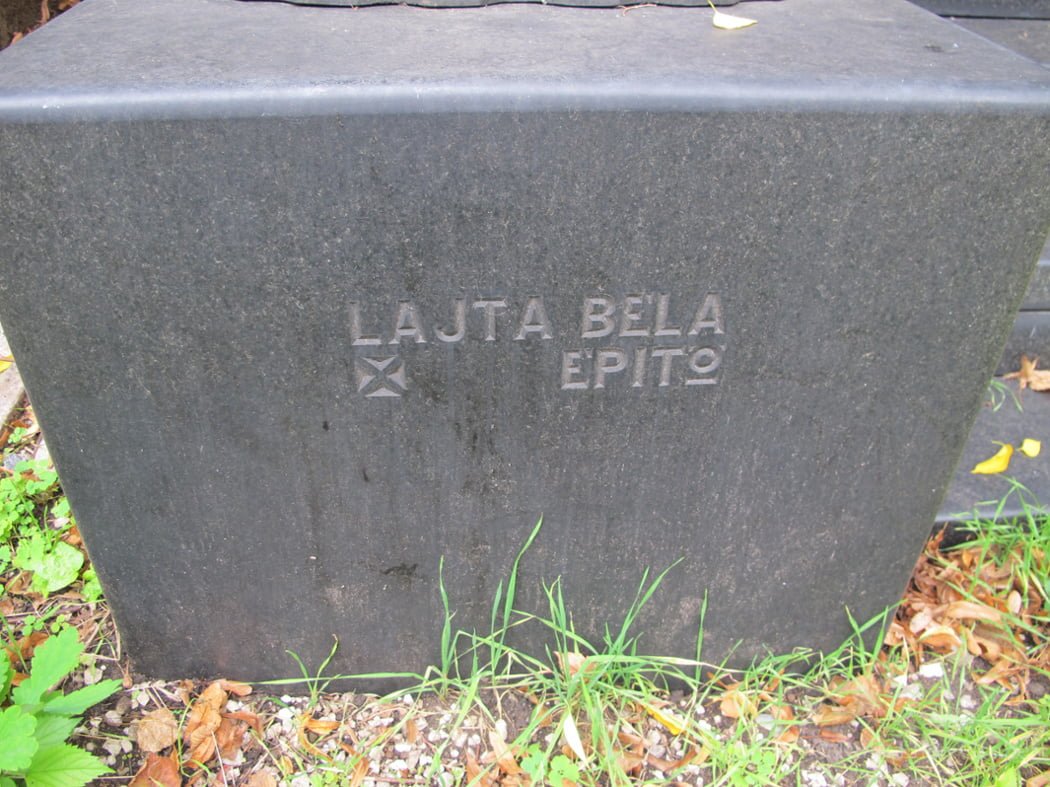
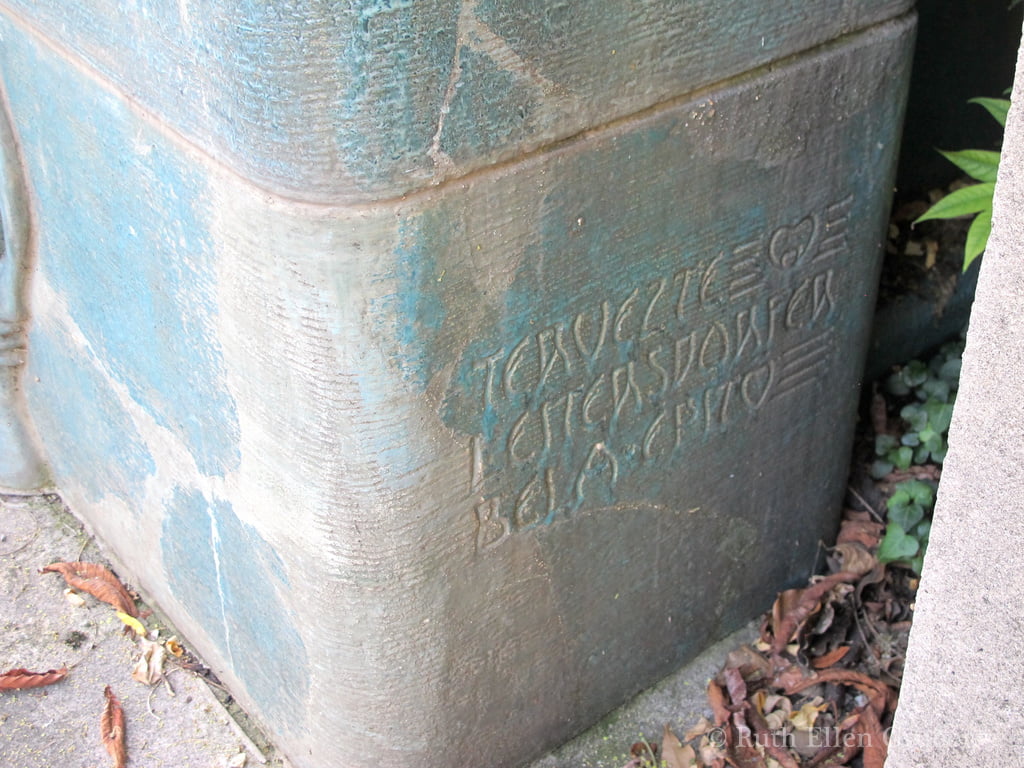
We posted a photo gallery essay of some of Lajta’s cemetery work, back in 2018.
Here’s a sample below — and click HERE to see more images in our earlier post.