
The Polish architect Maria Piechotka, one of the leading experts on synagogue architecture and — with her late husband — the author of several groundbreaking works has been honored for “her commitment to preserving Poland’s Jewish heritage.”
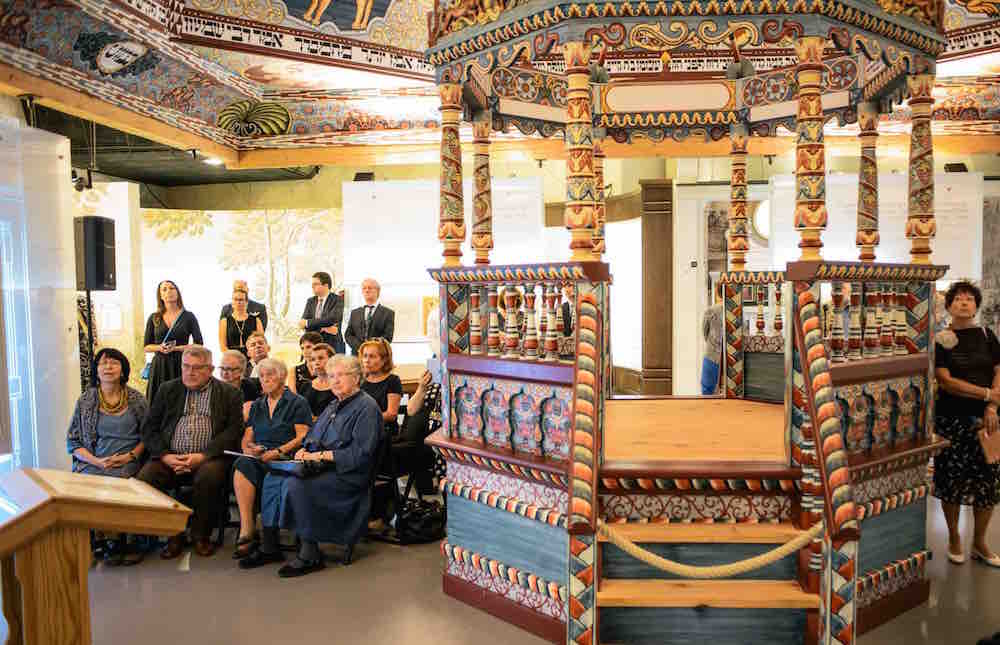
Maria, who is 96 and still active, was presented with the Taube Philanthropies’ 2016 Irena Sendler award on September 16, at the POLIN Museum of the History of Polish Jews. The ceremony took place under the museum’s replica of the 18th-century Gwoździec wooden synagogue. (The award was announced earlier this year, and Maria is the co-awardee of the 2016 Sendler Memorial award, along with Prof. Monika Adamczyk-Garbowska, who was presented the award on July 1, during the Jewish Culture Festival in Kraków.)
At the Sept. 16 ceremony Shana Penn, Executive Director of Taube Philanthropies presented the award, saying:
We come together under this magnificent synagogue replica and intricate painted ceiling to honor Maria Huber Piechotkowa because this replica – and the phenomenon of today’s Jewish cultural revival in Poland that it exemplifies – would not have been possible without the pioneering vision, passionate interest, and dedicated research that Maria and her husband, the late Kazimierz Piechotka, pursued over many decades. Together, the Piechotkas rescued from virtual oblivion the wooden synagogue’s architectural significance and beauty and established its place in the histories and heritages of Poland and of Jews for generations to come.
Poles and Jews inside and outside of Poland are deeply indebted to the Piechotkas for their historic contributions to the recovery, preservation and memory of Jewish heritage in Poland, which the wooden synagogue represents. They have transmitted their devotion and knowledge to generations of students of architecture, art, history, religion, and culture. They have brought Jews and Poles together to share cultural pride.
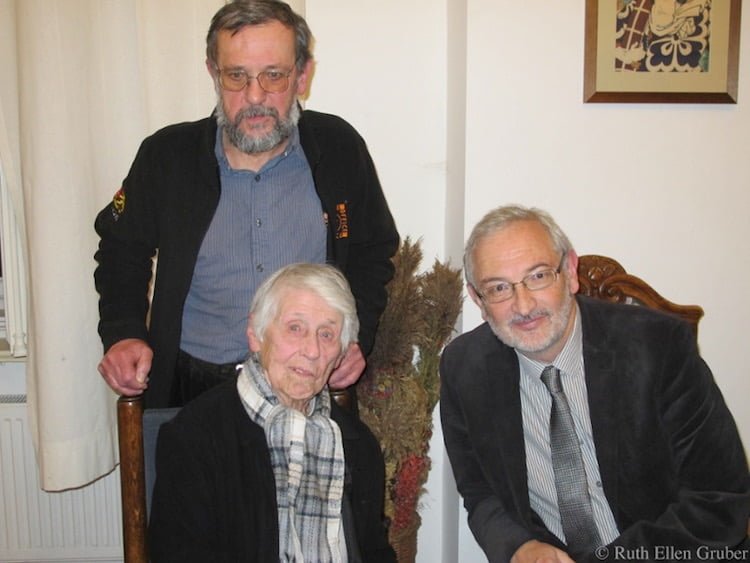
The Piechotkas were active in the Warsaw Uprising and in 1944 began their efforts to record the architectural detail of destroyed buildings, with a special focus on wooden synagogues. The couple co-authored several books on the subject, including Gates of Heaven: Wooden Synagogues on the Territory of the Former Republic, published in 1957, which has become the seminal work in the field. A new edition of the book was published this year.

In 2000, the couple was awarded the Jan Karski and Pola Nireńska award from the YIVO Institute for Jewish Research.

The Irena Sendler Memorial Award was created in 2008 by Taube Philanthropies in memory of courageous partisan Irena Sendler whom Yad Vashem named a “Righteous Among The Nations.” Each year, in commemoration of her, the award is presented to Polish citizens who have been exemplary in preserving and revitalizing their country’s Jewish heritage.
Previous awardees include Janusz Makuch, director of the Jewish Culture Festival, Kraków (2008); Jan Jagielski, archivist, Emanuel Ringelblum Jewish Historical Institute (2009); former President Aleksander Kwaśniewski (2010); the late Magda Grodzka-Gużkowska, who risked her life to help Irena Sendler rescue Jewish children from the Warsaw Ghetto (2011); scholars Prof. Dr. Maria Janion and Dr. Jolanta Ambrosewicz-Jacobs (2012); Bogdan Zdrojewski, former Minister of Culture and National Heritage, and Hanna Gronkiewicz-Waltz, Mayor of Warsaw (2013); Małgorzata Niezabitowska, author and journalist, and Tomasz Pietrasiewicz, director of the Grodzka Gate—NN Theatre Center (2014); and Krzysztof Czyżewski, director of the Borderland Foundation, and the late Dr. Jan Kulczyk, distinguished benefactor of POLIN Museum of the History of Polish Jews (2015).