

The old matzo oven has long been one of the sites that can be visited as part of the Jewish museum in Pitigliano, an extraordinarily picturesque hill town in southern Tuscany once known as a “little Jerusalem” because of its once-flourishing Jewish community.
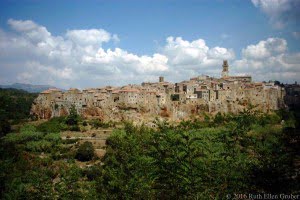
The museum encompasses the synagogue, dating from 1598 and rebuilt in the 1990s, as well as other parts of the former Jewish quarter, some of them — like the oven — that are underground chambers carved into the rust-colored tufa rock on which the town is built.
In her landmark (and now, sadly, out of print) 1981 book The Classic Cuisine of the Italian Jews, Edda Servi Machlin — a native of Pitigliano — describes in vivid terms how matzo was baked in the oven, which was opened just once a year, for Passover.

“[T]he oven was one of our most important facilities,” she writes. […] “At the time I was growing up [in the 1930s], the oven was not in operation all year round. But once a year, the opening of the oven just before passover was a thrilling event for children and adults alike.”

Morevover, she adds, amid the bustle of cleaning, kneading and baking, “for the young people the bakery was a happy hunting ground, a perfect place to gather to carry on flirtation and love affairs. Many a marriage was arranged while kneading the bits of dough, and perhaps even a few were wrecked during those vernal days.”

Just in time for Passover, Virtual Shtetl reports on another old matzo oven — this one in Góra Kalwaria, or Ger in Yiddish — a small town south of Warsaw that was one of the most important Hasidic centers in Poland from the mid-19th century and is still a site of pilgrimage today.
Pilgrims from all over the world have been visiting Góra Kalwaria until this day. They pray on the graves of tzadiks Icchak Meir Alter and his grandson Jehuda Arie Lejb. They also visit the backyard at 10/12 Pijarska St., where the former tzadiks’ house and the adjacent house of prayer still stand. An old matzo oven has survived in the attic of the latter building.
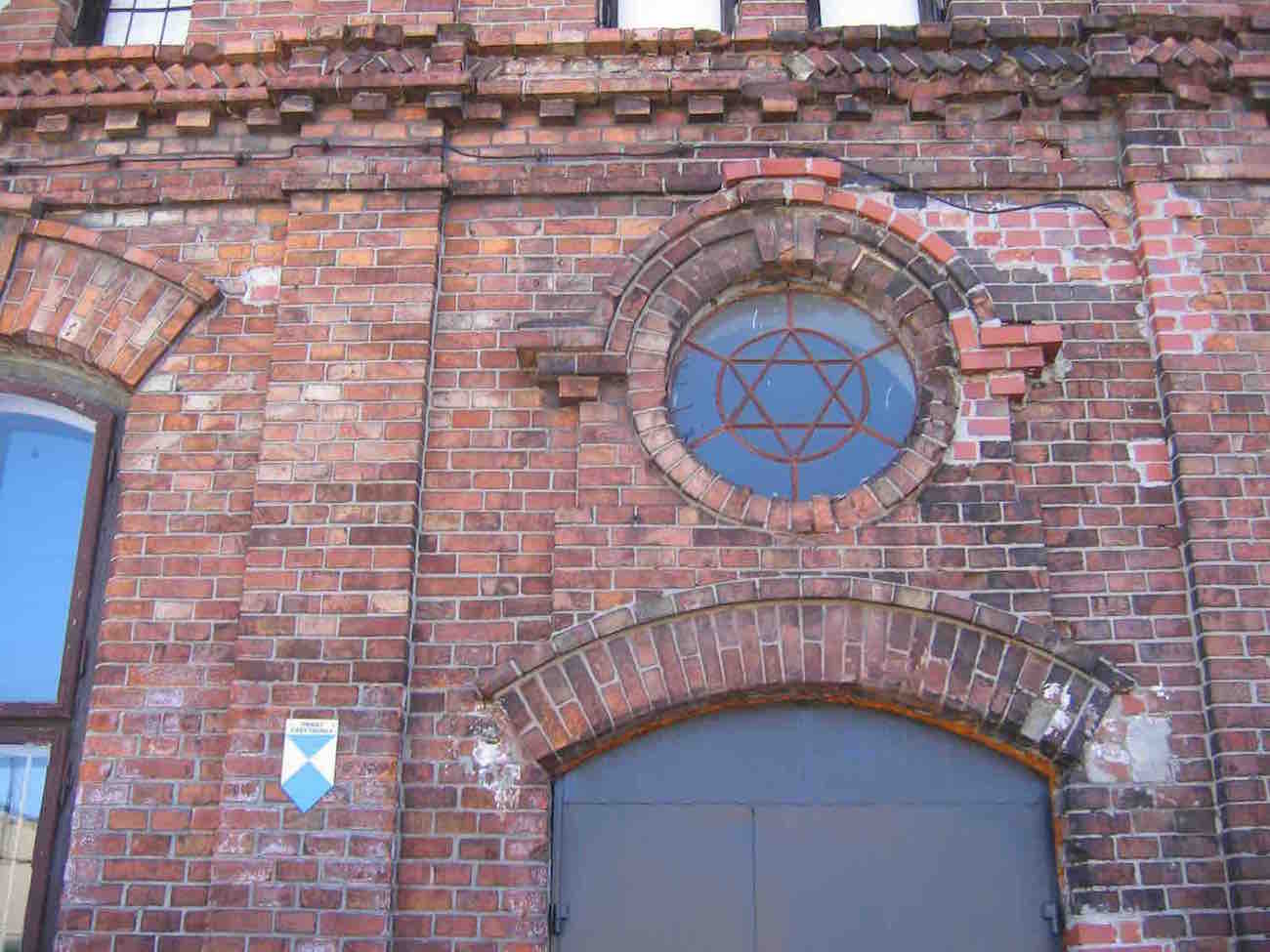
Virtual Shtetl describes the oven — which has long been out of use — as a “huge cuboid” that measures 2 meters by 4 meters at the base, and is more than 1.5 meters high.
It was a wood-fired stove. It was heated for a long time, and when it reached the desired temperature, the red-hot charcoal was taken out, the furnace was swept out and the baking started. The oven’s huge weight helped it keep the heat for a long time. Therefore the stove was probably used not only to bake matzot, but also to keep food warm for the Shabbat without the need to start a fire.
Amazingly, Krzysztof Bielawski of Virtual Shtetl managed to track down 99-year-old Henryk Prajs, who remembers how the oven was used and matzo was baked, many decades ago.
It was a stove for baking matzot for the tzadik’s family only. Baking started two months ahead of Pesach. Góra Kalwaria had a yeshiva and its rabbi selected physically stronger bachurim, boys, to roll the matzot. Three tables were arranged: two lengthways and one in a triangular shape. There was no woman, only boys from the yeshiva. I was 10 or 12 at that time, I used to go there with my friends. They wouldn’t let us in, but we could watch. The rabbi went round the tables and sang: ‘Yo bee dee bee bambye, ya bee dee bye…’ He used to sing like that, he told them how to roll. They made the szmure matzo there. It was a special, so-called watched matzo, 100% kosher. When the matzo was ready and collected, Rebbe offered it to Hasids – those he thought deserved it.”