

The mayor of Rădăuți plans to clean up the town’s sprawling Jewish cemetery and (potentially) integrate it and the imposing Radauti synagogue into local heritage tourism routes.

“A personal, soulful project, which in the spring will turn into reality, is the redevelopment of the Jewish Cemetery, through extensive works of care and cleaning of the vegetation that has taken over,” Mayor Bogdan Loghin wrote in a Facebook post earlier this month.
He noted that before the Holocaust the Jewish community of Rădăuți, a market town in the Bucovina region in northern Romania near the border with Ukraine, was one of the largest in the area. A very small Jewish community remains in the town today.
Loghin made his comment sharing a post from the Rădăuți municipality that described a potential tourism project involving the synagogue as well as the cemetery:
Today, in 2021, we are left with the memories of those times and two symbols of immeasurable cultural value: the Synagogue and the Jewish Cemetery. […] We want, through a partnership with the Jewish Community of Radauti, to bring to light the two symbols that are part of our history, of the people of Radauti, to later integrate them in a tourist circuit that will continue the memory of the Jews who laid real bricks at the foundation of this city, which is our home today, Rădăuți
The twin-towered synagogue, inaugurated on the August 18 1883, the birthday of the Emperor Franz Joseph, is a local landmark in the middle of town. It was renovated in 2012 and a permanent exhibition was installed.
The Radauti Jewish cemetery, established in 1831, has been well documented and mapped, and a web site provides extensive information.
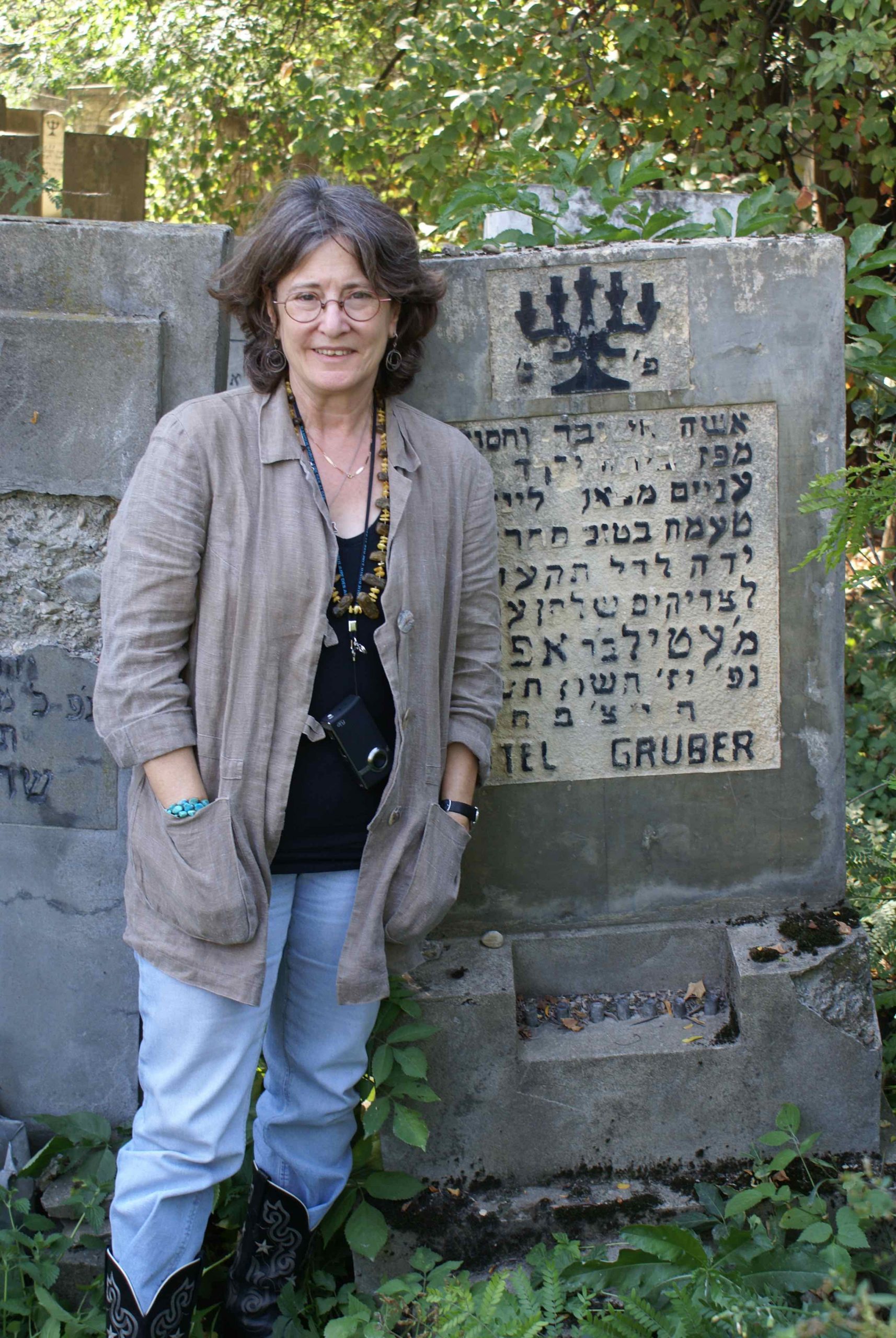
Located around four km outside of town, it includes some 7,000 graves, many of them with elaborately carved matzevot. (Several of the ancestors of JHE’s Ruth Ellen Gruber are buried there.)
According to the Encyclopedia of Jewish Communities in Romania, published in Israel in 1980, the synagogue was built in the early 1880s (though some information from the Romanian Jewish community has given the date as 1879) and was linked to the Austro-Hungarian Emperor Franz Josef — Radauti (Radautz) is in Bucovina, the easternmost province of the Austro-Hungarian Empire. The Encyclopedia notes controversy over its architecture.
During the visit of the Emperor Franz Joseph I in Radautz in 1880, a delegation of Jews requested from him that they be given a proper plot of land to build a big synagogue due to the increased number of Jews in the town. The Emperor agreed and gave the Jewish community a large plot of land in the center of the town. Then a big argument broke out between the orthodox and more progressive Jews. The orthodox demanded that the synagogue be built in the more traditional mode of synagogues. The progressive demanded that the synagogue be a more modernistic one in the style of the great synagogue of Czernowitz, with a cathedral type round dome. Due to this argument the building of the synagogue was postponed for several years. At the end a compromise was reached and the synagogue was built in the style of the great synagogue of Czernowitz, but with one big difference, instead of a round dome, two twin towers were built. The stage where the Torah is read was located in the center of the synagogue. The women’s section was on the western gallery.
Radauti Jewish cemetery web site
Read an article by Ruth Ellen Gruber about visiting the Jewish cemetery
5 comments on “Romania: Rădăuți Mayor plans to clean up the Jewish cemetery and wants to integrate the cemetery and synagogue in local heritage routes”
Touching to see Ruth with her ancestor. Mine are probably there too. Thank you for this news.
Julia Pascal
Sounds great! Visit will not likely be in the cards for reasons of health. Any possibility that the stones could be digitized and made available for viewing? Or even better, an index of names as far as they can be determined. My grandparents would be buried their and possibly my ggrandparents and others as well.
Please follow the link to the Radauti Jewish cemetery web site that we provided. It includes a list of names of people buried there.
I am seeking information on access to the Jewish cemetery in Radautz, where my great grandmother Perl Postelnik is buried.
I visited in Radautz in 2018 but had some difficulty getting access to the cemetery which was kept locked, and was dependant on a local friend who could translate for me, as I only speak English.
i will be returning to Radautz 5 -7 October, with my sister, and as we will have not so much time on this visit, I am wondering if you may be able to help with contacting the caretaker to arrange access?
with good wishes,
Yanai Postelnik
Great news, amazing initiative…looking forward to visit