

The Belgrade Jewish community has been carrying out extensive preservation, restoration, and improvement work at its Jewish cemeteries including the restoration of the main cemetery chapel.
Work has been going on in both the large Sephardic cemetery as well as in the smaller Ashkenazic cemetery across the street.

The “successful restoration” of the cemetery chapel was “one of the most significant achievements,” the community said in a LinkedIn post.
The project included demanding conservation works on the exterior of the building, including the restoration of the façade and arched windows, as well as the renovation of the staircase and roof through specialized cleaning and restoration techniques. These interventions preserved the original appearance of the chapel while preventing further deterioration of this important historical structure.
Other work, it said, included “grass cutting and removal of vegetation across approximately 3,000 square meters surrounding graves and burial sites, pruning and removal of damaged branches, as well as the removal of dry and deformed trees. Additional efforts included the collection, cleaning, and proper disposal of plant waste, significantly improving both the appearance and safety of the cemetery grounds.”

The pathways through the Sephardic cemetery also were renovated. This work, it said, entailed
surveying and preparation of the terrain, removal of existing cobblestone and asphalt surfaces, stabilization of the foundation layer, leveling of drainage structures, preparation and compaction of the base layer, installation of geotextile material, application of crushed aggregate, construction of a new asphalt surface, installation of concrete curbs, and improvement of the rainwater drainage system.
The Sephardic cemetery, dating from the late 19th century, includes a rich collection of grave markers in various styles, ranging from simple steles to ornate family tombs.
Many bear laminated photos of the deceased, and there is also a gravestone marking the burial of sacred books.
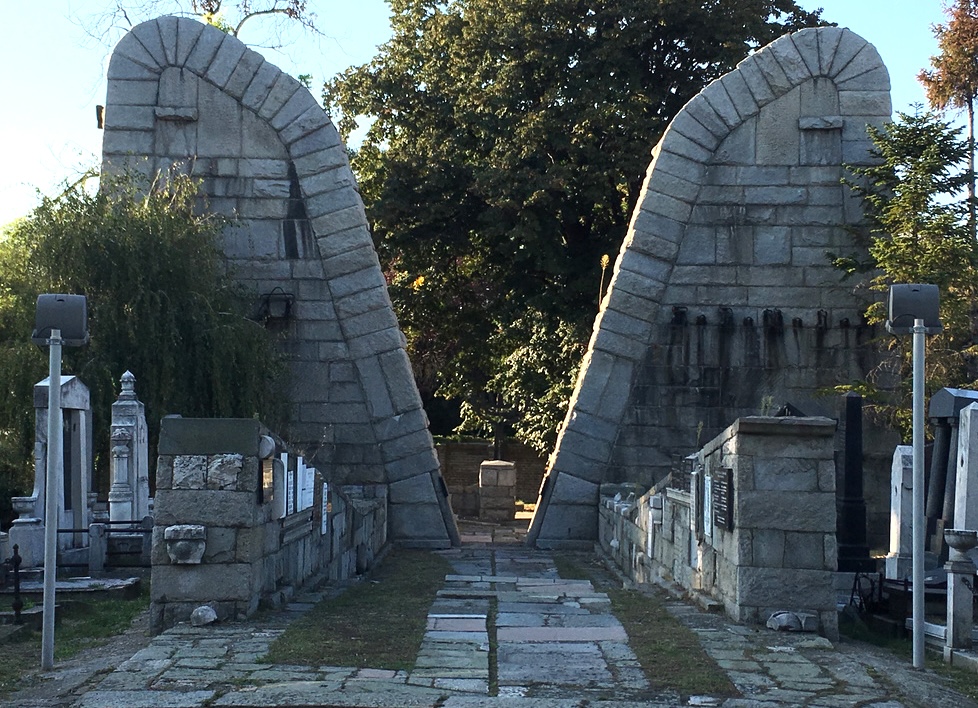
It is also noted for the large monument to Balkan Wars and World War I fighters, as well as the large Holocaust memorial — “Monument to Jewish Victims of Fascism and Fallen Fighters” — designed by Bogdan Bogdanović (1922-2010), an architect and urbanist who served as mayor of Belgrade from 1982-1986. The monument, built of stone — including rubble from building destroyed during the war — resembles two spread wings flanking a sculptural menorah.
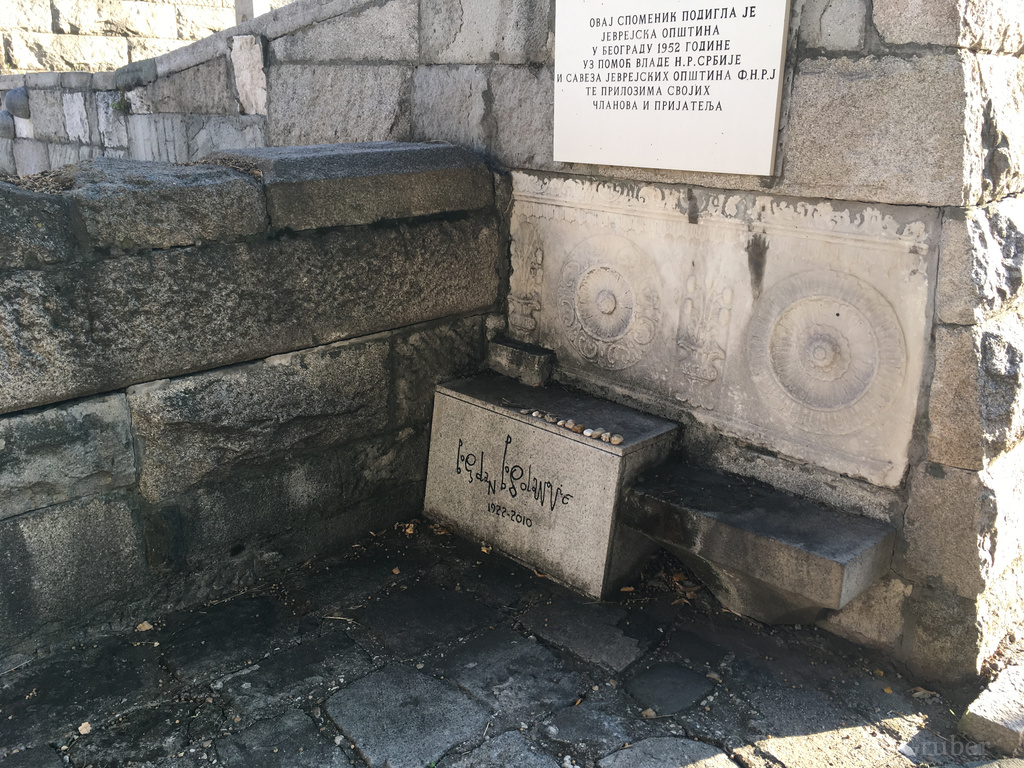
The monument, commissioned by the Jewish community in 1952, was Bogdanović’s first major commission and first attempt at memorial architecture — he went on to design more than score of imposing “commemorative memorial complexes across Yugoslavia honoring WWII Partisan victories and Axis atrocities.”
Though not Jewish, Bogdanović received permission from the Jewish community to be buried in the Jewish cemetery, and his grave and that of his wife are located at the base of his Holocaust memorial there.
Read about the Holocaust Monument in the Belgrade Jewish cemetery