
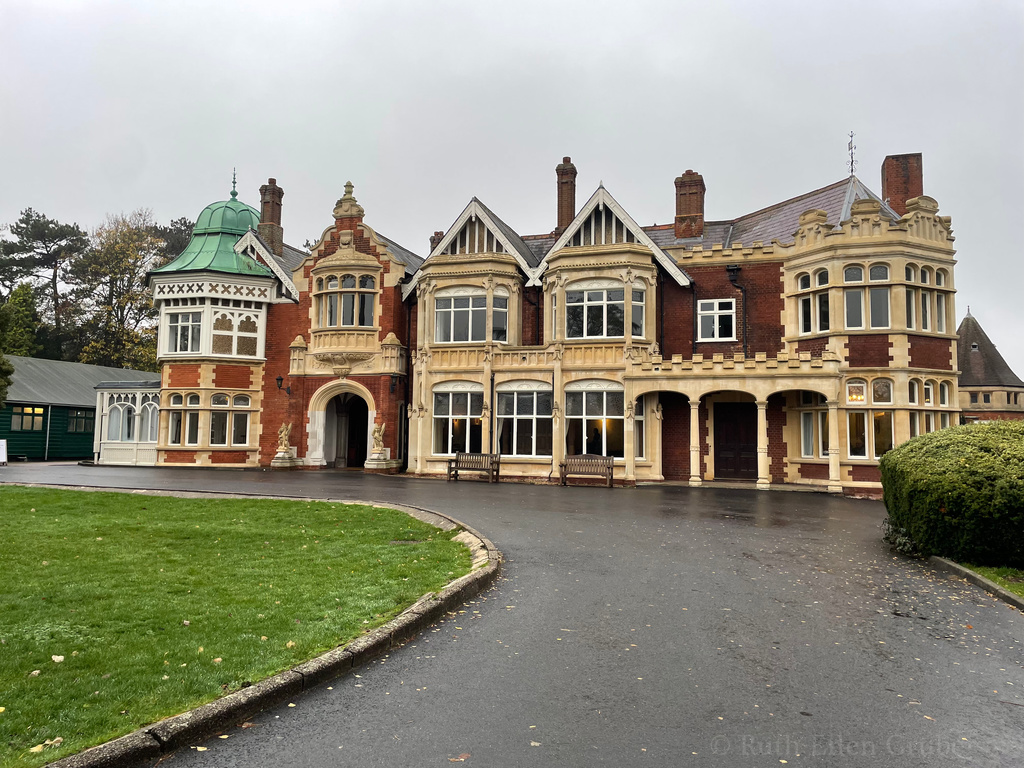
Bletchley Park, a sprawling estate north of London, was the site of the World War II top-secret complex where an extraordinary group of people labored night and day to break the Nazi Enigma codes and other encryptions. Their work was immortalized in — among other places — the films “Enigma” and “The Imitation Game.”
Today Bletchley Park is a historic site and museum, opened in 1994, with exhibits about the codebreakers’ work — and also about the Leons, the upper class Jewish family who before World War II owned the mansion at the center of the property. JHE’s Ruth Ellen Gruber visited recently and explored the park’s Jewish history as well as that of the Code-breakers.
Bletchley Park was what is being known now as a Jewish Country House. This generally refers to “palaces, villas and country houses with Jewish stories [that] illuminate the transformative impact of Jewish emancipation on modern European politics, society and culture.”
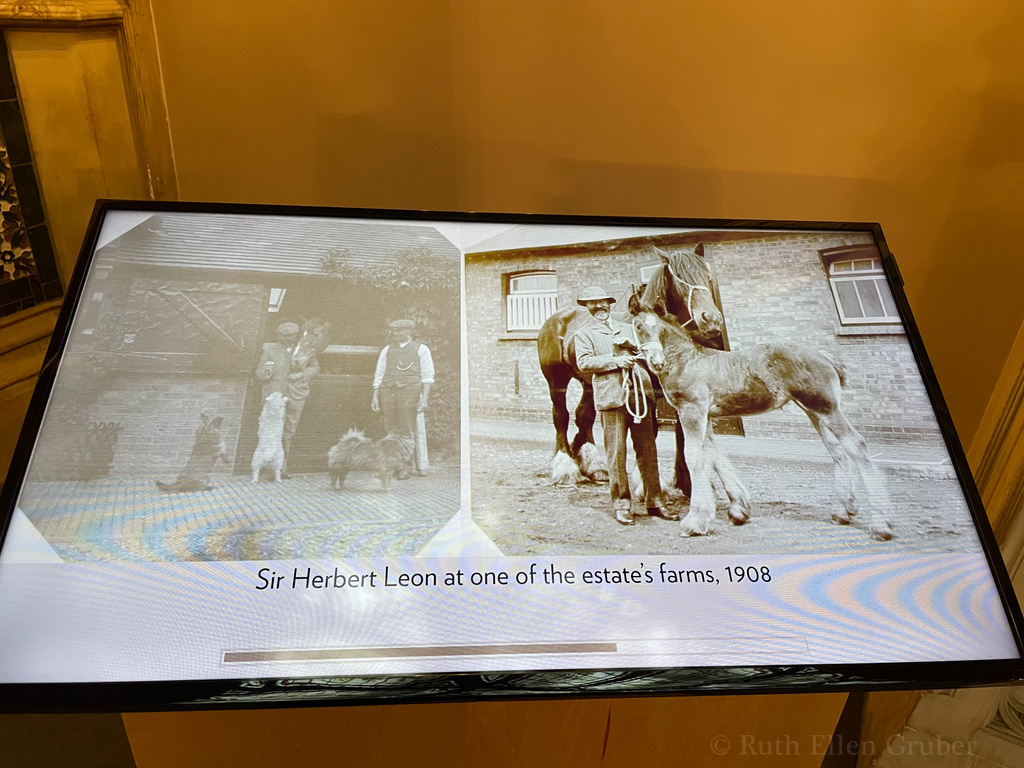
The estate was purchased in 1883 by the prominent Jewish financier, politician, and local philanthropist Sir Herbert Samuel Leon (1850-1926) as a country retreat for his family. Leon remodeled and expanded what had been a more simple country house into the opulent mansion that exists today — recognized as a Grade II listed building since 1990. (The Historic England listing provides a detailed architectural description.)

Leon — who served as a Member of Parliament and High Sheriff of Buckinghamshire, and was created a baronet in 1911 — put his stamp on the renovation work and on the family presence by embedding his initials in the decoration above the entrance to the mansion, which stands picturesquely near the shore of a small lake.
Leon and his wife Fanny had four young children (including two from his first wife, who had died shortly after giving birth to her second child).
Panels and screens throughout the mansion provide information about the family and their life in Bletchley Park, with photographs of family activities, parties, social life, and sports events.
After Leon died in 1926, Fanny Leon lived there until her death in 1937; then their children decided to sell the estate for development. Much of the land was sold off, and the mansion and remainder of the property were purchased in 1938 as the wartime base for the hush-hush Government Code and Cypher School. At Bletchley, the mathematician Alan Turing invented a machine, called the Bombe, that enabled Nazi cyphers to be decoded. Thousands of people, mostly women, worked there, but the mission was so secret that it wasn’t until the mid-1970s that information about began to be declassified.
Today, the pre-fab wooden huts and other WW2-era buildings where the codebreakers lived and worked house the exhibits that detail the life of the staffers and the intricacy of how they managed to break the Nazi cyphers.
During the war, the mansion was served as the facility’s head office and leisure building. Some of its opulently decorated rooms have been restored to how they looked before the war, when it was the Leon family’s country home. Click HERE to see a detailed description.


3 comments on “UK: Bletchley Park, the site of the top secret World War II operation to decrypt the Nazi Enigma cyphers, was once what is known as a Jewish Country House — take a look”
Hi Ruth, I wrote a catalogue essay for Canadian artist, Nina Levitt’s show entitled Thin Air, followed by the essays in: And She Was; Installations Inspired by Women in WWII. This exceptional exhibition the recounted military intelligence of Vera Atkins and Hannah Senesh.
The architecture is, let’s say, eccentric. The facade seems to invoke a city street with various different two-story homes, rather than a unified design. Any info about the architect who designed it?
Hello,
Yes, it’s certainly eccentric but typically Victorian. FYI the archway with clock, stables and garages behind the mansion were designed by Edward Swinfen Harris in a picturesque vernacular/Domestic Revival style. The remaining structure(s) were the result of several building projects over the years, and not the design work of a single architect. If you’d like more info, please DM me. In 2023, I carried out extensive research in various English archives for an undergrad architectural history honours thesis on “Jewish Bletchley.”