
Though thousands of Jewish heritage sites — synagogues, cemeteries, mikvaot, former ghetto areas, etc — still stand, in one form or another, many, many Jewish places have been razed, forgotten or erased from memory. Many synagogue buildings have been transformed out of recognition.
That’s what it is always heartening to see plaques and memorials placed as a means of remembering not just the lost or destroyed or otherwise vanished physical sites, but what they signified: living Jewish communities in all their complexity.
The past week has seen two such dedications, in widely separated parts of Europe: Bosnia-Herzegovina and the Italian island of Sardinia.
On Sept. 22, a piazza in Alghero, Sardinia was renamed “Plaça de la Juharia” — recalling the fact that that part of the city formed the Jewish quarter, prior to the expulsion of Jews in 1492. Taking part in the inauguration were Alghero’s mayor as well as the Israeli ambassador to Italy. The dedication of the piazza kicked of a weeklong series of events sponsored by the city and local foundations, with input from the Union of Italian Jewish Communities and the Medieval archaeology department of the University of Sassari. Called “La Settimana della Juharia“, or Juharia Week, it leads up to the European Day of Jewish Culture on Sept. 29 and includes various cultural events as well as a conference on the Jews in Alghero.
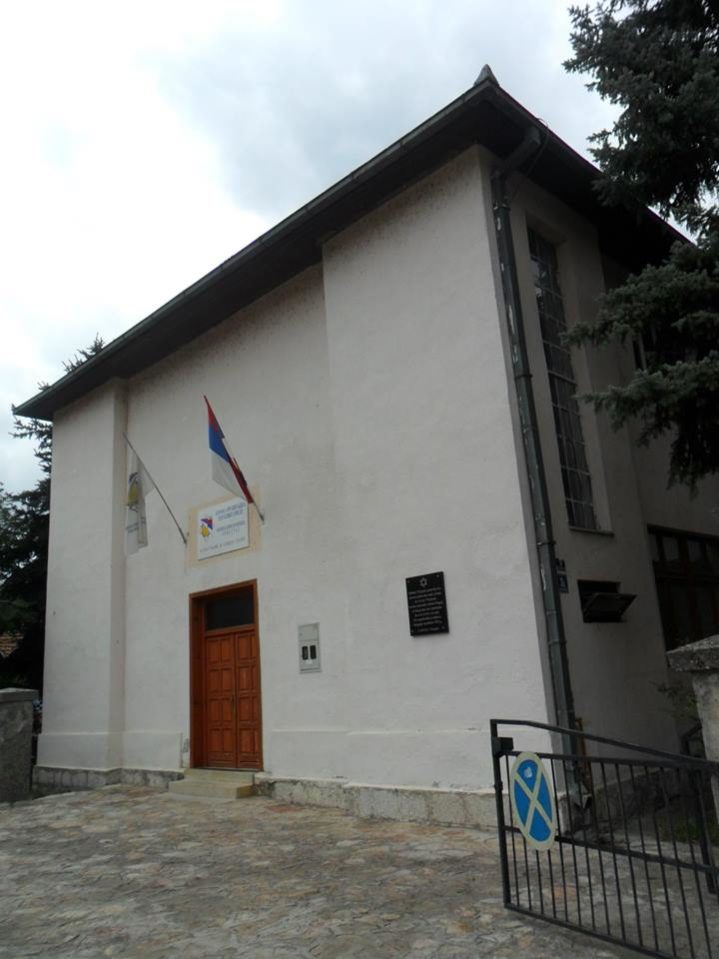
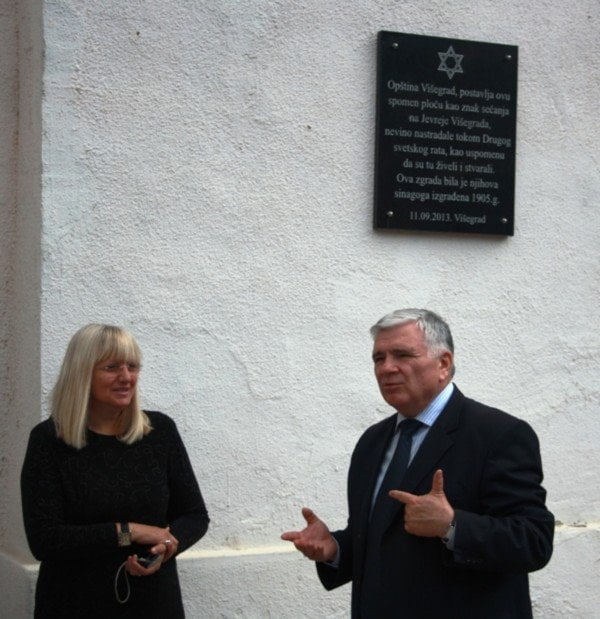
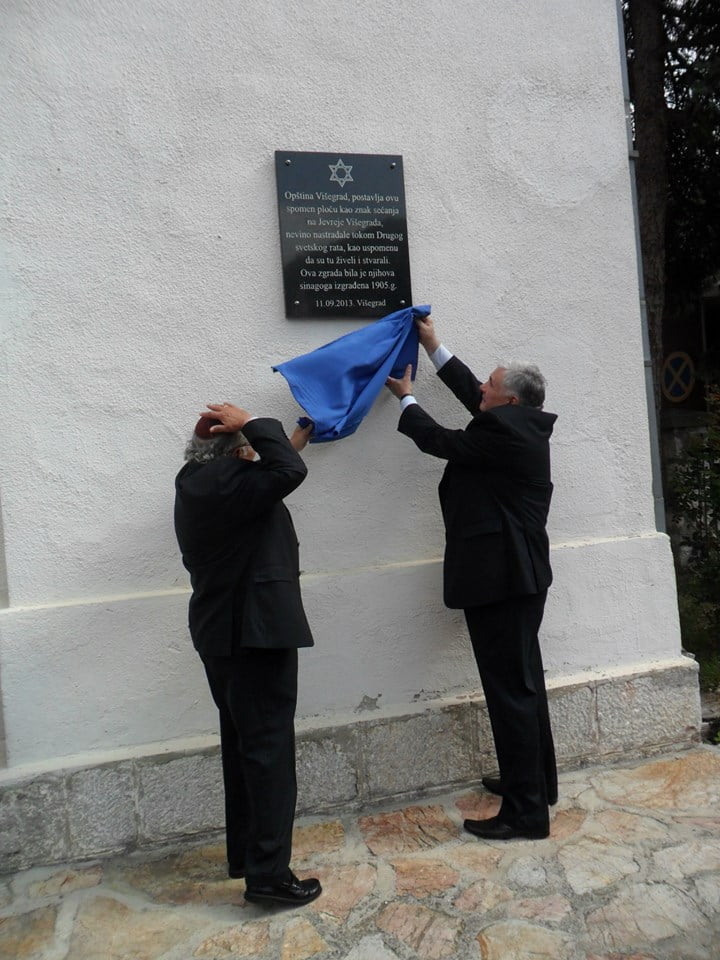
In Bosnia, meanwhile, a memorial plaque was placed of the site of the synagogue in Visegrad, at a ceremony on Sept. 23. Some 200 Jewish families lived in the town before World War II; today only one Jew lives there today, an elderly woman named Bukica Romano.
Prime mover behind the initiative to place the plaque was Jasna Ciric, the president of the tiny Jewish community in Nis, Serbia, a vigorous activist for Jewish heritage preservation and commemoration in the former Yugoslavia, who has campaigned for it for more than two years.
The synagogue was built in 1905. Originally it had a plain facade and two towers, but it bears little resemblance today to the original building. Writes the avaz.ba web site:
The synagogue in Visegrad was one of the most beautiful in Bosnia and Herzegovina before the Second World War. [During WW2], the temple was looted, devastated and partially destroyed. Initially it served as a food warehouse, and later was converted into a stable for horses. After this war, the synagogue was turned into a tailor shop, then [used by] the city archives, the Red Cross, and today serves the municipal veterans organizations.
3 comments on “Commemorations of lost Jewish places…in Sardinia and Bosnia-Herzegovina”
Jewish cemeteries are the last traces about life of Jews in many places in Europe.
I just organize visit of Holocaust suvivors to region Slavonia- in Croatia where many Jewish communities existed and now is no more Jews there,
no sinagogues or other buildings and only few artefact in local museums about Jews,
and cemetery you can hardly find and these in Vukovar look like place from “horor” films.
I’m in Alghero and the Piazza commemorating the Jewish presence here is a disgrace. There is only a plague amidst a barren open space with graffiti. In a town that is proud of its historical heritage and preservation of its churches and religious statues, it is completely disheartening to come to this area where Jews thrived and lost.
I congratulate the effort of Jews who work
To show the world that we are here
And remember our heritage We mourn
For our losses but we keep forging on
Together With the help of the almighty
We will continue our mission to make the world a better place