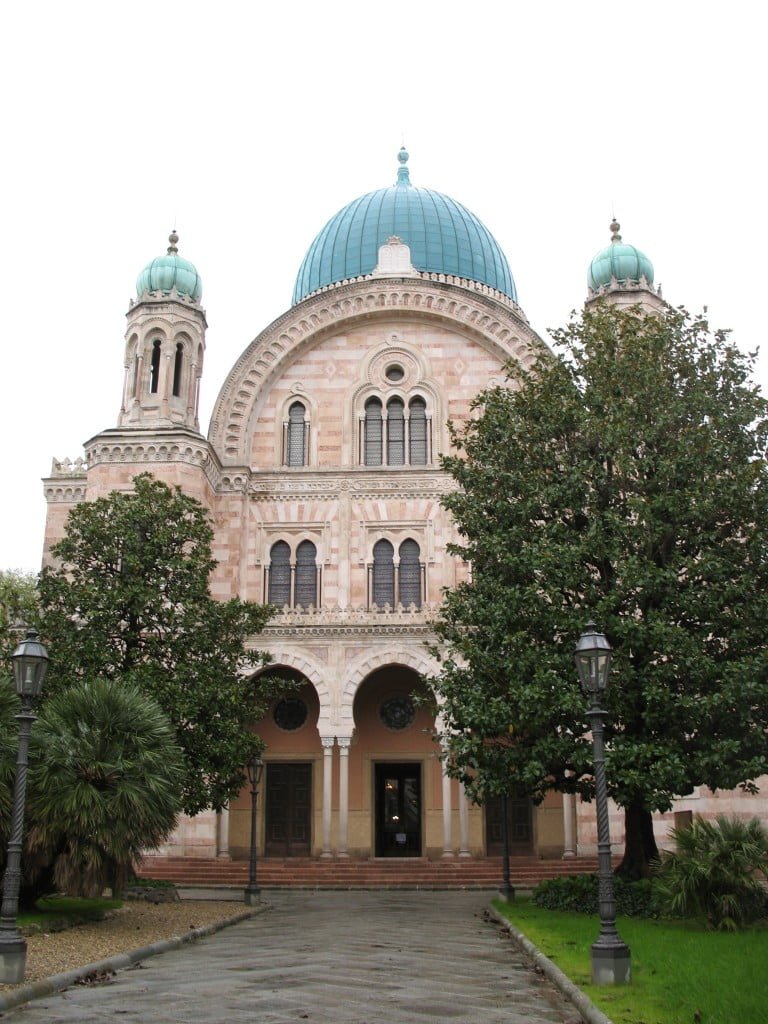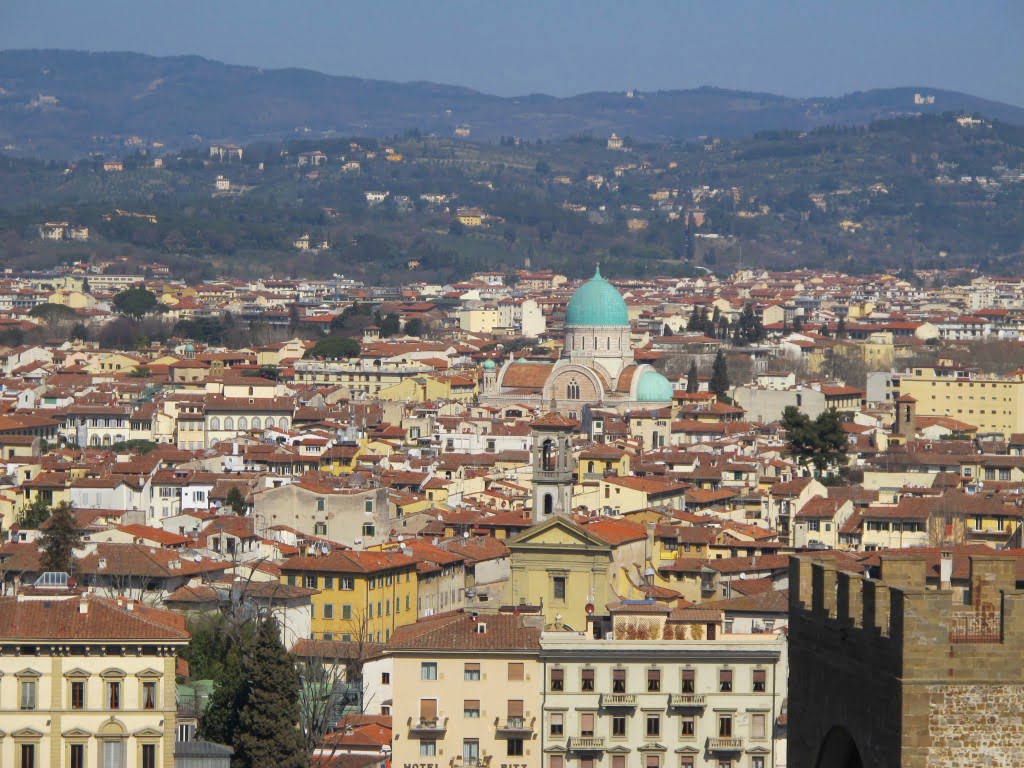
The magnificent Tempio Maggiore, or Great Synagogue in Florence was inaugurated 130 years ago today — on Oct. 24, 1882. Designed by architects Marco Treves, Mariano Falcini, and Vincenzo Micheli, it is lavishly decorated in Moorish-Byzantine style and features a huge front archway over the entrance and an immense, cooper-clad dome that is a city landmark — the biggest dome after that of the Duomo.
See a 360 degree panoramic image of the Synagogue, plus other images
Besides serving today’s Jewish community, the Synagogue complex also houses a Jewish museum. Both are regularly open to visitors.
See a slide show about the history and construction of the Synagogue (captions in Italian)
From the informative article on Beit Hatfutstot web site:
The synagogue is an example of the new monumental building that expressed the change in the way of life and thinking of European Jews during the Emancipation. After the French Revolution (1789), Western and Central European Jews were gradually granted civil rights; they were allowed to travel freely without special permits, and many new financial and social prospects were open to them. The Jews looked for ways to express these changes: the hundreds of synagogues built throughout Europe during the 19th century are impressive evidence of this desire. The builders of these synagogues were not longer restricted as to location and height, and had no fear sounds of worshipers at prayer would anger the non-Jewish inhabitants or government. Majestic buildings erected in the city centers testified to the Jews’ efforts to be accepted as equal citizens in the society around them and to become part of its culture. It was a display of power by an affluent and liberated community. First in Germany and later in the rest of Europe, outstanding architects vied with others for the chance to design synagogues, and there was much debate about the choice of style. Motifs from the past and a mixture of styles predominated at that time in European architecture. The most prevalent trends were neo-Gothic-Romanesque and the “Oriental”. Those who championed the Oriental influence, which was noted for its horseshoe arches, believed that this style was a true representation of the Jewish people and its Eastern origins.