
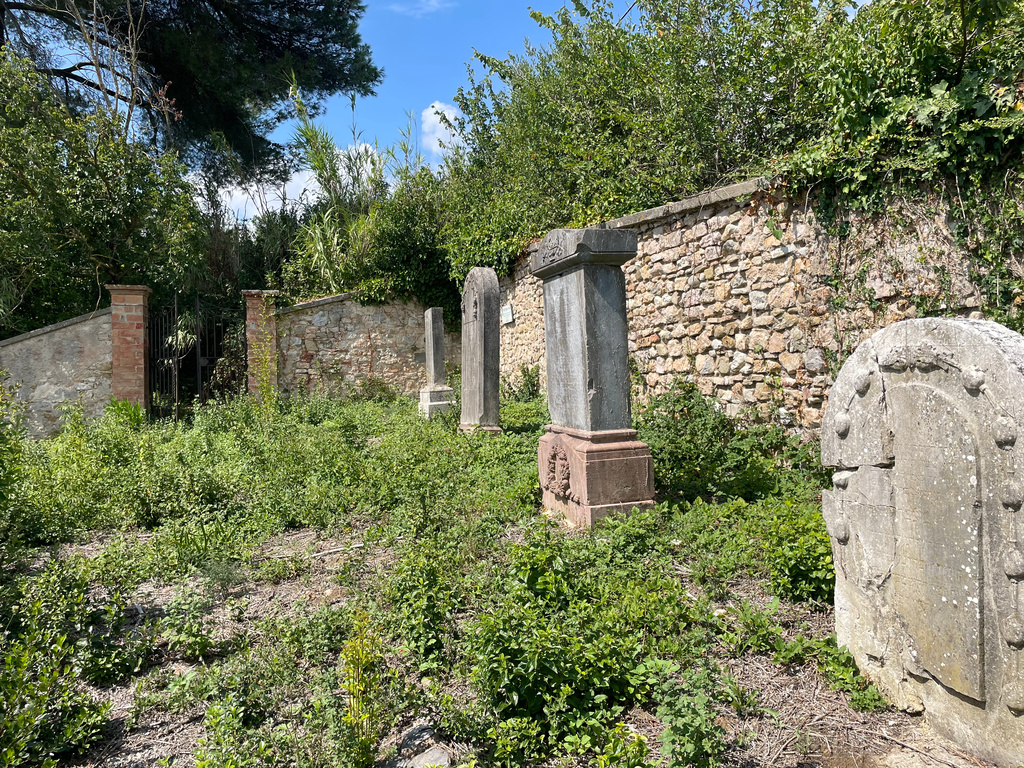
Back in February, we posted about what can happen if a beautifully cleaned and restored cemetery does not receive regular maintenance. The example was the tiny Old Jewish Cemetery in Perugia, capital of the Umbria region of central Italy.

The cemetery, which has only five standing intact gravestones, had been thoroughly cleaned and restored by the Rotary Club in 2005, with further work by the city in 2017 that left the cemetery in excellent condition — Rome’s chief rabbi and other officials inspected the site.
Thanks to the restoration, the matzevot were documented and studied; in the media the cemetery was regarded as an important local historical site, and a series of guided educational visits to the cemetery for school children was programmed.
But there was little or no follow up maintenance over the years, and in February we found the cemetery totally overgrown, unmarked, locked, difficult to access, and to all intents and purposes forgotten.

Thanks to the local branch of the Italy-Israel Association, which contacted the municipality after seeing our post, city workers did clean up the cemetery and cut back vegetation this past spring.
On a new visit this week, we found the site in much better condition than it had been.
The cemetery remains unmarked, but the path leading to it from the main road has been cleared, the gravestones are clean, and most of the rampant growth was cut back.
It seems like a some adult trees were also cut down.
Already, however, new vegetation has sprung up and will clearly soon be a problem if not dealt with on a regular basis…
That’s the nature of nature, of course.
The question is how to deal with it — a question that, as our posts from many other places have demonstrated, is widespread across Europe and elsewhere.

Perugia had a flourishing Jewish community in the middle ages, but the community ceased to exist in the 16th century due to the expulsion of Jews from the Papal States.
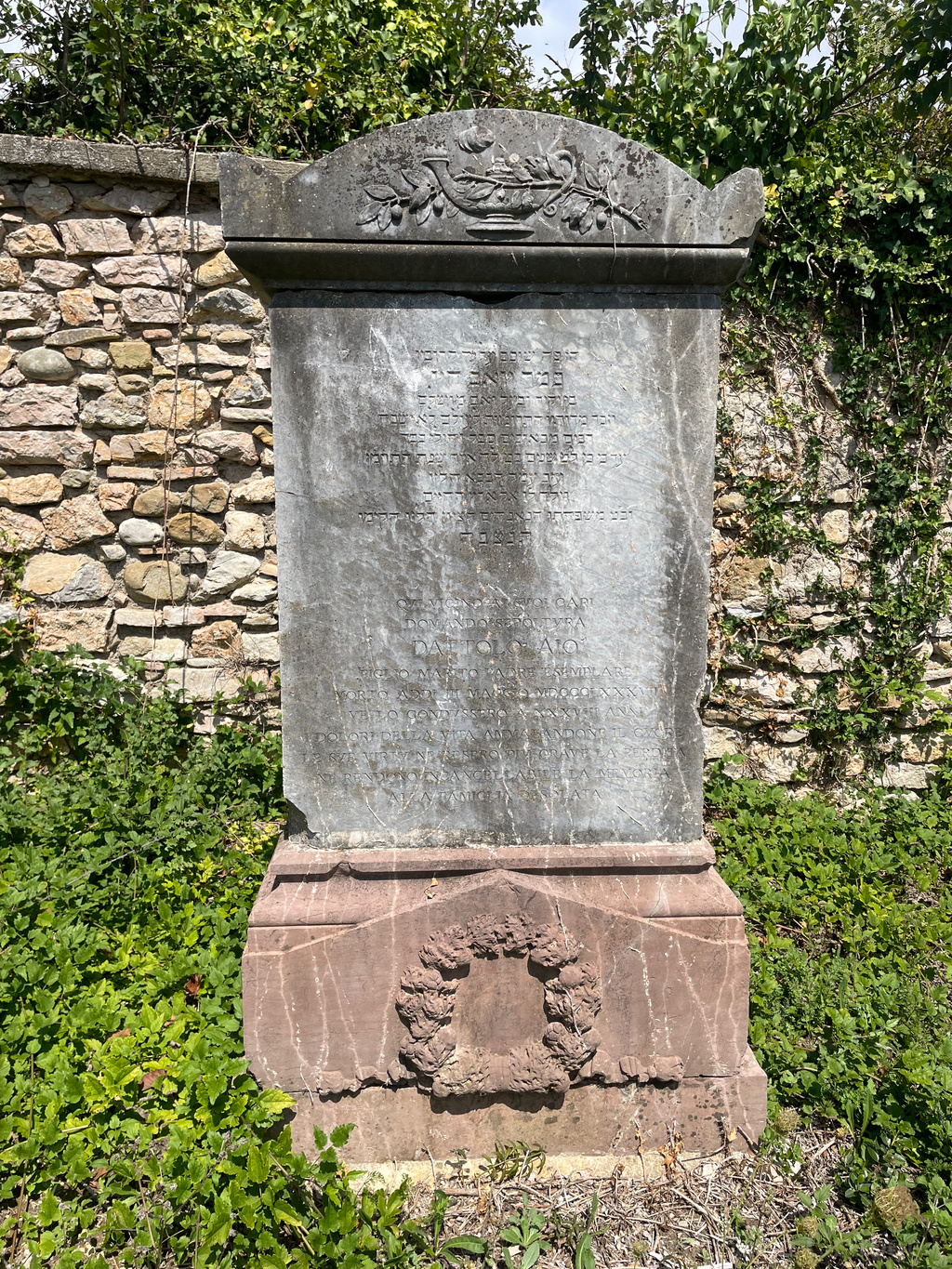
Jews only began returning in the mid 19th century, and the community never amounted to more than 200 members. Today, only a handful of Jews live in Perugia, and there is no formal Jewish community structure. Since the closure of the old cemetery, more than a century ago, local Jews have been buried in a small section of the main municipal cemetery, which opened in 1849.
One solution might be to find volunteers who can work with the city and the Italy-Israel Association to keep the vegetation cut back before it again overwhelms the site.
But this type of involvement is not easy to organize — we hope that in this, and in other cases, it can be.
See our post from February, with link to a 2022 webinar about the cemetery
3 comments on “Italy update: Perugia’s tiny Old Jewish Cemetery was cleaned up — but the eternal question of maintenance to combat vegetation remains….”
Eine Lösung könnte sein ohne Chemikalien und Abbrennen durch das Weiden von Schafen und Ziegen, wie es z. B. In der Bukowina in nicht umzäunten Arealen der Fall ist. In unseren Alpen werden große Areale durch die Tätigkeit der Tiere frei von der Verbuschung gehalten und sind die schonenste Art der Pflege. Alfred Margul-Sperber schreibt in seinem Gedicht Judenfriedhof: „Eine Ziege weidet deines Ahnen Grab, und ihr Bart im Winde flattert auf und ab…“
Thanks for the article, I will visit the site in October:)
Please post what you find and see. I’ll be visiting at the end of December.