
NOTE: This is the recovered link to a post that was originally posted on February 6 and later was lost in our outage.
Since then, we have heard from the Italy-Israel Association in Perugia that they contacted the Perugia municipality and were assured that the cemetery will be cleaned up within the month of April.
Still, we find it important to repost, as the problems it deals with regarding disused Jewish cemeteries are widespread — even when there is goodwill and willingness to confront them.

We and others have stressed that simply cleaning and/or restoring a Jewish cemetery is not a simple solution — it is essential that arrangements for regular maintenance must be made, otherwise the site will soon revert into its overgrown, neglected state.
JHE’s Ruth Ellen Gruber bore witness to this, with a recent visit to the old Jewish cemetery of Perugia, Italy, long out of use. The cemetery was beautifully restored and cleaned up 20 years ago by the Rotary Club, and clean up and restoration work also was carried out by the Perugia municipality in 2017 — but today the site is totally overgrown again, unmarked, locked, difficult to access, and to all intents and purposes forgotten.
She writes:
Perugia, the capital of Italy’s Umbria region, had a flourishing Jewish community in the middle ages, but the community ceased to exist in the 16th century due to the expulsion of Jews from the Papal States. Jews only began returning in the mid 19th century, and the community never amounted to more than 200 members. Today, a handful of Jews live in Perugia, but there is no formal Jewish community structure. Since the closure of the old cemetery, more than a century ago, local Jews have been buried in a small section of the main municipal cemetery, which opened in 1849.
The original, old Jewish cemetery is located on via S. Girolamo, a road through rolling countryside that leads into Perugia. The cemetery is not marked or designated with any signage, but the site is shown on google maps, and a friend and I used google maps and google street view photos to find it.
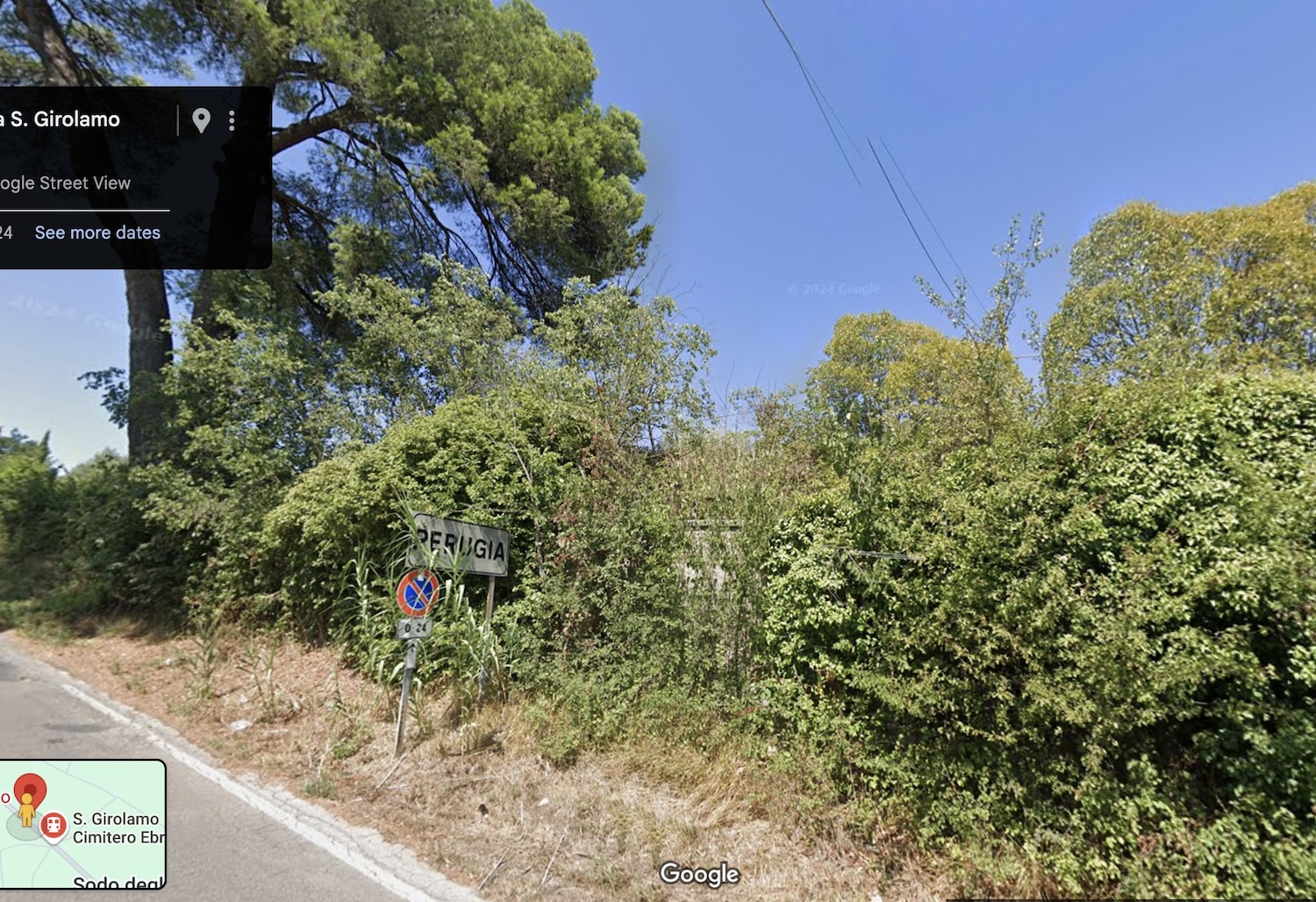
A huge pine tree stands near the spot, and the cemetery wall along the road can just be seen — with difficulty — through the vegetation that almost complete covers it.
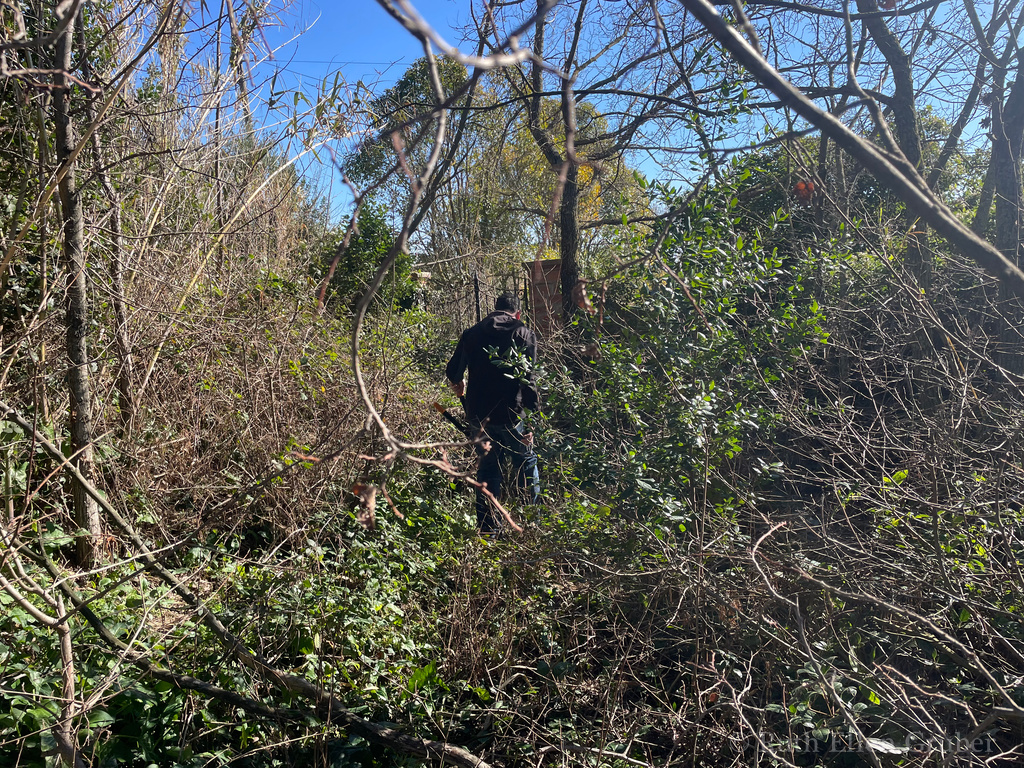
The restoration work in 2005 and 2017 had apparently placed some sort of steps leading up from the street, but we did not see any, nor any clear way to reach the cemetery that way, so we went from the other side, through an olive grove and then a thickly overgrown patch of brush, brambles, young trees, and fallen branches. Fortunately, we had brought heavy duty clippers.
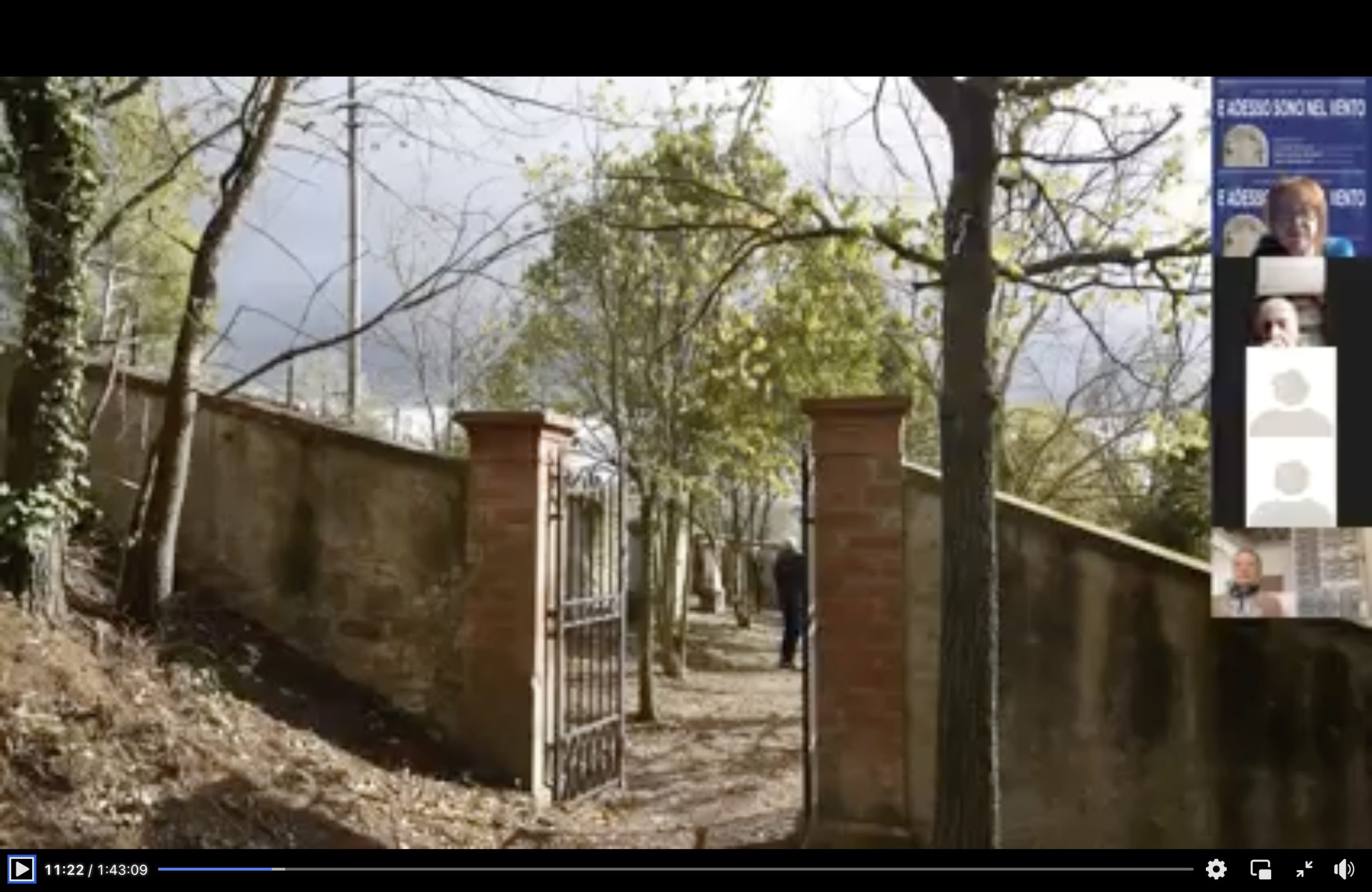
A Zoom event organized by the local branch of the Italy-Israel Association in January 2022 — which I watched later, after our visit — showed photos of the restoration work (it was not clear from the discussion whether the photos had been taken after the work carried out in 2005 or in 2017).
You can see in the photo the tiny space, enclosed by a sturdy stone wall, with about five matzevot visible. All are from the late 19th century, though much earlier, pre-expulsion burials may exist.
In 2017, the Italy-Israel Association, in cooperation with the municipality, even programmed a series of guided educational visits to the cemetery for school children.

A speaker at the 2022 Zoom event acknowledged that the condition of the cemetery had again become overgrown and said that the municipality planned more clean-up work — but this has clearly not happened.
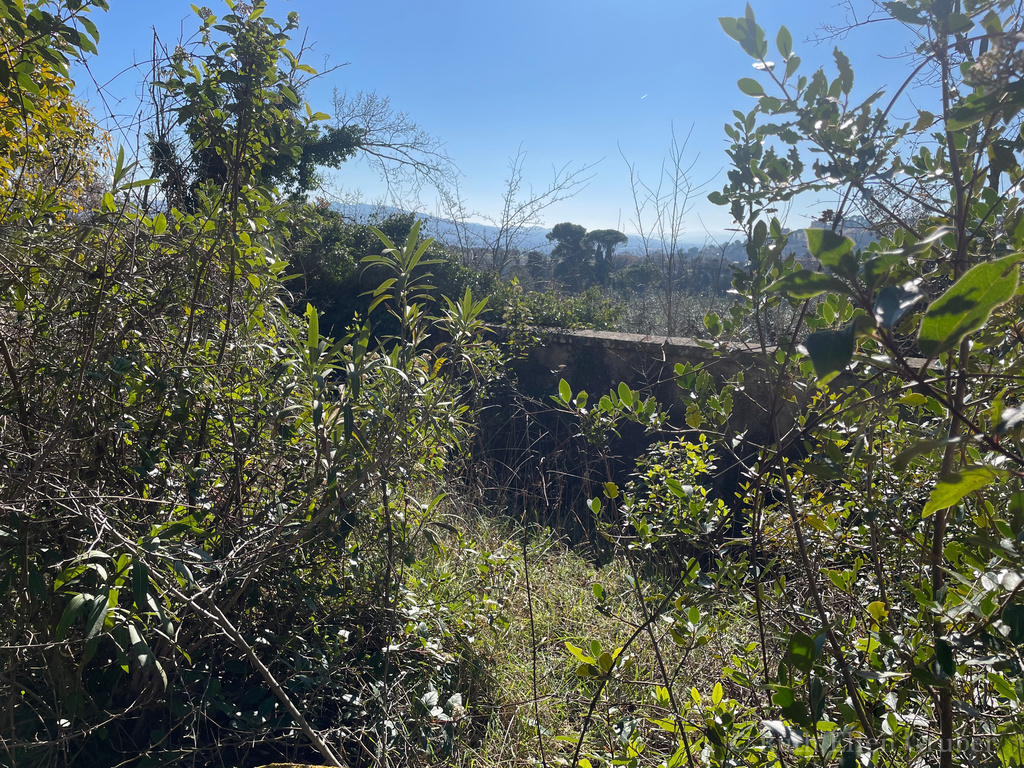
This is the scene today, three years later, looking through the iron gate — which is locked with a chain and padlock. One or two gravestones are just barely visible near the wall.

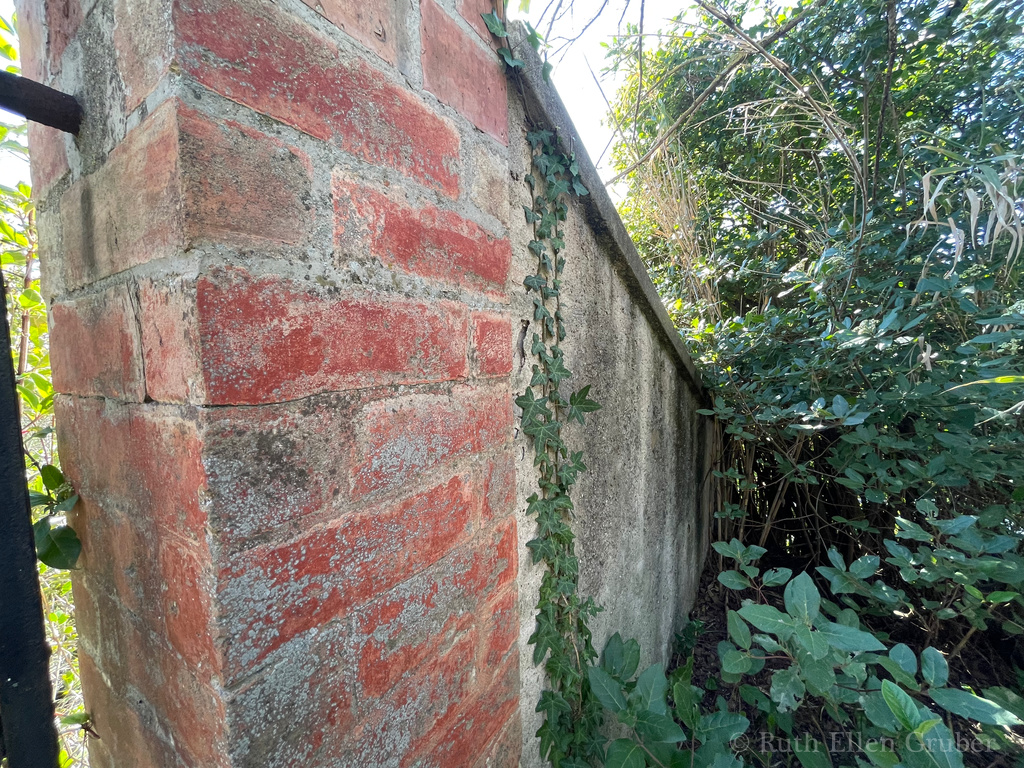
There is no outside signage, or even a plaque denoting the place as a Jewish cemetery.
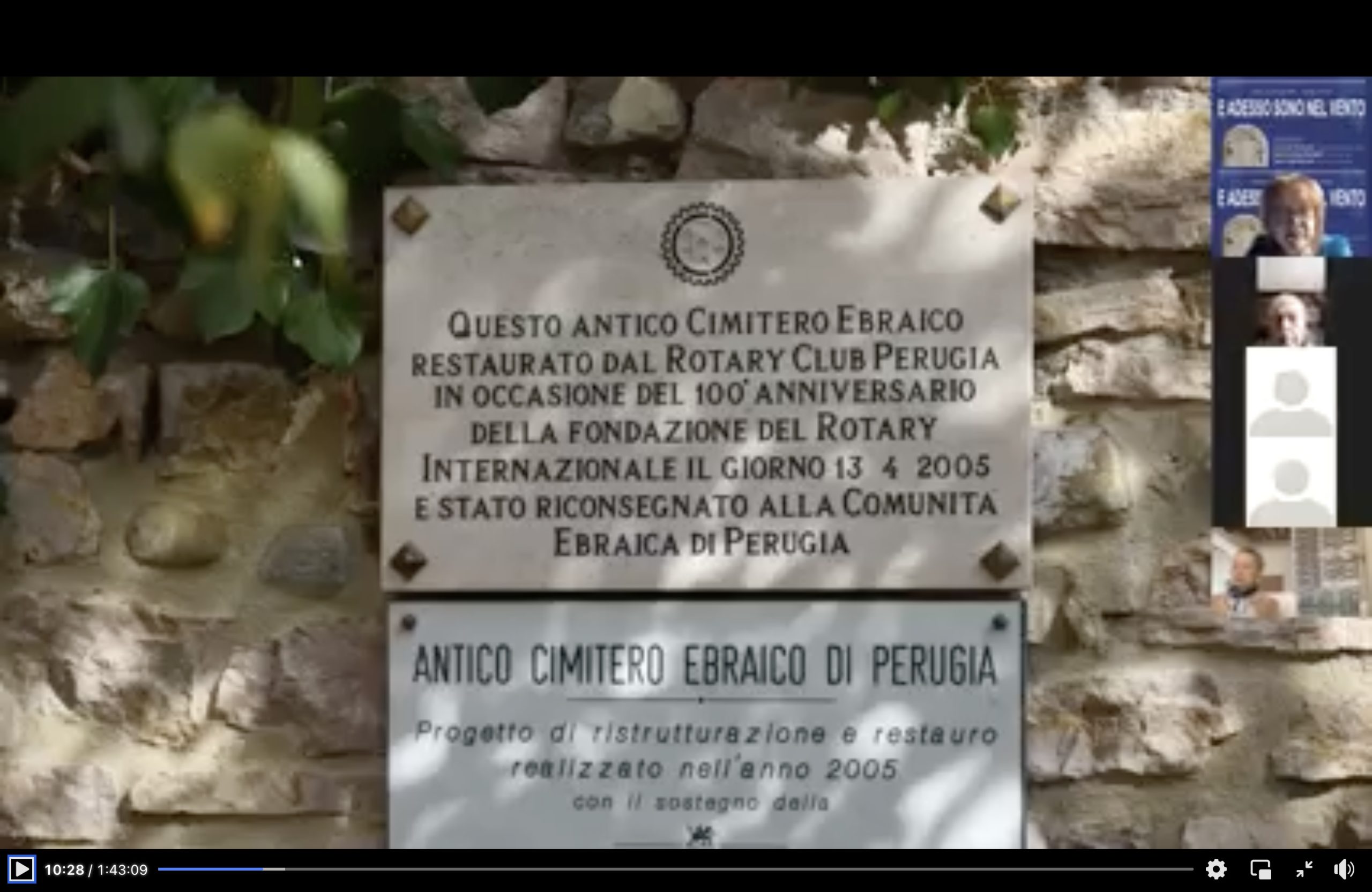
Although, in 2005 — as this screen grab from the Zoom event shows — the Rotary Club placed a plaque inside the cemetery. We were not able to see this from outside.
Given the locked gate, we were not able to enter the cemetery, though my friend tried to get a better overview by climbing up.
It would have been difficult to penetrate the vegetation to get a closer look at the matzevot.

Thanks to the earlier restoration, however, the matzevot have been documented and studied.
The 2022 Zoom presentation included a talk by Prof. Mauro Perani, one of Italy’s foremost experts in Jewish cemetery epigraphy, which focused in particular on two of the surviving gravestones, both from the late 19th century, whose epitaphs he has transcribed and translated.
The Zoom also includes as presentation by an Israeli fashion designer, Ilana Efrati, who has a house near Perugia and who staged an art installation in the cemetery in 2017, at which she hung some of her textiles, colored with natural pigments, among the graves.
You can watch the entire Zoom presentation here below.
It is in Italian, but you can see the pictures of the cemetery after restoration at around the 10:15 mark. Mauro Perani’s discussion of the gravestones starts at around the 26:54 mark.
1 comment on “Italy: The overgrown old Jewish cemetery of Perugia — what happens when there’s no follow-up or maintenance after a Jewish cemetery is beautifully restored”
Maria Luciana Buseghin
The Italy-Israel Association of Perugia knows the story well and has followed it in the person of Gustavo Reichenbach since the Rotary took care of the restoration and published a booklet by the Maiottis on the history of the Cemetery. In 2017 the Association convinced the Municipality to have the site cleaned up, after which Rav Riccardo di Segni and the president of the Roman Community Ruth Dureghello came from Rome to inspect the site and then meet representatives of the Municipality.
Subsequently, a meeting was held with councilor Cicchi also for the Jewish part of the monumental cemetery and a new meeting was organized with Dureghello in Perugia in 2023, during which it emerged that anything must be done after finding the agreement made between the Jewish Community of Rome and the Municipality of Perugia, presumably at the beginning of the 20th century and above all with a written agreement between the current administration and the Jewish Community of Rome, of which the association is only an ambassador.
Our vice-president Gabriela Sabatini continued to follow the issue and the Municipality committed to including the old Jewish cemetery among those for which the municipal administration maintains but nothing has happened yet.
Unfortunately we have not yet been able to have a meeting with the new administration which we hope will happen soon.
Maria Luciana Buseghin presidente e Gabriela Sabatini vicepresidente dell’Associazione Italia – ISRAELE DI PERUGIA