

Conservation work supported by the EU and UN has been completed on the majestic ruins of the 18th century Great Synagogue of Rashkov (Raşcov), a town situated on the left bank of the Dniester River that is currently part of the unrecognized Pridnestrovian Republic (Transnistria), which split from Moldova in 1990–92.
The synagogue and a local Raşcov church were among 10 heritage sites on both sides of the Dniester that in 2020 won a competition (involving online voting) to receive EU funding for preservation and restoration. The competition was organised by the EU Confidence Building Measure program (EU CBM) and implemented by U.N. Development Program (UNDP). The competition awarded the synagogue €48,000 for the process.
Watch a video produced by the UNDP Moldova where you can see images of the conserved synagogue, and also the church:
“The conservation works lasted for several months and follow the national and international standards of heritage preservation,” the UNDP said in an announcement October 7.
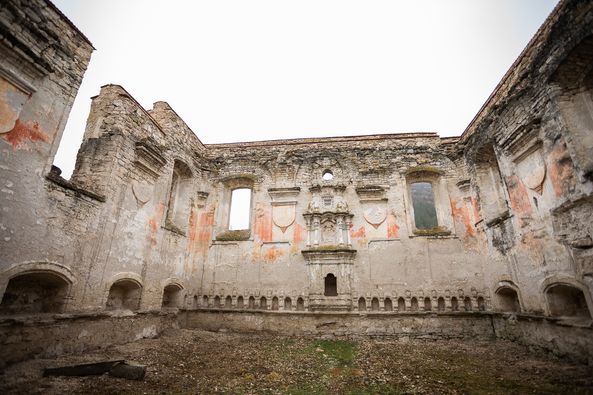
“No standard consolidation works are allowed on such historic buildings; interventions should be minimal, therefore we use a special diamond drilling at a certain humidity, as it is essential that these walls are reinforced,” Iurii Kriklivets, deputy director of the company that carried out the conservation work, said in the statement.
“We should preserve the existing historical heritage. We cannot change these walls and this plaster in order not to affect the building’s exterior and interior aspect,” he added.
The synagogue is presumed to have been built in 1749, during the rabbinical tenure of R. Yaakov Yosef, Center for Jewish Art scholars Vladimir Levin and Sergey R. Kravtsov wrote in a 2017 article for JHE about the history and architecture of the synagogue.

As we wrote in August 2021, the UNDP signed a cooperation agreement with Tkumat Rashkov (Rashkov Rebirth), a Foundation established in Israel in 2016 to restore the synagogue, in April 2021. Tkumat Rashkov signed a cooperation agreement with the Jewish Community of Moldova in July of that year.
The October 7 UNDP announcement did not detail exactly what conservation work took place.
The first stage of work began on August 4, 2021 — clean-up, removal of vegetation, and preservation of the walls: priority temporary measures aimed at safeguarding the building until full conservation and restoration work can get under way .
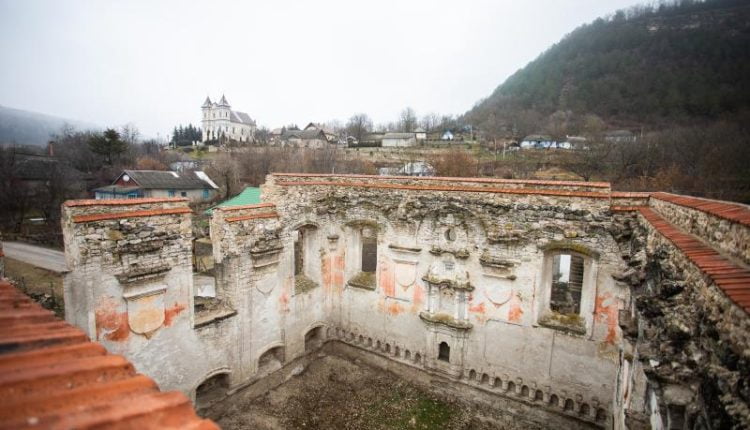
Further work, in 2022, was to include (and apparently did include) archaeological research as well as continuing conservation of the building and the restoration of the surviving stone elements of the Synagogue’s decoration.
Click here to see the UNDP announcement, with pictures
Click here to see more pictures, on the UNDP Moldova Facebook page
Click here to see our August 2021 post when the work started