

The Jewish Museum of Greece is currently closed as it undergoes wide-ranging renovation of its building and a revamping of its core exhibition. An update on the work says that reopening is planned for early 2027, in time for the museum’s 50th anniversary.
Key goals of the project, the museum says on its web site, are to upgrade the building, while preserving its historic character; protect and conserve the exhibits in appropriate facilities; attract schools and families through interactive exhibitions; [and] transform the Museum into a vibrant, open cultural space.”
“A major aspect of the project is a complete curatorial redesign of the permanent exhibition, wherein exhibits will be presented within a continuous historical timeline extending from the late 4th century BCE to the present day,” the update says.
This chronological narrative will illuminate the continuity and resilience of Jewish life in Greece, connect the Greek Jewish experience with the broader Greek, European, and Jewish history, and engage visitors of all ages in a cohesive historical journey. […] Exhibition texts and interpretive material are being entirely redeveloped, while upgraded digital infrastructure will support more immersive educational experiences for students and visitors alike.
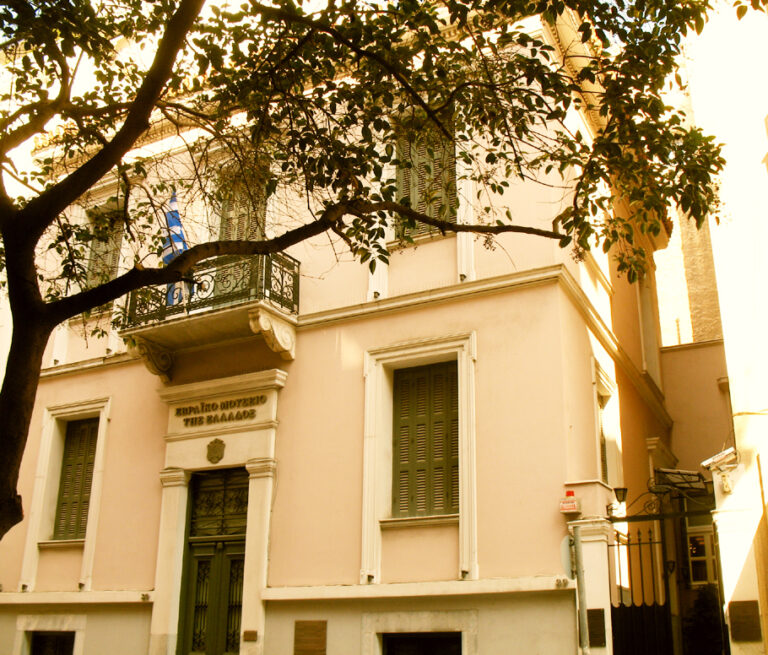 The museum is located in a 19th century building in the heart of Athens, whose outer walls were retained while its interior was totally rebuilt as a modern configuration around a central vertical shaft topped by a glass dome. The museum moved to these premises in 1998.
Renovation of the building includes “Painting and lighting works; general technical interventions; installation of new air-conditioning and environmental control systems; redesign of the basement storage areas; refurbishment of the museum shop; upgrading of office spaces; improvement of the entrance and security systems; renovation of the building façade; and upgrading of information and communication infrastructure.”
The museum was founded in 1977 and attracts around 12,000 visitors a year, about 20 percent of them Greek school pupils.