

We are pleased to share this Call for Papers for the International Conference “Intimate Memory, Institutional Memory: Reframing Holocaust Commemorations.” Deadline for submission May 31.

The Conference, to take place at Emanuel Ringelblum Jewish Historical Institute in Warsaw (ZIH), is devoted to the evolving practices of Holocaust remembrance across individual, community, and institutional contexts. It will examine the evolving relationship between individual, activist, and institutional forms of Holocaust remembrance and the broader social, political, and cultural forces that shape them.
It is organized by the ZIH, the German Historical Institute in Warsaw, and the Center for Jewish Art in Jerusalem with its partners in the Holocaust Memorial Monuments project from the University of Miami and International Survey of Jewish Monuments (ISJM).
Scholars from history, memory studies, anthropology, political science, Jewish studies, cultural studies, museum studies, digital humanities, and related disciplines, at all career stages, are invited to submit.
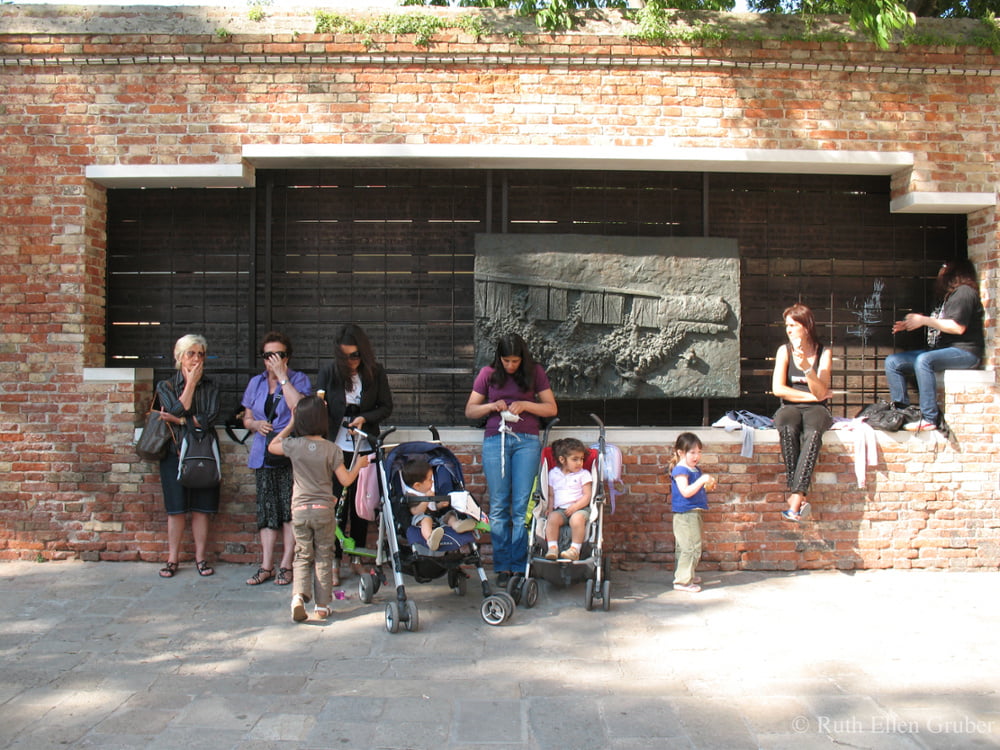
The Conference takes place in Warsaw, November 15-17, 2026.
Please submit an abstract of 300–400 words, and also include a short biographical note (up to 150 words) by May 31, 2026. Submit to: [email protected]
Individual paper proposals as well as panel proposals related to the conference themes are welcome. Scholars at all career stages, including early-career researchers and doctoral candidates, are encouraged to apply.
The organizers will provide accommodation and offer partial travel reimbursement for eligible participants (subject to available funding).
The conference will focus on the following topics (though the list is not exhaustive):
-
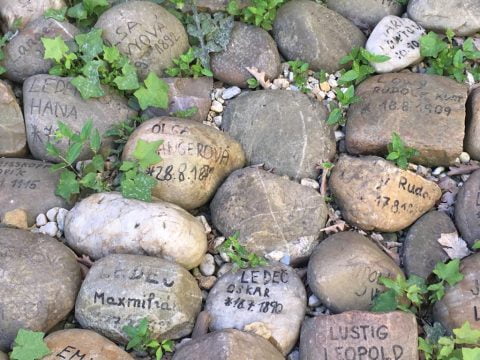
Names of Holocaust victims hand-written on stones at the memorial in Plzen, Czech Republic Individual and Family Commemorations

- individual and family forms of remembrance (personal archives, letters, photographs, documents, testimonies, rituals, objects, artistic or literary practices),
- practices of remembrance at sites of mass murder and in a transnational context,
- survivors’ testimonies and their evolving forms (written, oral, digital, intergenerational),
- post-memory practices among descendants
-
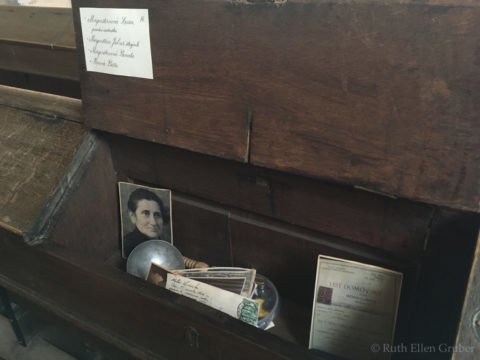
An exhibit/memorial in the former synagogue in Lostice , CZ, personalizes the Shoah by providing material and histories of the local victims Community and Grassroots Initiatives

- grassroots and community initiatives (local commemorative projects, museums, festivals, activism),
- relationships between local histories and national and transnational narratives of memory,
- State, Institutional, and Official Commemorations
- national museums Initiatives, monuments and memorial complexes
- educational programmes and government-mandated curricula
- state, institutional and political frameworks for Holocaust remembrance,
- legal, educational and museum approaches (memorial laws, restitution policies, regulations on public history)
- international organisations (e.g. IHRA) and transnational standards of commemoration
-

Home page of the Dutch Internactive Holocaust Memorial — which has information on individual victims Digital Transformations of Memory
- digital Holocaust memorial sites, digitisation of family archives and survivors’ collections
- digital transformations of memory (digital archives, social media, artificial intelligence, VR/AR),
- methodological and ethical issues in memory studies.
Scientific Committee
Haim Shaked (University of Miami)
Vladimir Levin (Hebrew University of Jerusalem)
Samuel D. Gruber (International Survey of Jewish Monuments)
Michał Trębacz (Emanuel Ringelblum Jewish Historical Institute)
Magdalena Saryusz-Wolska (German Historical Institute in Warsaw)
Click here for the full call, details, and submission details