
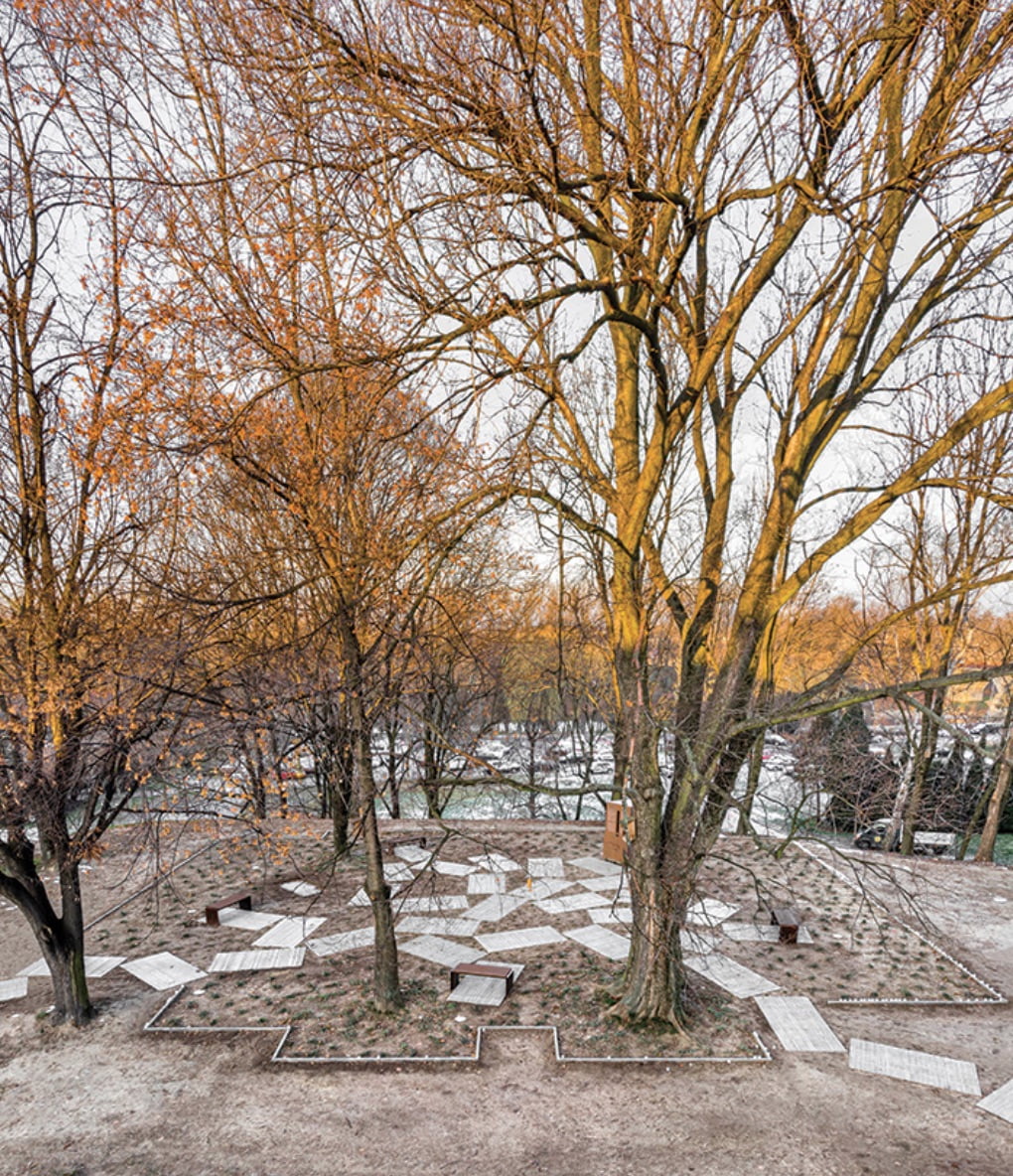
The new memorial park on the site of the destroyed Great Synagogue in Oświęcim — the town is southern Poland where the Nazis built the Auschwitz death camp — is one of the 40 architectural sites shortlisted for the prestigious European Union Prize for Contemporary Architecture/Mies van der Rohe Award.
The 40 sites on the shortlist are located in 18 countries and were chosen from a total of 532 works nominated for the prize, which recognizes buildings and other architectural sites completed in the preceding two years (this edition 2.5 years).
UPDATE: The five finalists were announced February 16, 2022, but alas, the memorial park was not among them.
The stated principal objectives of the award are:
to achieve a thorough understanding of the transformation of the built environment; to recognize and commend excellence and innovation in the field of architecture; and to draw attention to the important contribution of architects in the development of new ideas with the undeniable support of clients and the involvement of those who will become the inhabitants and users of these places.

The Great Synagogue Memorial Park was inaugurated with a concert and candlelit ceremony November 28, 2019 — 80 years after the Nazis occupiers burned it down on November 29, 1939. The site was long an empty lot, with in recent years signage describing the synagogue.
The park is a project of the Auschwitz Jewish Center (AJC), a prayer and educational center established in 2000 that includes a museum dedicated to the Jewish history of the town, which was known in Yiddish as Oshpitzin and whose population before the Holocaust was more than half Jewish.
The Park project was supported by the town of Oświęcim as well as institutional and private donors from Poland and elsewhere.
The park was designed by Bartosz Haduch and Łukasz Marjański, of NArchitekTURA, with cooperation from Magdalena Poprawska, Imaginga Studio.
The design includes the demarcated outline of the footprint of the destroyed synagogue, within it a path made out of stone slabs, and several benches.
Archaeological excavations in 2004 discovered candlesticks and other material from the synagogue, including the Eternal Light (Ner Tamid), which are now displayed in the Auschwitz Jewish Center’s Museum. The Memorial Park includes a replica of the candelabra as well as a triangular structure containing historic photographs of the synagogue.
In 2020, the park won first place in the best public space category of the Stanisław Witkiewicz awards, a prize presented every two years for the best modern architectural projects “conducive to the protection and shaping of the cultural landscape of Małopolska” region.
Read a description of the Memorial Park on the Prize web site
Read the press release about the Shortlist
Read a description of the site and its design by the architect