
This conference is a bit off our usual focus, but we think it will be of interest to our readers — so we’re pleased to share the Call for Papers.
Conference: “Art of the Holocaust until 1989: Beyond an East/West Divide”
June 8–10, 2022, Budapest
Deadline for submissions: March 1, 2022
The conference is organized by: Central European University (CEU) Jewish Studies Program, in cooperation with the Museum of Fine Arts – Central European Research Institute for Art History (KEMKI)

Representations of the Holocaust in visual arts have been the subject of numerous studies from the fields of art history and visual culture. But the question of representing the Holocaust before 1989 in the countries of the former Eastern Bloc remains underdeveloped.
This conference proposes to explore this area by focusing on artworks created during the Holocaust and in its aftermath, up until 1989. In geographical terms, it will address art created on both sides of the East/West divide.
Organizers are interested in the analysis of commissioned artworks, representing official memory politics of given states, as well as non-commissioned ones, created on the artists’ initiative.
The involvement of artists themselves represents another important issue, which raises questions such as: Who were the official commissions given to? What was the relationship between the anti-fascist movement and the memory of the Holocaust in the domain of fine arts? Is the pool of authors of commissioned and non-commissioned works the same, or is there only a partial overlap?
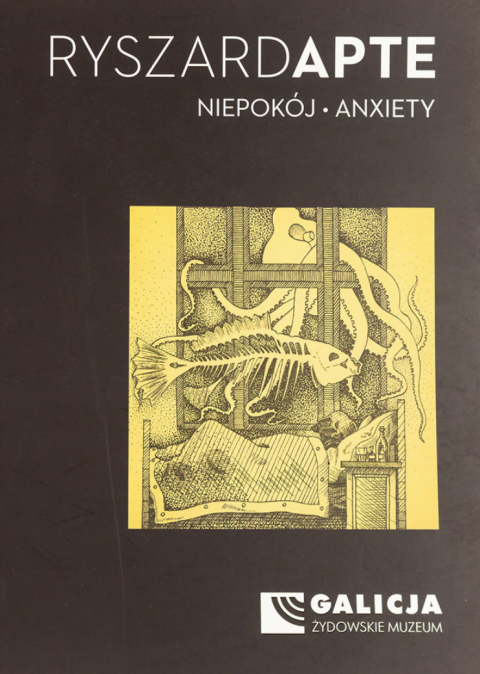
And who, besides the survivors, were the artists interested in creating artworks related to the genocide and where did their interest stem from? Another important aspect is the visibility of the experience of the non-Jewish victims, it particularly the Roma and Sinti.
Other questions include the issues of generations and different approaches, such as figuration, realism, or abstraction and conceptual art; the “geography of the Holocaust,” and the role of organisations (such as museums) and initiatives (such as different associations) connected to the former sites of the Holocaust; also the “afterlife” of produced artworks, highlighting the role of private, national or international collections as well as their history.
Also to be considered are the institutionalization of Holocaust memory, and what were the most important dates (trials, debates, etc.) for the development of the Holocaust memory in fine arts? And, too, the question of how the artistic production related to the Holocaust was entangled in global, historical processes, for example in contemporaneous anti-Semitism and the episodes of the Arab-Israeli conflict?
Organizers welcome case studies, as well as comparative analyses that relate to any of the above issues. In particular, they encourage presentations dealing with artistic or institutional practices that so far have received little scholarly attention, or have not been presented outside their national context.
Travel and accommodation costs for a limited number of early career researchers can be covered. If you would like to be considered, please indicate this in your application.
Please send the abstract (max. 300 words) of your proposed 20-minute presentation, together with a short biographical note (max. 150 words), by March 1, 2022 to [email protected].
Click for the full Call for Papers and further information about the Conference