
Plans for repair or renovation work are under way at two 19th century former synagogues in northern Croatia — those in Varaždin and Koprivnica. Both will be used as cultural centers and already host occasional concerts and exhibitions.
Koprivnica
UPDATE: The work was completed and the synagogue dedicated as a Culture Center in November 2019. Click here for article (in Croatian), photos and video.
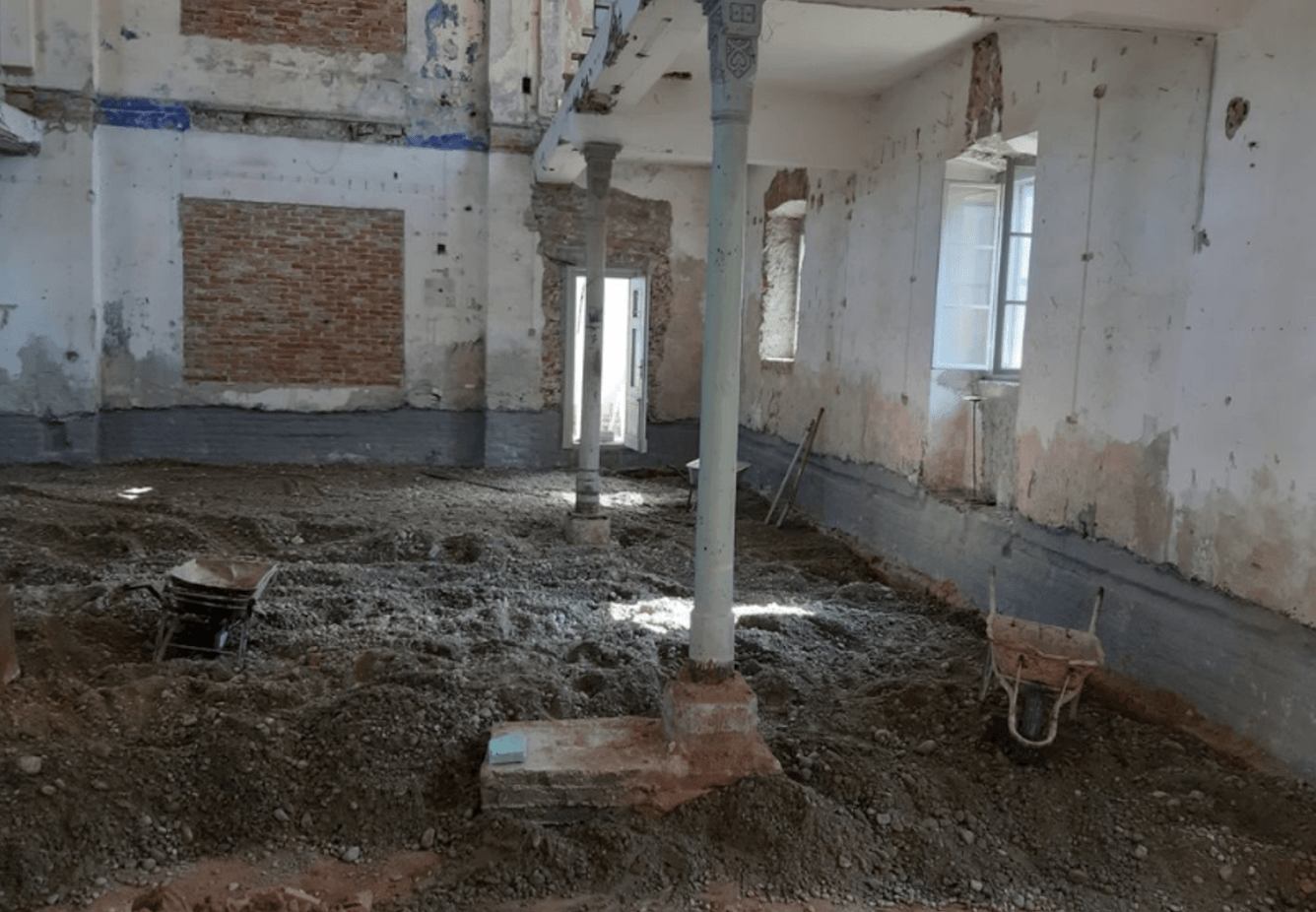
The Koprivnica municipality announced earlier this month that work has begun to install a new floor in the synagogue there, following approval from the Croatian Ministry of Culture of 100,000 kuna (approx €13,500) for the 275,363 kuna (€37,300) project. The city will cover the rest of the funding.
The synagogue, with a flat, tripartite facade, was built in the mid-1870s to a neo-Moorish design by architects Julius Deutsch and Slavko Lowy.

During World War II it was used as a prison and later as a warehouse and industrial site. In 1996 a plaque was put up to honor Holocaust victims. Today it is empty but also sometimes used for cultural events.
The City said rehabilitation of the ground floor of the building should be completed by the end of October. It includes removal of the old brick floor, waterproofing, and installing new wooden flooring. The aim, the City said, is to better enable it to be used for cultural events.
In an interview with local media, Mayor Michel Jaksic noted that exterior restoration work and other repairs to the synagogue had already been carried out. He said the city tried to maintain the building as best it could given the constraints of the local budget.
“This year we applied to the Ministry of Culture for reconstruction of the floor given that we program certain concerts and cultural events there,” he said.
See Center for Jewish Art documentation of the synagogue
Varaždin
In Varaždin, an ambitious project, partially funded by the Culture Ministry, is set to begin this autumn to reconstruct — as much as possible — the original facade of the former synagogue, while also converting the building as a whole into a cultural center. Restoration work is also to be carried out on the ceremonial hall of the Jewish cemetery.
Designed by the architects Valent Morandini and Ludwig Deutsch, the synagogue was built in 1861 and had a tripartite facade with an arched central section, two squat side towers topped by bulbous domes, and arched portals and windows.
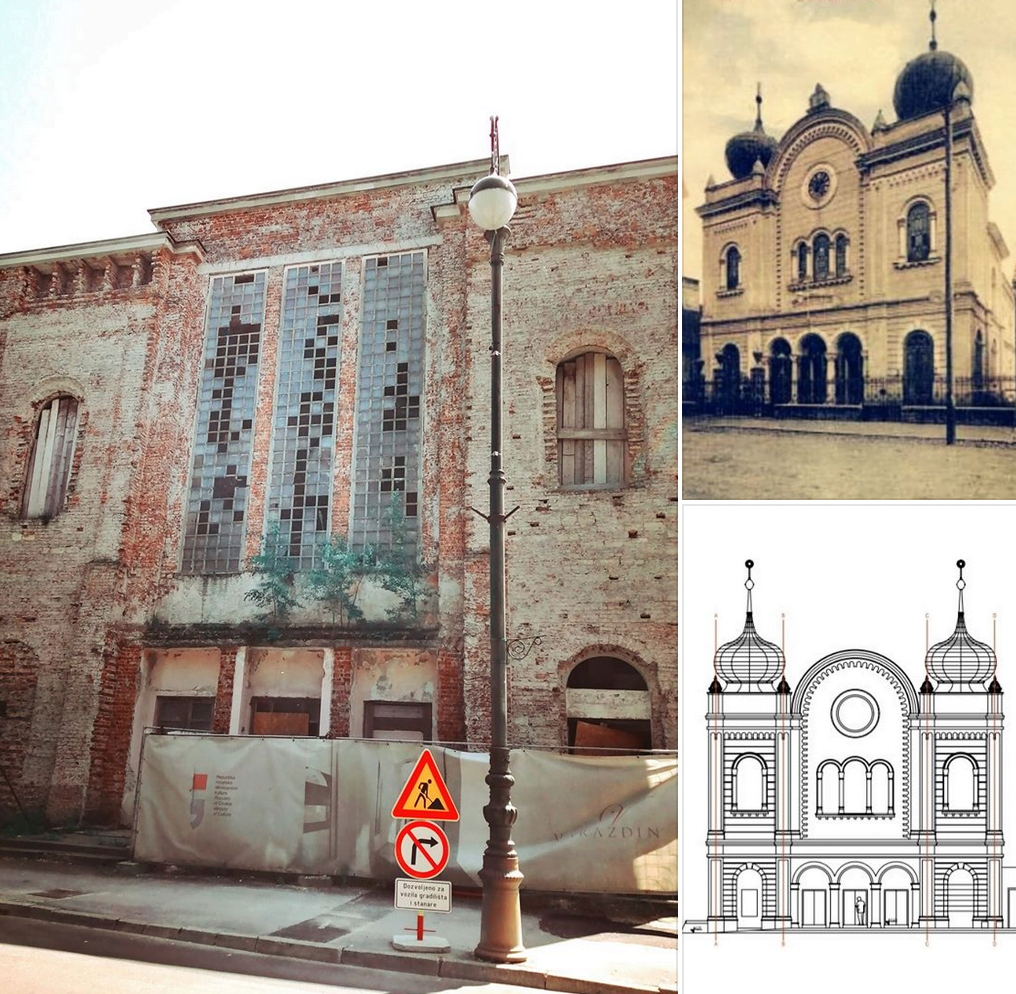
The facade was totally rebuilt after World War II in stark modernist style, with the central section featuring a large vertical window made of glass bricks; the building was long used as a cinema but has stood vacant for years. A project for the reconstruction of the facade was proposed already in the 2006.
Deputy Mayor Sandra Malenica announced in a Facebook post August 7 that there had been a public procurement for the project and that work would soon finally begin on a project already conceived 13 years ago. “Some things take time,” she wrote. She posted a montage of pictures showing the synagogue as it was originally and in its current state.
Local radio quoted Malenica as saying the work would take place in two phases, with the first the reconstruction of the facade.
She noted that the other three exterior sides of the building and the roof had been renovated a decade ago.
In the second stage of work, she said, the interior form of the building would be conserved, with the sanctuary transformed into an auditorium that could host concerts, discussions, and lectures for up to 300 people. She said she hoped to obtain EU funding for this in 2021.
The synagogue already hosts occasional cultural events, such as this exhibit in May about Jews and Varazdin.
Watch a video of a 2017 performance keyed to the facade of the synagogue:
Read the interview with Sandra Malenica