

For the past seven years, the Hillel Jewish Students Cultural Center in Minsk has carried out a youth volunteer project to recover, maintain, and restore Jewish cemeteries in Belarus. In this essay, Hillel Minsk director Alena Kuliounich describes the unique initiative, part of Hillel’s MEGA — Memory Education Generation Activity – project, implemented with the support of Genesis Philanthropy Group, Hillel International, Hillel CASE, Shalom Corps, and the US Commission for the Preservation of America’s Heritage Abroad.
In Minsk Hillel’s MEGA project, young volunteers bring lost Jewish cemeteries back to light
By Alena Kuliounich
October 23, 2022
During and after World War II, Jewish history and cultural objects in Belarus were destroyed; ancient Jewish cemeteries were ruined, and most headstones were used for various purposes, such as building material for houses or even for construction of roads or sometimes paths in the villages. Most cemeteries disappeared, or today remain hidden in the forests or fields.
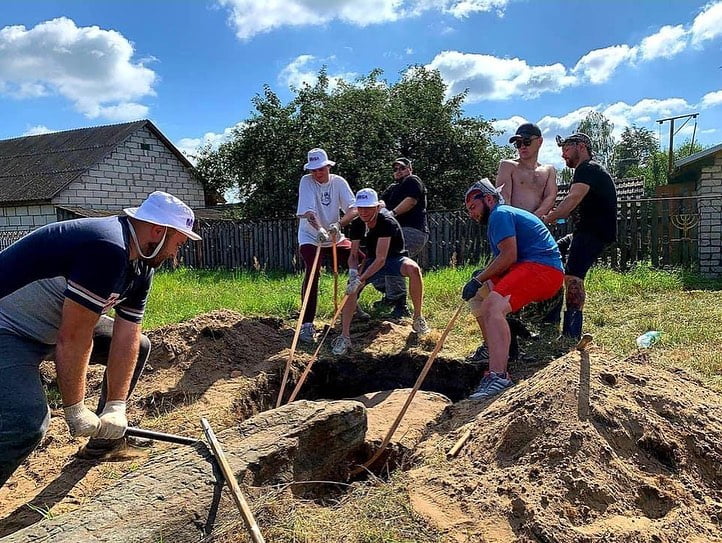
Descendants of Jews who used to live on the territory of Belarus often cannot find any evidence of their presence. They have no place to bring a memorial stone; they cannot find traces of their family even though they know for sure that their family roots are in Belarus – a country once rich in Jewish communities and where Yiddish was a second language.
Project MEGA – which stands for “Memory, Education, Generation, Action” – was born at the local Hillel in the Belarusian capital Minsk, in order to connect young Jews with the history of their community and to help restore Jewish cemeteries.
It is a special volunteering project that brings Jewish students together, introduces them to the Jewish culture and traditions, local Jewish communities, and sights of Belarus and suggests saving the past for the sake of future.
First, we find cemeteries, which may be completely buried under earth; places that can hardly even be recognized as cemeteries. We research what can be done to restore this cemetery; we make calculations, make a program and a route, find resources and lecturers. Then we announce a call for Jewish young leaders aged from 18 to 30 and invite them to take part in the project.
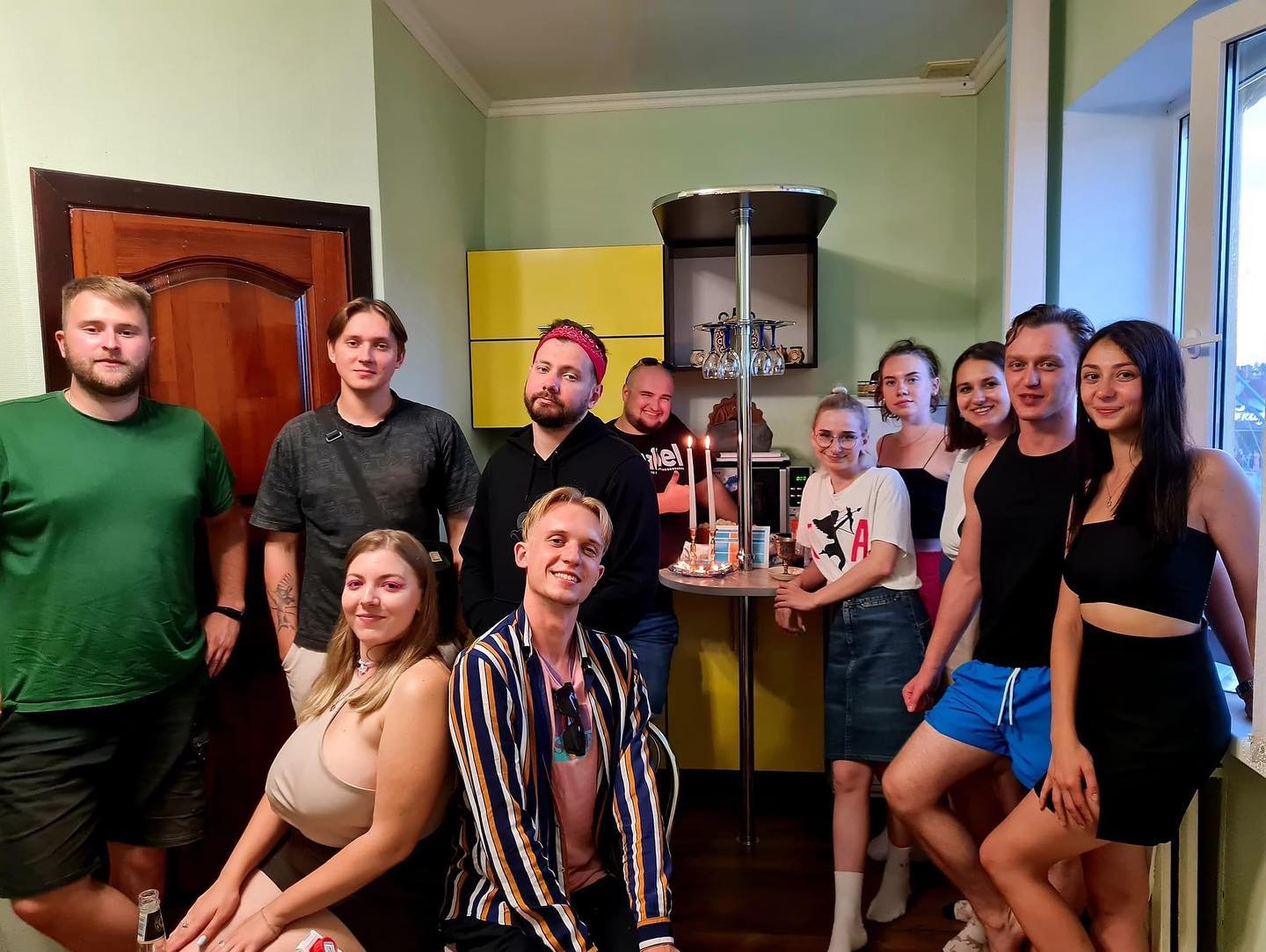
Indeed, MEGA is not just a project about cleaning headstones or looking after the cemeteries. It is a project about Jewish young people, who care about other Jewish people, who become friends. It’s about people who study the history of Jews from Belarus, who fall in love with our country, with Jewish history — and with each other.
We bring a group of young Jews together, introduce them to each other, to our Jewish history, teach them how to work at the cemetery, how to clean and read the headstones, how to make a map of the cemetery and mark on it the places of the headstones we find. We also study Jewish traditions and culture as a special option, we travel all over Belarus to cities with Jewish history; we visit synagogues, rabbis and Jewish communities, have Shabbat and Havdalah together, spend 8 days and 7 nights full of work, Jewish culture, talks, stories and songs.

We dig the ground; bring the headstones on the surface; read the names of the Jews we never met or knew. Our students make a forgotten and hidden place a Jewish cemetery, a place to know and remember. Then we read every stone and get to know each person who was buried at the cemetery, make photos of the headstones, translate them into Russian.
Our project has had vivid results: restored cemeteries in Dziatlovo, Shatsk, Zembin, Mir, Motol, Kopyl, Vishnevo, and about 1000 headstones saved and restored in Brest.
Every cemetery has its history and its MEGA story, here are just a few:
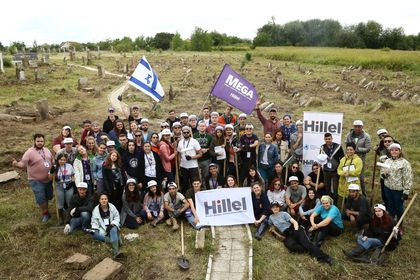 Mir is known for the Mir yeshiva. Its big cemetery took us two years to clean and restore. MEGA 2018 and 2019 resulted in 700 headstones raised and read. Some 100 Jewish students from Belarus, USA, Ukraine, Israel, Poland, Russia, Moldova, Georgia and Azerbaijan took part.
Vishnevo is known for Shimon Peres, who was born there. The Jewish cemetery in Vishnevo had actually become a forest, and even local people had no idea about the place where they used to pick berries and mushrooms. But thanks to MEGA and 30 young Jews, the names of 170 long gone people will not be forgotten – their tombstones were raised and read.
Motol was the birthplace of Chaim Weitzman. The MEGA project cleaned and painted the fence; cleaned, raised and read 32 headstones, and removed the grass and bushes.
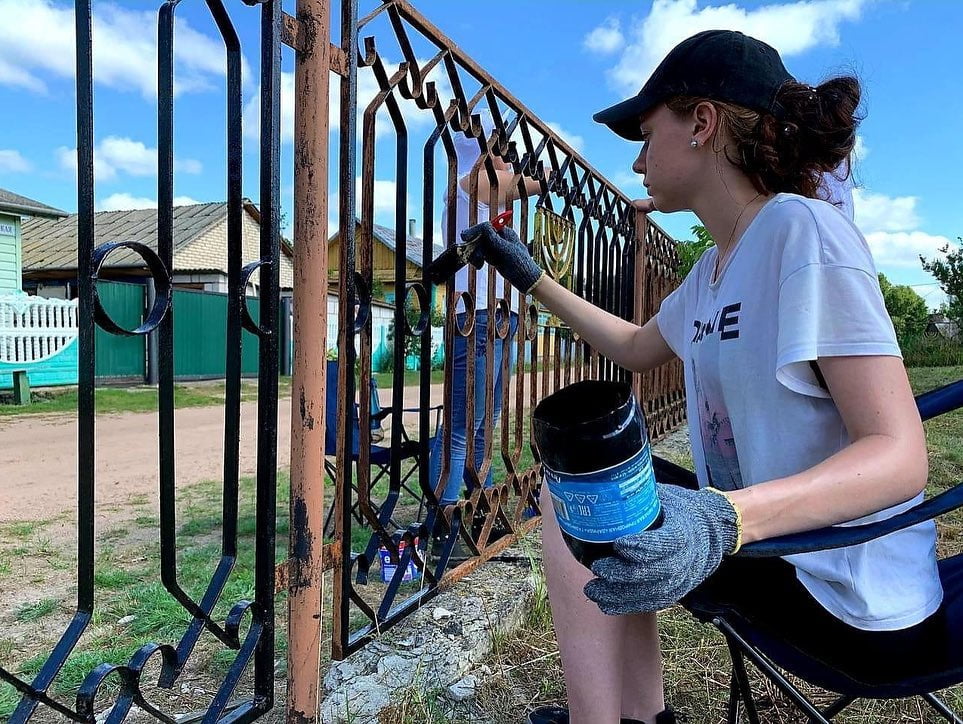
The MEGA project requires a lot of strength and endurance as the participants work from morning till night. But the project is also a chance for them to challenge themselves and to tap their inner strength.
And finally in these places, thanks to our project, a field, or a place in the forest, is no longer just a place. It is a Jewish cemetery for people to know, for descendants to come — and for us to remember.
– – – – –
Alena Kuliounich is the director of Minsk Hillel and the Deputy Chair of the Union of Belarusian Jewish Public Associations and Communities