


COVID-19 quarantine measures closed Jewish heritage sites and led to the cancellation or postponement of many cemetery clean-up actions by volunteer groups. Monika Tarajko, of the Grodzka Gate NN Theatre in Lublin, Poland, often volunteers with such groups. But this year she used the pandemic time to work in isolation – accompanied by her father – to clear and document one Jewish cemetery, that in Józefów Biłgorajski. To date, she writes, she and her dad have cleaned and/or documented more than 450 matzevot. In this personal essay she recounts the experience.
(House of) Life in the Pandemic: Documenting a Jewish cemetery, in isolation, with Dad
By Monika Tarajko
July 8, 2020
I don’t remember exactly just why or when I started dealing with Jewish cemeteries. But I know that when I visited Józefów for the first time in 2012, the cemetery made a strong impression on me. It caused a sort of nostalgia but also sadness that a place related to so many local human stories remained abandoned. I wanted to change it, although at that time I didn’t know how or where to start.
Working at the “Grodzka Gate – NN Theater” Center in Lublin, however, has given me the opportunity to learn about Jewish history and traditions as well as the rules that must be followed regarding a bet olam — a Jewish cemetery. And for years now, I’ve used my free time to work as a volunteer — cleaning and documenting Jewish cemeteries in the region.
We usually start work in early spring, before the vegetation period starts. The epidemic this year thwarted our plans. The obligation of isolation made group work impossible. We were all supposed to stay home.
But I didn’t.
I decided to continue my cemetery work, on my own.
I wasn’t totally alone, though. I don’t drive, so — as in previous years when I worked at cemeteries — I asked my dad for help, or at least for a ride. (The quarantine measures in Poland for the most part did not separate you from your family.)
In 2019, Dad and I had visited almost all Jewish cemeteries in the region together. This year, we’ve been going to only one place every week – to Józefów. And Dad hasn’t just been my driver; he’s taken active part in the cleaning and documentation.
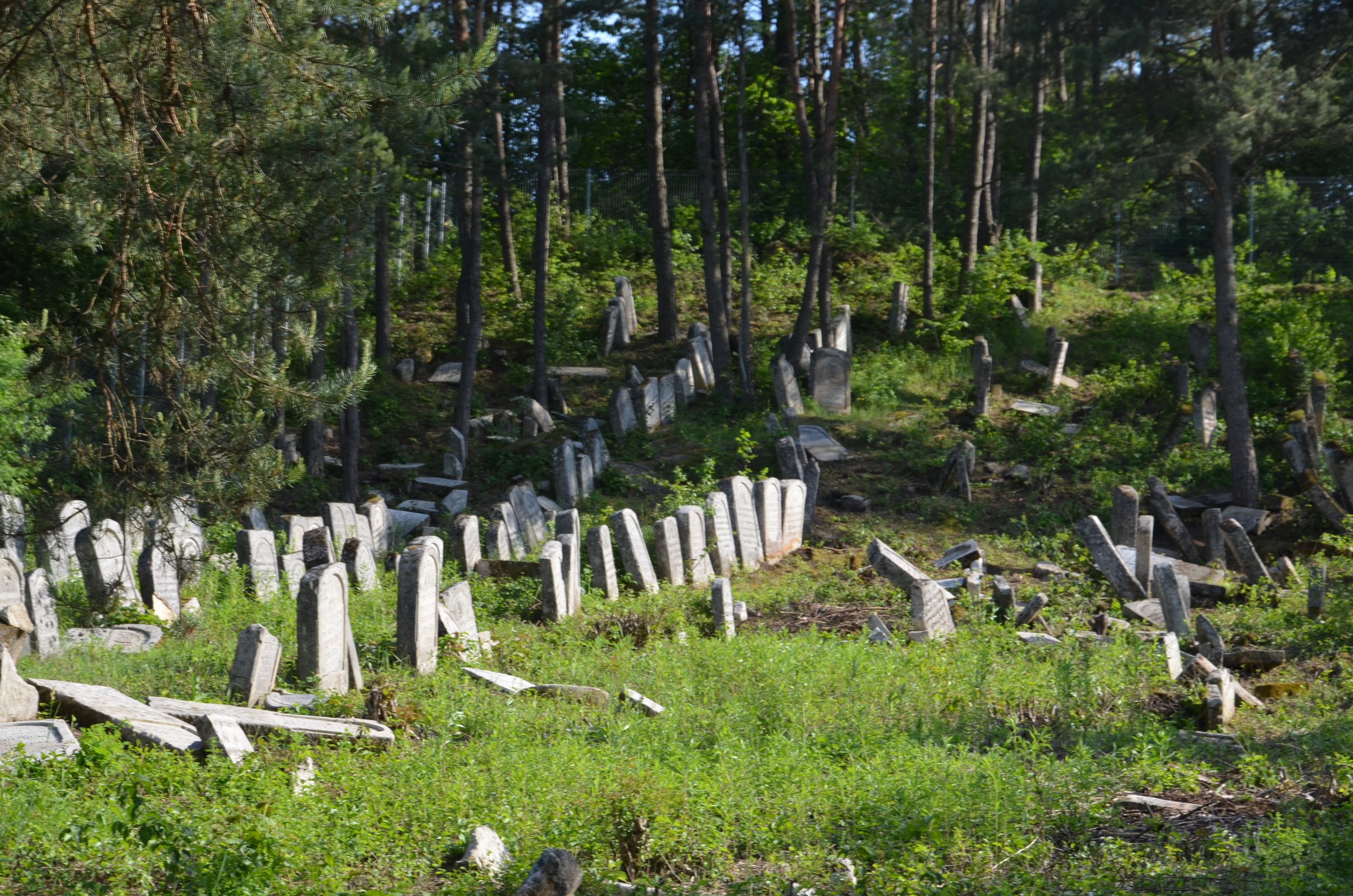
I chose that Jewish cemetery to work in, in isolation, in part because of its location. It is situated on a hill to the south of the city, well away from human settlement. But perhaps I also chose it because the town was the birthplace of the famous Hasidic rabbi Yaakow Yitzchak Horowitz (1745-1815), known as the “Seer of Lublin.” And also, maybe, because I still remember that nostalgia and sadness I felt at my first visit. These feelings still haunt me, and I still want to learn more about the people who created the city before the Holocaust.
You see, in 1921, more than 78 percent of the total population of Józefów was Jewish. Jewish citizens had begun to settle there ever since the town was granted a location charter in 1725. They lived mainly near the southern part of the market, on the main street – Sitarska. The city belonged to the Zamość Ordinance and crafts and trade were developed here. Famous Hebrew printing houses established by the Waks and Zecer families also operated here. A stone synagogue survived the war. It is used today as a library, with a small exhibition devoted to local Jewish history. The limestone from nearby quarries was also mined for gravestones.
The Jewish cemetery was founded in the first half of the 18th century — according to the scholar Andrzej Trzinski, the oldest known matzeva dates from 1737. Rows of burials – separate for men and women (according to the principle of mechitza) — are still visible. There is a section for children’s graves; and the tombs of rabbis and teachers are grouped near the gate.
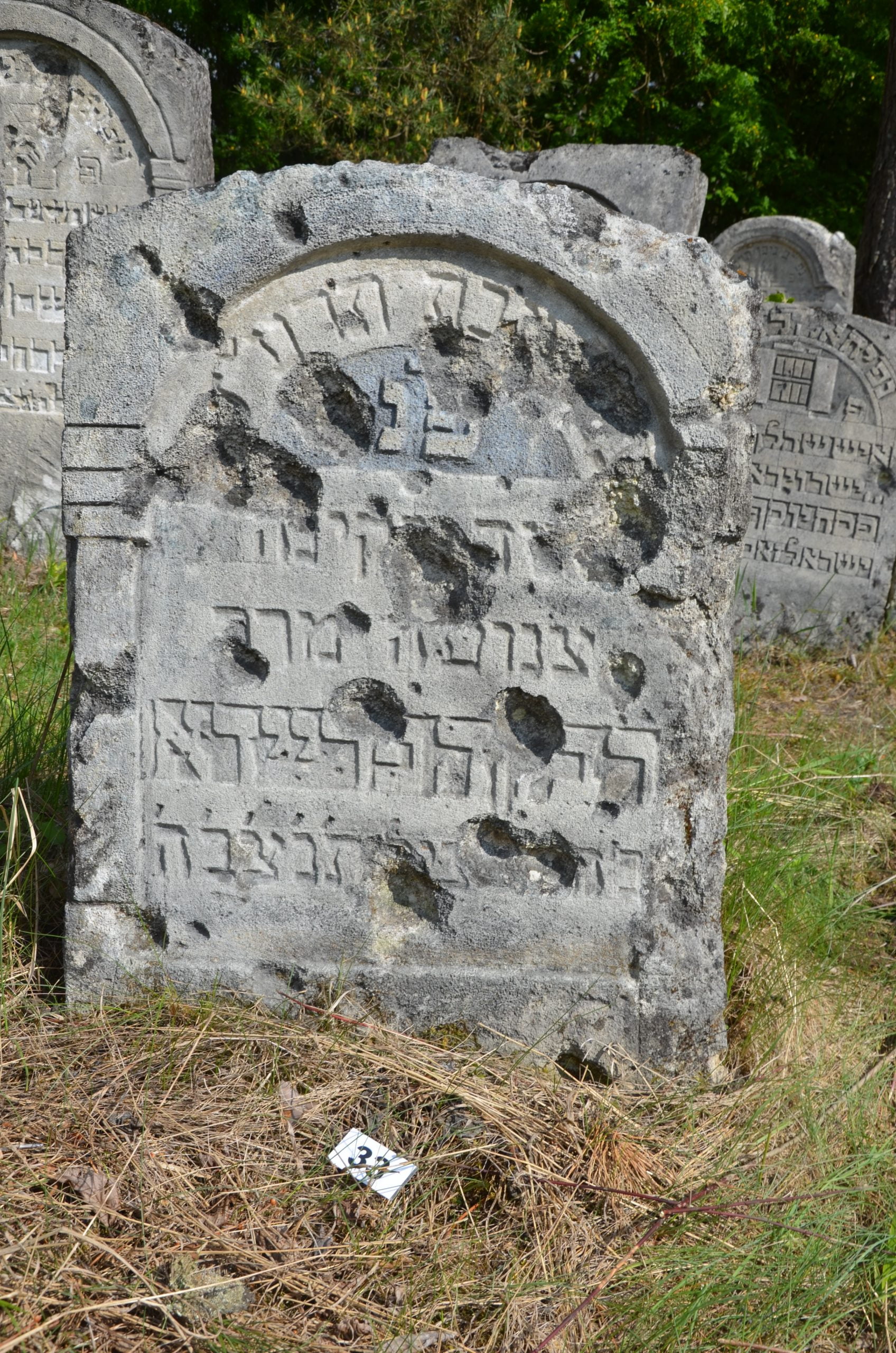
The greatest number of surviving matzevot come from the early 20th century. They are located in the eastern part of the cemetery. On some of the steles you can see traces of bullets, testifying to the tragic fate of the cemetery during the war. Most of the tombstones are preserved on their places (though sometimes broken).
And the epigraphs are legible. They contain simple traditional symbols (lions, candlesticks, books, pitchers of the Levites, hands in the gesture of blessing), phrases of praise, sometimes lamentations and — above all – the names and dates of death of the former city inhabitants. Once we finish our documentation, these data will allow us to create an index of surviving burials and a cemetery plan.
As Dad and I worked, we started with the newest tombstones and progressively moved back to the past.
The cemetery was cleaned up and fenced in 2015. And it was cleared of vegetation again in 2019. This has allowed us to reach the usually inaccessible corners of the cemetery in our work.
We take pictures, measure the stones. Traces of old polychrome are becoming more and more visible. Sometimes, when the tombstones are broken, we collect them like puzzles.
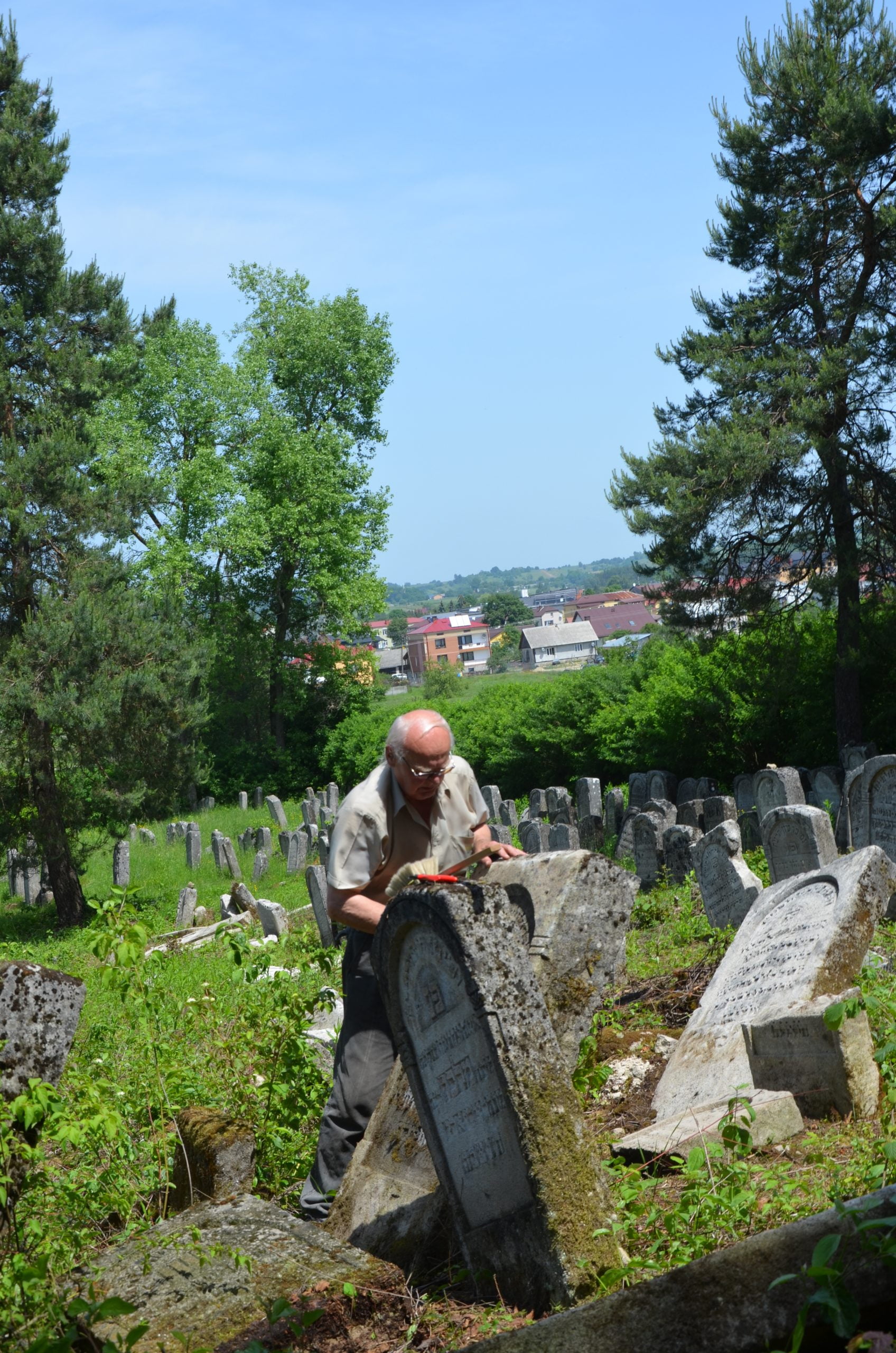
Each stone is important to us, whether it contains letters or not. After all, it was a part of someone’s grave, a material sign of memory, that the family, who can no longer come here today – left for their tam we-jakar (“noble and dear”) brother, husband or father. The community in Józefów was rather orthodox. Many inscriptions include descriptions of the dead as pious, performing works of mercy, studying the Torah day and night. There are graves of teachers, representatives of the commune, rabbinical court or funeral brotherhood. There are graves of women, respected and modest, for whom the light of this world was faith and family.
When my dad first starting coming with me to cemeteries, it was just as a driver. Last year during our travels, he often watched from a distance, not knowing at all how to behave. But had already learned a lot, even before we started working in Jozefow this spring. He can provide information to visitors, and he participates in all types of cemetery work. He knows it’s important and necessary.
Working with my dad is not only measured in the time that we spend together. Rather, it’s a kind of understanding without words; help without questions from his side and joy and inexpressible gratitude from my side.
To date in our pandemic work, Dad and I have cleared and inventoried more than 450 matzevot. This is more than the number given on the information panel installed next to the cemetery, even though only half of the cemetery is documented!
Unfortunately, we will have to stop our work soon – it’s summer; the vegetation is taking over the cemetery again, and we can’t keep up. But we’ll use our time now to process all the data that we have collected.
We will probably go to the cemetery one more time, though– on July 13, the day dedicated to the memory of Józefów Jews, the anniversary of the day in 1942 when officers of the 101st police reserve battalion executed between 1,300 and 1,500 Jews, most of them women, children and the elderly.
May their souls be bound up in the bond of life!
– – – – – –
As part of their Gidonim cemetery documentation project, students from the Reut school in Jerusalem carried out a documentation of the Józefów cemetery in 2006. Click here to see their photo gallery and documentation of the gravestones
– – – – – –
Monika Tarajko is an educational specialist at the Grodzka Gate NN Theatre in Lublin, Poland, a municipal culture institution that for more than 25 years has been working in the field of Jewish historical and cultural heritage and Shoah commemoration.