

 The Swedish scholar Daniel Leviathan is a PhD candidate in Jewish Studies at Lund University in southern Sweden. His dissertation, tentatively titled ”Constructing Public Judaism in Sweden: the Synagogues of Sweden 1795-1939,” focuses on the five major purposely built synagogues (and their predecessors) that were erected in Sweden from the creation of the country’s first Jewish community in the late 18th century up until World War II. With the support of the C.M. Lerici Foundation, he is currently based in Rome, at the Swedish Institute of Classical Studies, carrying out research on the Swedish Christian architect Fredrik Wilhelm Scholander (1816-1881), who spent three formative years in Italy in the 1840s and went on to design the Great Synagogue in Stockholm, opened in 1870.
In this essay Leviathan describes his work and its focus.
Researching the History of Swedish Synagogues — in Italy
By Daniel Leviathan
February 22, 2024
Though major synagogues were constructed in the Swedish cities of Stockholm, Gothenburg, Norrköping, Malmö and Karlstad, little has been written about them in a concentrated way. I discovered this gap when I returned to Sweden in 2018 and began to study the early modern and modern period, after studying archaeology and the ancient Near East at the Hebrew University in Jerusalem, where one of my focus areas was ancient synagogues.
Research about Jewish life in Sweden has mainly centered on the history of the development of Jewish life in Sweden, with a major focus on studying the different migrational waves that created the Jewry of Sweden today. Especially questions regarding Sweden and the Holocaust have attracted attention. Only recently has a resurgence occurred in research focused more on Jewish daily life and Jewish material culture, partially thanks the reinauguration of the Jewish Museum of Stockholm in 2019 and a general growing interest in Sweden for Jewish culture.

One of the subjects which had received lesser attention in the Swedish research was the country’s synagogues. Most of these synagogues were built in the second half of the 19th century and were simply seen as part of the synagogue construction boom in Europe of that time, with no further questions asked. The research that existed consisted mainly of small-scale popular articles about the synagogues, published in jubilee/anniversary books for the congregations or synagogues. Only recently, thanks to the research of the cultural historian Dr. Maja Hultman, currently at the University of Gothenburg, was there a first deeper analysis on the construction of the Stockholm synagogue.
In my research, I am expanding upon her excellent work about the Stockholm synagogue, but also including the other major synagogues in Sweden. I hope that this more comprehensive work on these synagogues, built in the same period, but each with its own story and raison d’etre, will provide another aspect of knowledge about Jewish life in Sweden. Furthermore I hope to make this material more accessible to other researchers, as my study will be published in English.
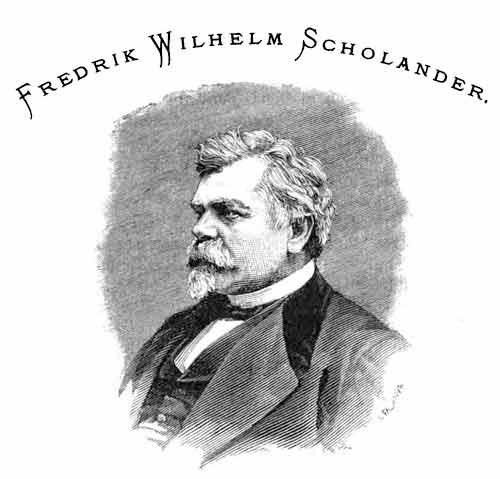
In this phase of my research, in Italy and Rome, I am following in the footsteps of the architect, Fredrik Wilhelm Scholander, who spent the years 1843-1846 in Italy, when he was in his late twenties. He would go on to be one of the most important Swedish architects of the 19th century. The great synagogue in Stockholm, inaugurated in 1870, is one of his standout buildings.
Scholander was a splendid architect in his own right; his work was part of the transformation of Sweden from an agrarian to an industrial society. But more importantly he became the main teacher and mentor for a whole generation of architects to come – the generation of architects who would shape Sweden architecturally into the Sweden that we know today. Their buildings, influenced by his teachings, still dot the urban landscapes across Sweden. Two of his students would come to construct synagogues – John Smedberg in Malmö and Jac Ahrenberg in Helsinki, Finland.
During his formative years studying architecture, Scholander first spent the years 1841-43 in Paris as a student of Louis Hippolyte Lebas (1782-1867). Lebas, connected to the Ecole des Beaux-Arts in Paris, was a strong supporter of the art-historical method of Johann Joachim Winckelmann (1717-1768), which focused on studying architectural history, both through standing buildings as well as archaeological remains. This school of thought, of deeply grounding the study of architecture in architectural history and tradition, would come to develop into the style known as Beaux-Arts architecture.
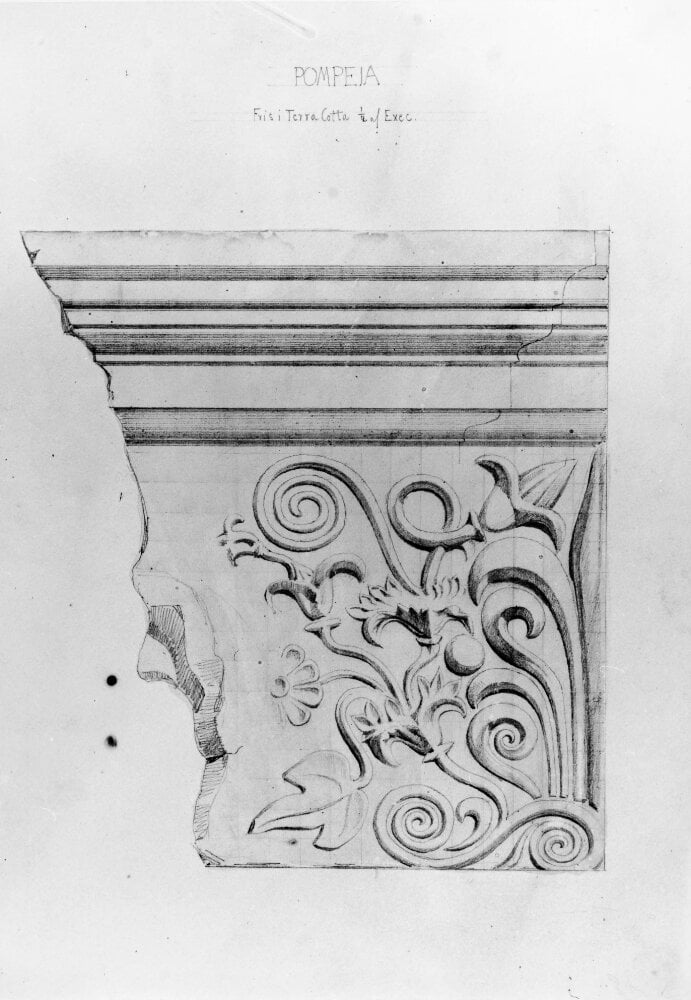
From Paris, where Scholander became adept in Lebas and Winckelmann’s methods of studying architecture, he continued on to Italy, where he remained until 1846, mainly based in Rome. During this time, Scholander studied the architecture of Rome, Venice, Florence and other Italian cities, as well as the archaeological remains of the ancient cities of Pompeii and Herculaneum, on his own, putting the knowledge acquired in Paris to the test.
In his notes, he very briefly refers to having passed through some of the Jewish ghettos, such as the one in Padua, some of which, like that in Rome, were still closed. Unfortunately, the detailed notes from his time in Rome and Venice have been lost. And his notes from a second trip to Italy, in 1863, include only hints to whether he possibly had seen the synagogues in those two cities at that time.
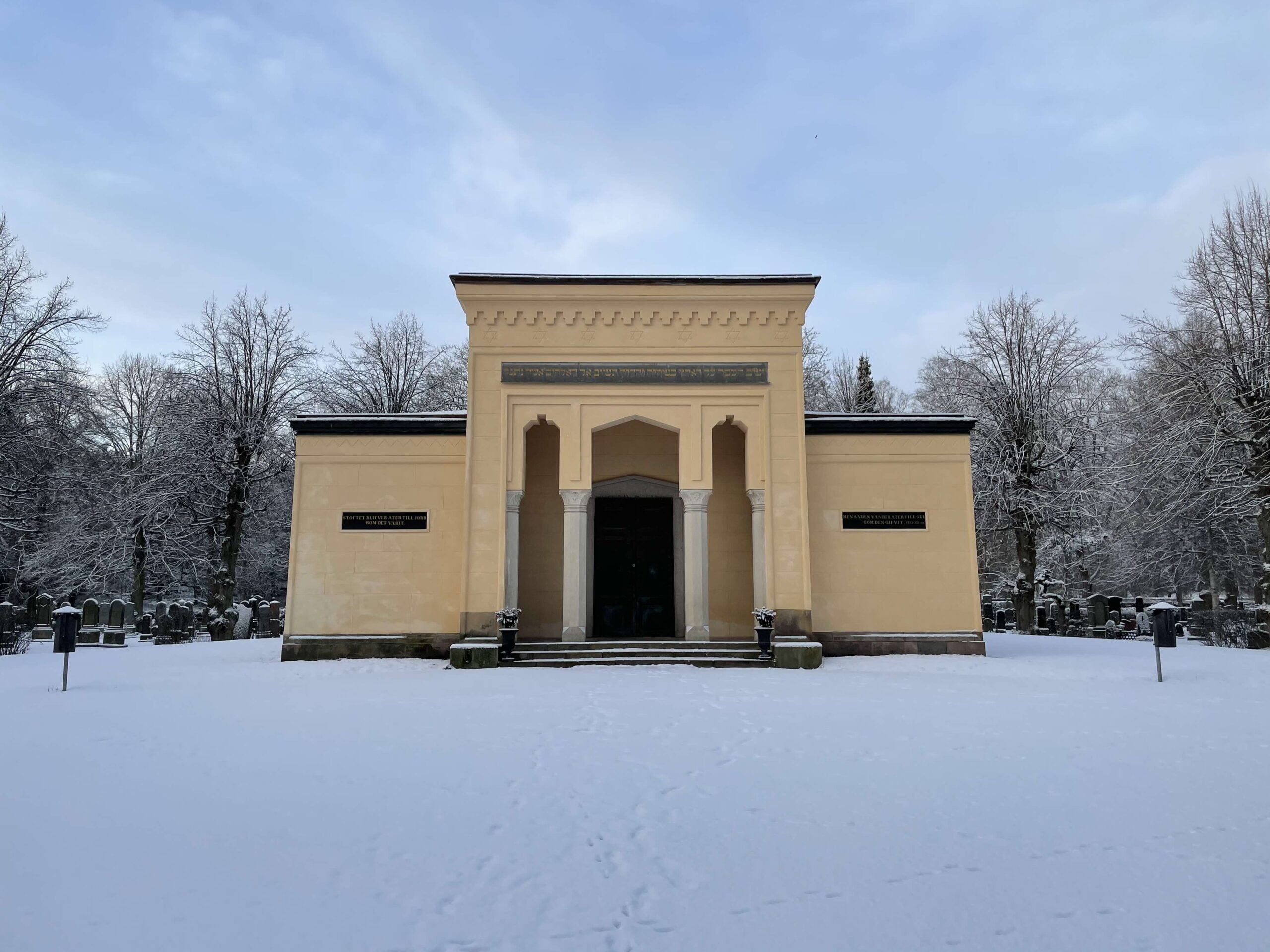
After Scholander returned to Sweden in 1846, he became a professor of architecture at the Royal Academy of Arts in Stockholm. In 1855 the Jewish Community of Stockholm, founded in 1775, chose him to design a funerary chapel at the new main Jewish cemetery in the city. A few years later, in 1862, he designed the new, grand synagogue of Stockholm. It was inaugurated in 1870 – the same year Swedish Jews gained emancipation – and was meant to become the foremost synagogue in the country (also see featured picture above).
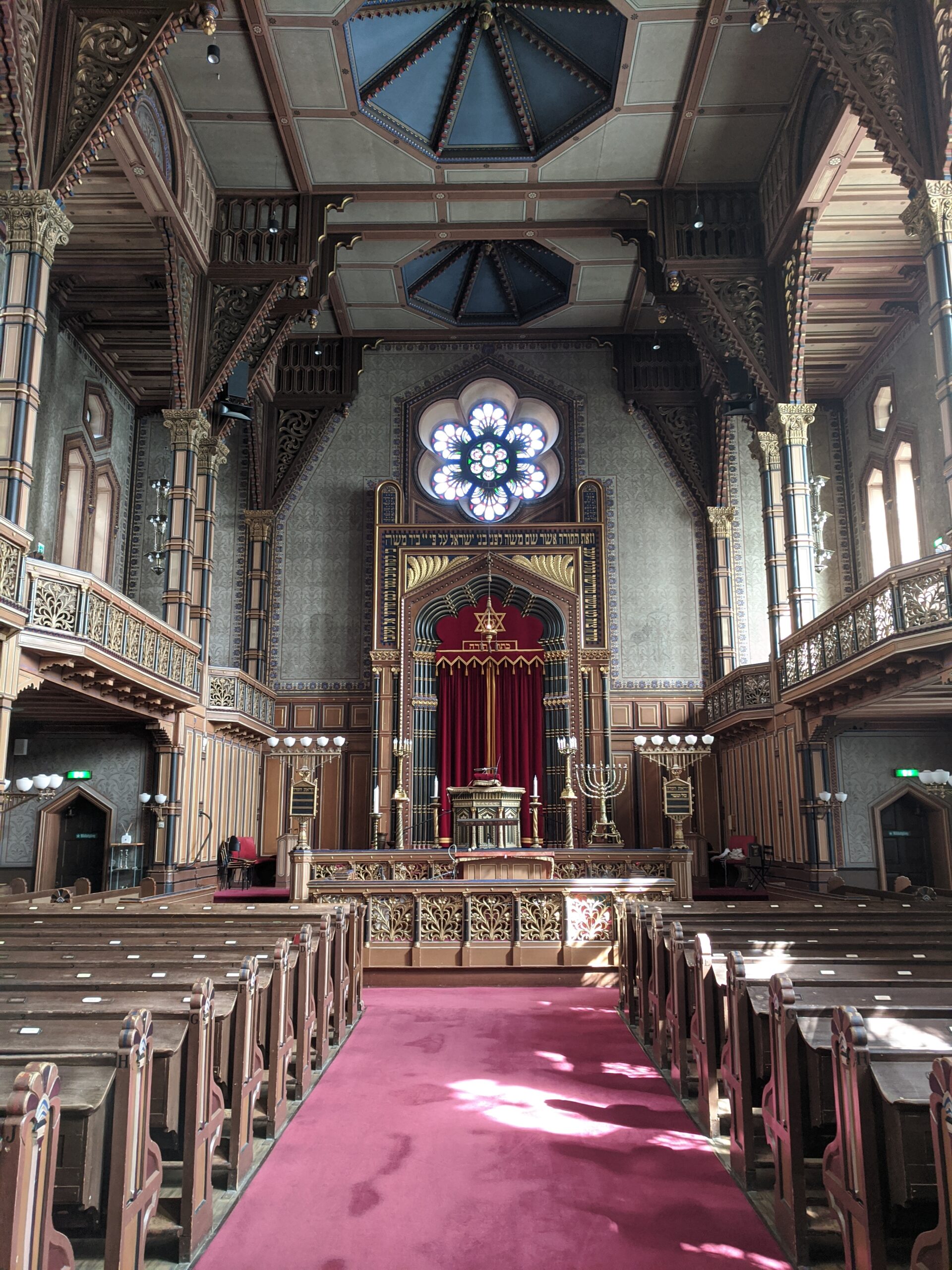
During my time in Italy, my main goal is to study how Scholander’s studies and travels in Italy influenced his future architectural projects, and especially the Stockholm synagogue. So far in my research in Italy, having deeply studied his notes, it seems that Scholander was more broadly focused on studying and understanding the different architectural styles he encountered in the country, more than specifically studying certain buildings.
Scholander seems, however, to have visited many different religious buildings and monuments in his travels, and these came to influence his future architectural style – a style based strongly on historical traditions. During my research, I aim to try to visit many of synagogues in Italy that date from the 16th to the mid 19thcentury and which Scholander could possibly have visited, seen, and maybe been influenced by. These include the synagogues of Siena, Padua, Ferrara, and Venice and the pre-emancipation synagogues in Piedmont region. From his notes, we know Scholander visited Siena, Padua and Venice, in addition to Rome, so there is at least an existing chance that he saw at least one of the synagogues in these cities.
I will also more generally study how the ancient Roman, Renaissance and Baroque architecture that Scholander observed during his Italian years came to influence him. Scholander left behind parts of his diary from his trips, as well as drafts for a larger book on architectural history, which serve as a source for this study.
Finally I will look further into Scholander’s sources of inspiration – namely other architects. He was a great admirer of Gottfried Semper, the architect of the Dresden synagogue, who, similar to Lebas in Paris, followed in the footsteps of Winckelmann in his approach to architectural history based partially on archaeological finds. Scholander passed through Dresden on his way home to Sweden, but only got to meet Semper at a local pub, together with many other admirers; Semper was quite drunk, to Scholander’s great disappointment.
In addition to my primary focus on Scholander’s experiences and influences, my research also includes further study of synagogue architecture in Italy in general, especially the synagogues that were built around the same time or slightly later than the Great Synagogue of Stockholm, such as the synagogues in Alessandria (1871), Vercelli (1878) Florence (1882), Rome (1904), and others.
My hope is to deepen my knowledge of synagogue architecture during this period, the second half of the 19th century, and understand how architectural traditions travelled across Europe, in large parts thanks to the travels of architects.
– – – – – –
The Swedish scholar Daniel Leviathan is an archaeologist who studied at the Hebrew University in Jerusalem, specializing in biblical and classical archaeology. He is currently working on a PhD in Jewish Studies at Lund University in southern Sweden, exploring the history and architecture of Swedish synagogues.