

Research ecologist Bill Brostoff has compiled a guide for descendants seeking to restore the Jewish cemetery in their ancestors’ town or village in Poland. He has based much of his recommendation on his own experiences leading a project to restore the Jewish cemetery in the village of Trzcianne, near Białystok.
We publish here Dr. Brostoff’s Preface to the 16-page guide.
Click this link for the full PDF of the guide itself — Descendants’ Guidebook for Jewish Cemetery Restoration in Poland.
NOTE — We also highly recommend the web site A Guide to Jewish Cemetery Preservation in Western Ukraine, which has extensive explanatory material, how-to information, and links to resources
PREFACE
With all that has been written about historical and contemporary Jewish life in Poland, all that has been made available about individual cemetery restoration projects, including the lamentation that well over 1000 cemeteries are in need of restoration, and the great generosity of individuals providing advice and mentoring; there is no written guidance on how to proceed.
Having stumbled through the process and learned by trial and error, I feel compelled to share my experiences for others embarking on the journey. My hope is that not only will compiling advice aid individual restoration projects but also promote the goal of restoring the larger assemblage of cemeteries.

I have neither great experience nor expertise with cemetery restoration nor with detailed protocols of Jewish cemeteries. However, after I got over my apprehension of visiting Poland a few years ago, I visited my family’s ancestral shtetl in Trzcianne (not far from Białystok), and was appalled by the state of the cemetery. Although my family genealogy and story had been traced back to the mid-18th century, my quest in Poland was to see the status of the cemetery, to document any of my ancestors’ graves, and to determine whether I could find the remnants of my great-great grandfather’s three-story brick house he had commissioned about 1877.
After seeing the state of the cemetery and becoming very fond of Poland and the Poles, I decided that I would make every effort to restore the cemetery. The Jewish media, as very broadly interpreted, paints a rosy picture of such an endeavor. Having watched the film “A Town Called Brzostek” and read about some other successful restoration projects, I thought the process would be relatively simple and straightforward, albeit with a few stumbling blocks along the way.
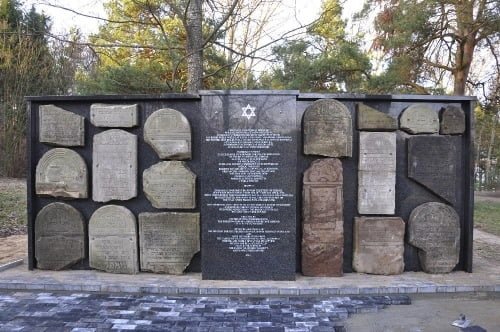
Alas, after starting the process along the lines of advice I had been given by a few experts, I discovered that the process was far from simple and straightforward. Many of the descendants had experienced considerable frustration in dealing with what might be called the “required points of contact.” Appointments with authorities were cancelled or changed at the last minute, contracted memorials and fences not constructed as expected, and ceremonies not followed according to plan. Not only had the expectations of the descendants frequently not been met, but those of the local communities were not met either. A seemingly gracious gesture on the part of one descendant at a “kick-off” restoration activity, for example, led to an incident nearly derailing the entire process.
With this in mind, I decided that a guidebook, or possibly a pair of guidebooks, would be helpful and go a long way toward getting as far as possible in restoring and documenting the neglected.

The companion guidebook, which will need to be largely written by someone else, is for local communities in Poland providing suggestions and guidance on how to deal with their respective Jewish cemeteries, descendants groups.
It is critical to keep in mind that each cemetery is unique. Jewish cemeteries in Poland range from having a few to over perhaps 250,000 graves, from completely devastated with no visible headstones to little damaged and having many visible headstones, communities being proactive about restoration and working with diaspora descendants to those being reluctant or even hostile to even acknowledging previous Jewish presence, and from having a group of engaged descendants to descendants without much interest. Thus, while it is important to build on the experience of others, each cemetery will differ and require a different strategy.

Please consider this a “living document.” As our collective experience grows and as the political situation in Poland evolves, new advice will likely be available. I will attempt to update the guidebook from time to time.
I hope that all involved in their respective process will share their experiences and suggestions with the broader community. Please feel free to contact me or post on one or more of the various community Facebook groups.
Bill Brostoff, PhD
Berkeley
March 4, 2020
Click the link below for the full PDF of the guide.